
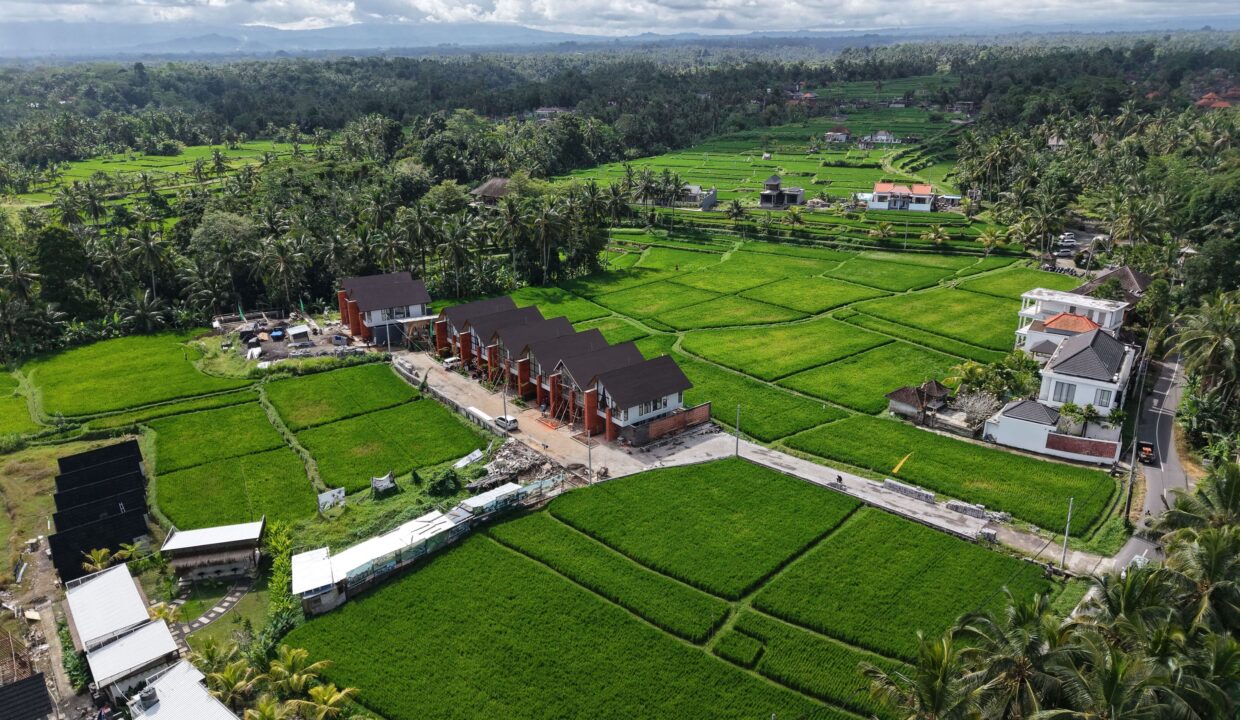
Bank Indonesia recorded an increase in residential property prices in Bali’s primary market in the first half of 2026.
The Residential Property Price Index grew by 1.02% year‑on‑year in Q2 2026, higher than the 0.87% growth recorded in Q1 2026.
Achris Sarwani, Head of Bank Indonesia’s Bali Representative Office, explained that the rise in Bali’s Residential Property Price Index was mainly driven by higher prices in the medium‑sized segment (36–70 m²) and large properties (>70 m²), which increased by 1.52% and 0.82% year‑on‑year respectively.
“The growth in the Residential Property Price Index is primarily triggered by rising construction costs. Around 81.3% of respondents cited higher building material prices as the main factor behind house price increases, followed by rising labor costs reported by 46.9% of respondents. Additional price pressures also came from higher licensing fees, fuel price hikes, and the addition of housing facilities and social amenities,” Achris explained on Monday (17/8/2026).
Prices Expected to Keep Rising
Amid the upward trend, developers in Bali noted several challenges in selling primary residential properties. Key obstacles include high mortgage interest rates, limited land availability, tax burdens, and large down‑payment requirements.
On the financing side, the survey showed that the main source of funding for residential property development in Bali still comes from developers’ own capital (56.6%), followed by bank loans (35.3%), customer funds (5.9%), and non‑bank financial institution loans (2.2%).
From the consumer perspective, mortgage schemes remain the dominant method of home purchase, accounting for 67.6% of total transactions.
Looking ahead, respondents expect residential property prices in Bali to continue rising in Q3 2026. The increase is projected to affect both land and house prices, whether purchased through cash or mortgage schemes.
Meanwhile, hotel demand declined as tourists increasingly preferred staying in villas and resorts at more affordable prices.
Even so, there was positive news from the rental retail segment, which grew by 12.88 percent, driven by the entry of international chain outlets in food and beverage as well as hobby‑related businesses — indicating that Bali’s consumer purchasing power remains resilient.
On the supply side, Bali’s commercial property market continued to expand, with the Commercial Property Supply Index rising 4.39 percent, supported by growth in rental retail and hotels.
This condition aligns with the performance of Bali’s construction sector, which recorded growth in Q2 2026.
Bank Indonesia Bali projects that the performance of Bali’s commercial property sector will be supported by improvements in tourism, in line with the peak season of international tourist arrivals — particularly from Australia — in Q3 2026.
Source: BisnisBali, AntaraNews