
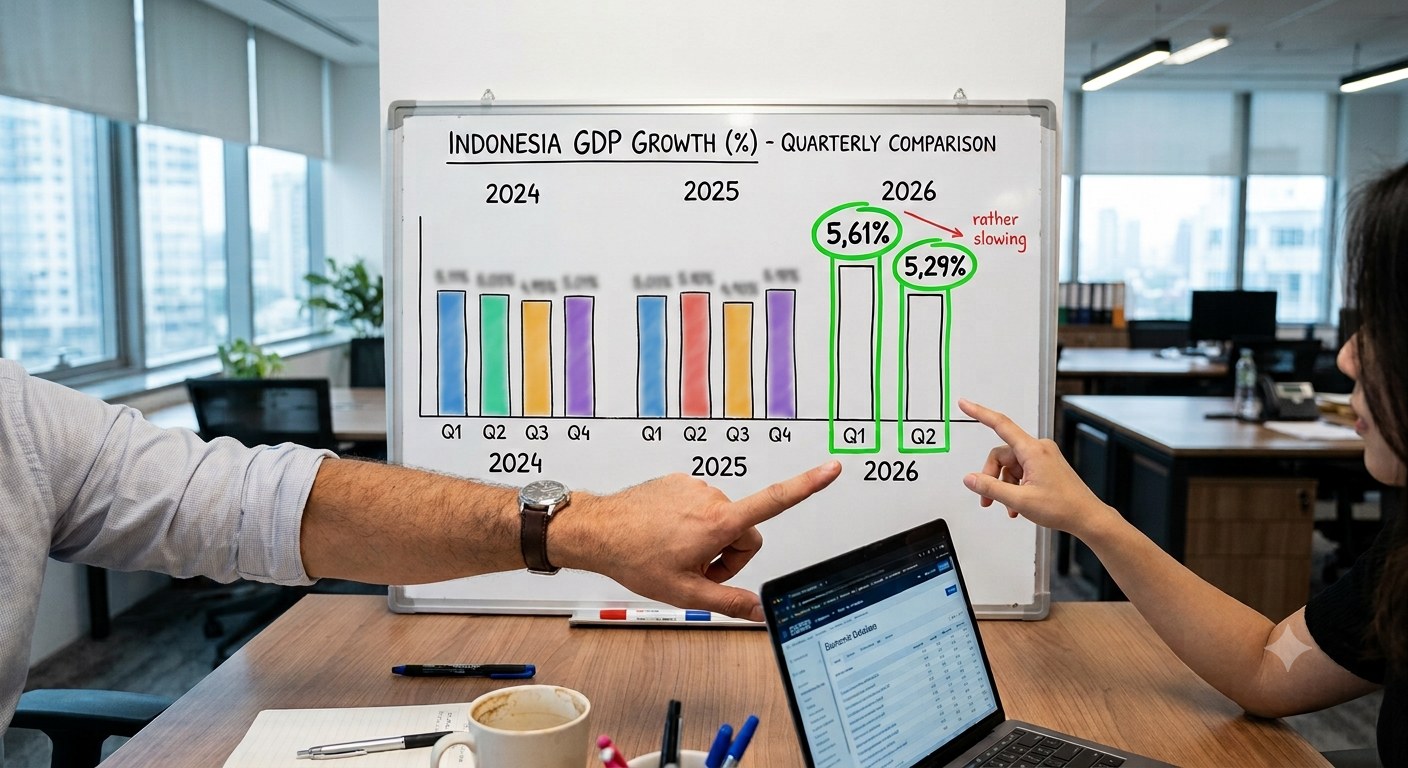
Indonesia’s economic growth is 5.29% year‑on‑year in the second quarter of 2026, according to Statistics Indonesia (BPS).
The pace was slower than the 5.61% recorded in the first quarter, though quarter‑to‑quarter growth reached 3.73%.
The bureau’s Deputy for National Accounts and Statistical Analysis, Moh. Edy Mahmud said the manufacturing, trade, and information and communication sectors were the main drivers, supported by stronger domestic demand.
From the expenditure side, household consumption and investment provided the biggest lift. On a year‑on‑year basis, nearly all sectors posted gains, except mining.
The five largest contributors for GDP are manufacturing, agriculture, trade, construction, and mining—together made up 63.73% of GDP.
Vietnam Posts Higher Figures
Finance Minister Purbaya Yudhi Sadewa noted that external pressures between April and June, particularly a surge in global oil prices, disrupted trade and exports.
“In April, May, and June, when global oil prices were high, exports were clearly disrupted. They weren’t optimal,” he said at a media briefing at Ministry of Finance office on Wednesday (August 5, 2026).
Despite the slowdown, Purbaya described the 5.29% growth as resilient in the face of global headwinds.
He expressed confidence that growth could accelerate toward 6% in the third and fourth quarters, driven by stronger domestic demand and a more robust financial sector.
One key strategy, he added, is boosting liquidity to lower banking funding costs and reduce lending rates.
Meanwhile, Airlangga Hartarto as Coordinating Minister for Economic Affairs said, the 5.29% growth rate is among the region’s best, although Vietnam continues to post higher figures.
Sources: Kompas