
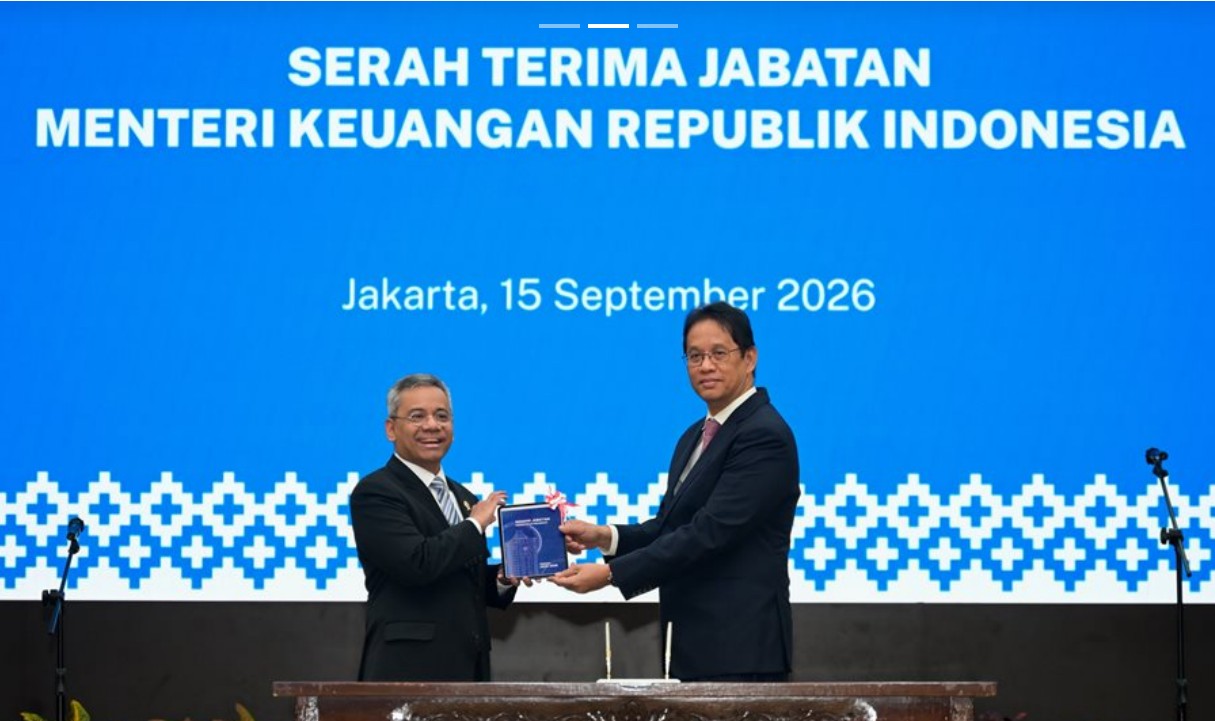
The sudden removal of Purbaya Yudhi Sadewa as Indonesia’s finance minister on Monday, September 14, 2026, shocked the nation.
Yet amid heated debate over the reshuffle, it is undeniable that Suahasil Nazara, Indonesia’s new finance minister, faces the urgent task of making fiscal policy direction more predictable for business sector.
The challenges include clarifying the sequence of policies, strengthening inter‑agency coordination, and striking a balance between fiscal discipline and the need to sustain domestic growth.
High expectations for the new finance minister have been voiced by the Indonesian Chamber of Commerce and Industry/KADIN.
According to Erwin Aksa, Vice Chairman of KADIN, the industrial sector is currently under pressure from multiple fronts, ranging from high energy costs, raw materials, logistics, financing, and competition from imported products to global trade uncertainty.
For this reason, fiscal policy under Suahasil’s leadership is expected to be more pro‑growth, pro‑investment, and pro‑industry, while still upholding prudence in maintaining the health of the state budget.
“That’s why fiscal policy must not end up increasing the cost of doing business,” Erwin told Bisnis.com on Monday (14/9/2026).
Drive the Industrial Sector
Echoing Erwin Aksa’s statement, fellow KADIN official Saleh Husin expressed optimism about Suahasil Nazara’s leadership.
Saleh noted that Suahasil’s background as an academic at the Faculty of Economics and Business, University of Indonesia, and his experience leading the Fiscal Policy Agency will serve as strong capital to drive the industrial and trade sectors.
“In moving the wheels of Indonesia’s economy, the government certainly needs the private sector as a strategic partner. Beyond managing the balance of central and regional finances, what is equally important is ensuring that the private sector — in this case industry and trade — keeps turning at full speed without obstacles,” Saleh explained.
KADIN also urged the government to maintain industrial cost structures at competitive levels compared to neighboring countries. Erwin highlighted that energy, logistics, financing, and various levies are key factors determining whether Indonesian products can compete with those from Vietnam, Thailand, Malaysia, and China.
At the same time, he encourages Indoensia’s Ministry of Finance take a more active role in conducting regulatory impact assessments together with technical ministries and the business community before introducing new fiscal policies.
According to Erwin, every new tax, excise, or levy must first be assessed for its impact on production costs, investment, employment, consumer purchasing power, and industrial competitiveness.
“Ultimately, we hope Minister Suahasil can maintain a balance between fiscal sustainability and industrial competitiveness. The state budget must remain healthy, but the business sector must also stay healthy,” Erwin concluded.
Sources; Bisnis
Feat Image: via FinanceMinistry