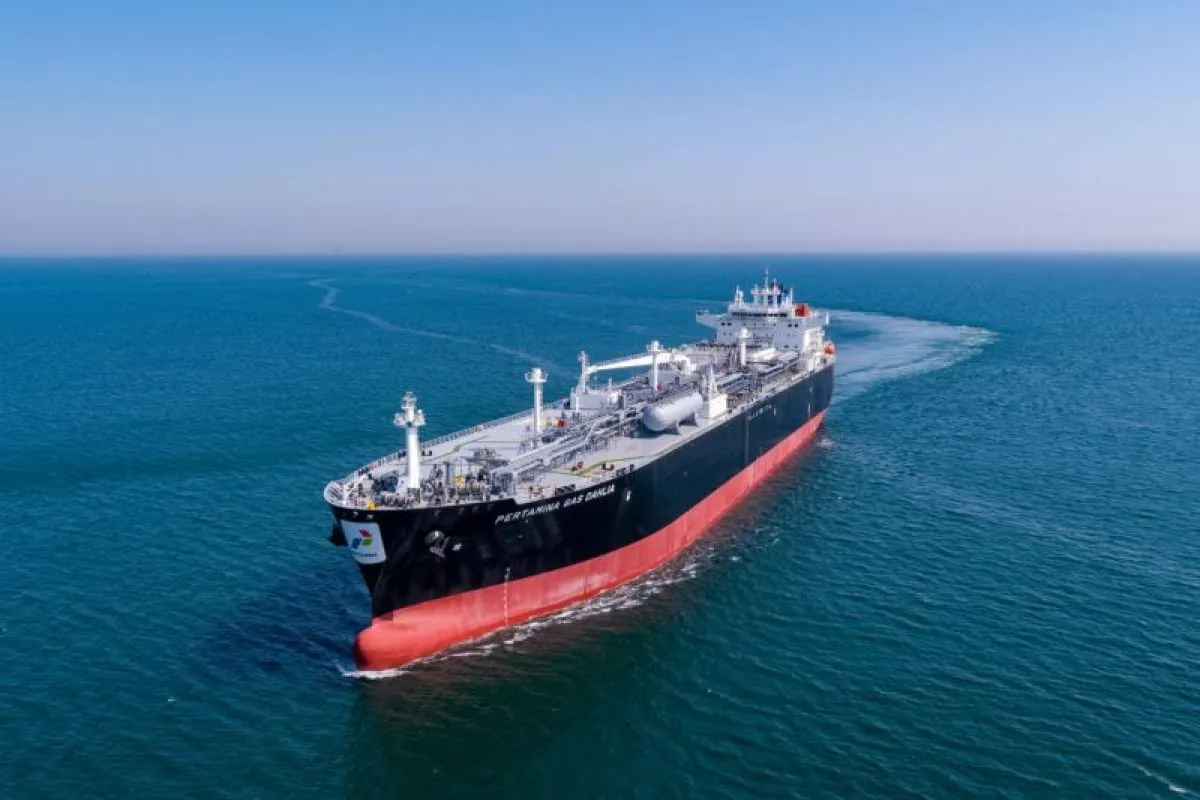
Covering over 17,000 islands means delivering fuel across Indonesia is no small task. Pertamina Patra Niaga handles it through a network of ships. Yet transporting barrels isn’t the full picture here.
That fleet operates like unseen support beams – always there, never noticed, holding up steady energy supply nationwide. Economic motion depends on these quiet crossings between distant shores.
Smooth sailing for Pertamina’s ships goes unseen, Roberth M.V. Dumatubun points out. Trouble strikes, however, and consequences show up fast – no fuel, stalled economies.
Since nearly all global commerce travels on water, moving goods by sea matters widely. For Indonesia, such movement isn’t just important – it’s nonstop vital.
Instead of fixed pipelines, the company relies on vessels that carry gasoline and cooking gas far beyond coasts, reaching remote villages through island channels and river paths alike.
Meeting the Challenge of the 3T Regions
Distributing energy across Indonesia is a complex process which demands a flexible and reliable shipping system.
“Shipping is an invisible infrastructure that supports national energy distribution,” stated by Roberth M.V. Dumatubun, Corporate Secretary, Pertamina Patra Niaga.
Pertamina Patra Niaga emphasizes that this maritime network is crucial in order to achieve equitable energy access, particularly in the country’s 3T regions (frontier, outermost, and disadvantaged areas).
Without ships constantly distributing fuels to these areas, shortages would hit fast which could lead to weakening local economies and public services.
Despite uncertain climates, operations must continue without delay. When storms interfere, movement of resources grows harder still. A reliable system of vehicles and routes keeps supply chains active across distant areas.
Energy reaches places where few services exist. Lives depend on steady deliveries, whether for medical centers or public travel. Power supports routines most take for granted. Communities function because shipments arrive as needed.
Commitment to a Resilient Energy Future
Future plans focus on reinforcing sea-linked fuel delivery networks. Through ongoing coordination across Pertamina entities, operational consistency improves. Adaptability grows alongside shifting worldwide patterns and higher local consumption needs.
By strengthening this unseen maritime network, Indonesia seeks to safeguard its energy self-reliance and uphold stability throughout its extensive island chain, stretching from Java’s industrial core to the distant coastlines of eastern Indonesia.
Source: ANTARA News
Feat Image: ANTARA News