
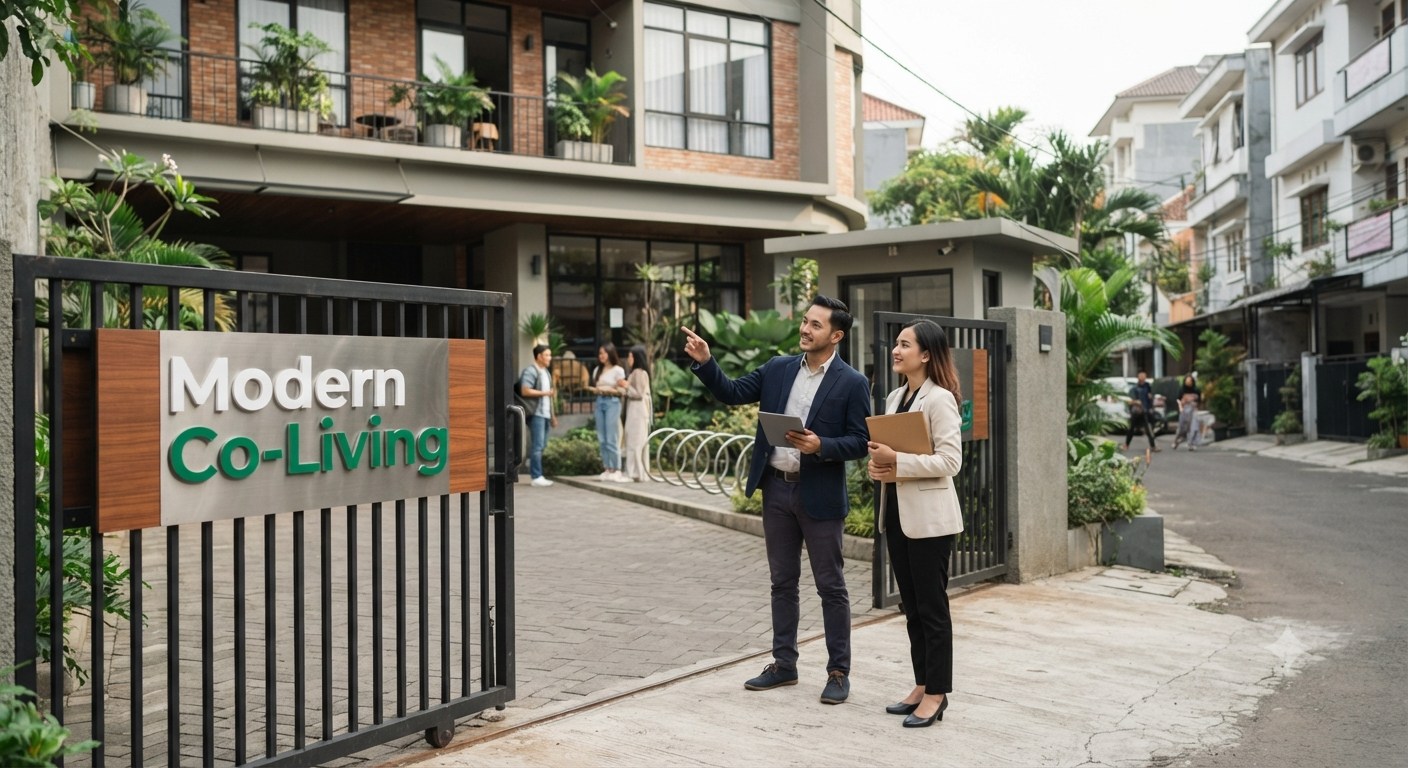
Modern co-living operator Cove has registered a 40% spike in asset conversion interest, highlighting co-living as a resilient property investment channel amidst macroeconomic turbulence driven by exchange rate fluctuations.
Rizky Kusumo, Cove’s Country Director of Investment, explained that ongoing economic uncertainty has exerted heavy pressure on Indonesia’s real estate market, fueled heavily by climbing construction material costs.
This financial strain is further amplified by softening consumer purchasing power, evidenced by a 25.67% year-on-year collapse in residential property sales.
“This contrast shows that co-living remains a promising form of property investment, even as general investment enthusiasm slows down across the country,” he said in an official statement on Thursday (July 23).
Turning Idle Assets into Revenue Streams
The surging demand for housing amid a sluggish property climate has drawn fresh entrants into the co-living space, particularly as home and apartment ownership remains out of reach for many young professionals.
Curiously, this momentum is largely driven by individual asset owners. Roughly 70% of consultation requests fielded by Cove originate from private landowners, typically holding idle family assets or inherited plots.
These trends indicate that current economic realities are pushing individuals to monetize dormant properties rather than hold out for speculative land sales. Beyond vacant land, the remainder of consultation inquiries stems from owners of underperforming shophouses (ruko).
“They are opting for co-living as a more predictable and stable asset conversion strategy compared to other commercial alternatives that carry higher risks and vulnerability to shifting trends,” Rizky noted.
Flexibility also defines current business models. Most participating landowners are pivoting toward hybrid co-living designs, blending monthly rentals with daily stays.
This hybrid approach shields operators against the volatility of traditional boarding houses (kost), allowing owners to capture transient tourism traffic while continuing to service steady demand from long-term co-living residents.
Jakarta Leads the Charge
Among the urban centers where Cove provides advisory services, Jakarta and Surabaya stand out as hotspots for co-living conversions. However, Jakarta commands a massive lead, pulling in triple the consultation volume—up to 200% higher—than Surabaya.
Prime targets for expansion are centered around Cipete and Setiabudi in South Jakarta. Over the past year, these neighborhoods have added 200 to 300 new co-living and boarding units while maintaining healthy occupancy levels despite the broader real estate downturn.
Sources: Marketeers, Olenka