
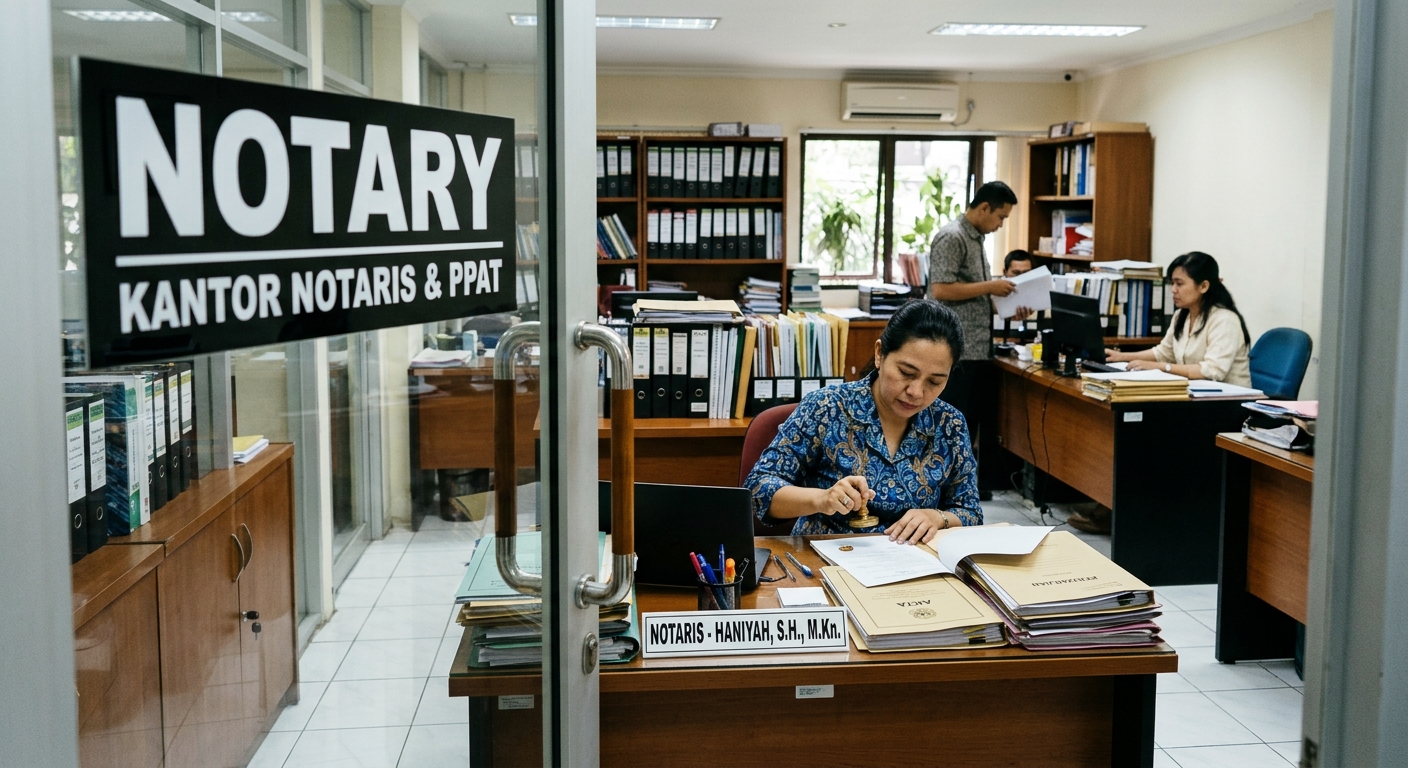
Most foreign investors think Indonesian Notary Services is only about filing documents at the very end of the legal process.
In reality, some of the most expensive mistakes made by PT PMAs happen right at the notary’s desk.
The trouble is that many investors also assume that once a deed has been signed and notarized, everything must be legally sound.
Not necessarily.
A notary can authenticate a document. That doesn’t mean the business structure behind it is compliant, suitable for your licence, or even capable of supporting the visa, property, or investment strategy you had in mind.
And when something is wrong, the problem often doesn’t appear immediately. It surfaces months later during a licence application, a KITAS renewal, a tax review, or a due diligence process before a sale.
By then, fixing it is usually more expensive than getting it right in the first place.
So What Does a Notary Services Actually Do?
In Indonesia, a notary is a public official authorised to prepare and authenticate certain legal documents.
For foreign investors, that generally means dealing with:
▪️ PT PMA and company establishment deeds
▪️ Shareholder resolutions and amendments
▪️ Property and registered-lease agreements
▪️ Powers of attorney
▪️ Corporate restructuring documents
The notary’s role is important because these documents become the legal record of how the company is structured. But here’s the part many investors misunderstand.
What a Notary Does NOT Do
A notary does not approve your business model.
A notary does not decide whether your villa is in the correct zoning area.
A notary does not confirm that your tax structure works.
A notary does not guarantee your licence application will be successful.
And a notary certainly cannot promise that Immigration will issue your KITAS.
Yet we often hear a familiar sentence: “The notary already approved it.”
That statement can create a false sense of comfort.
An authenticated document and a regulator-approved business structure are not the same thing.
A deed can be perfectly notarized and still contain a structure that will raise questions later.
Where Investors Usually Get Into Trouble
One of the most common examples involves share capital.
Many foreign investors have heard about the IDR 2.5 billion paid-up capital requirement for a PT PMA following Ministry of Investment/BKPM Regulation No. 5 of 2025.
But confusion starts when people mix up:
authorised capital
issued capital
paid-up capital
These are not interchangeable.
Imagine a deed shows IDR 10 billion worth of issued shares, but only IDR 2.5 billion was ever deposited into the company account.
The company can still be formed. The deed can still be signed.
But sooner or later, that mismatch is likely to trigger questions during an audit, licence review, corporate restructuring, or investor due diligence exercise.
A good notary will spot these issues before the deed is completed, not after the documents have already been filed.
The Cheapest Due Diligence You’ll Ever Pay For
Ironically, investors often spend more time reviewing villa finishes than reviewing the legal structure of the company buying the villa.
That’s backward.
The right notary won’t just prepare documents.
They’ll ask questions.
They’ll identify inconsistencies.
They’ll tell you when the paperwork doesn’t match reality.
And sometimes, they may save you from a mistake that could cost far more than their professional fee.
Before Signing Anything
Before engaging a notary, ask yourself:
✓ Have they handled PT PMA structures before?
✓ Do they clearly explain what they are responsible for — and what they are not?
✓ Does the capital stated in the deed reflect real capital that’s actually been deposited?
✓ Have all shareholder details been checked and verified?
✓ Are they coordinating with your legal, tax, and immigration advisers?
If the answer to any of those questions is unclear, stop and ask more questions.
Because once a deed is signed, fixing the structure is usually harder than building it correctly from the start.
Indonesian Notary Services are not a rubber stamp. They are where an investment structure becomes legally documented and where avoidable defects can be caught early. For foreign investors, treating the notary as a due diligence partner rather than a formality is one of the cheapest risk controls available.
This article is general information, not legal or tax advice for a specific transaction. For notary assistance, contact Seven Stones Indonesia’s legal team via WhatsApp, or read our guide to notary services for your business.