
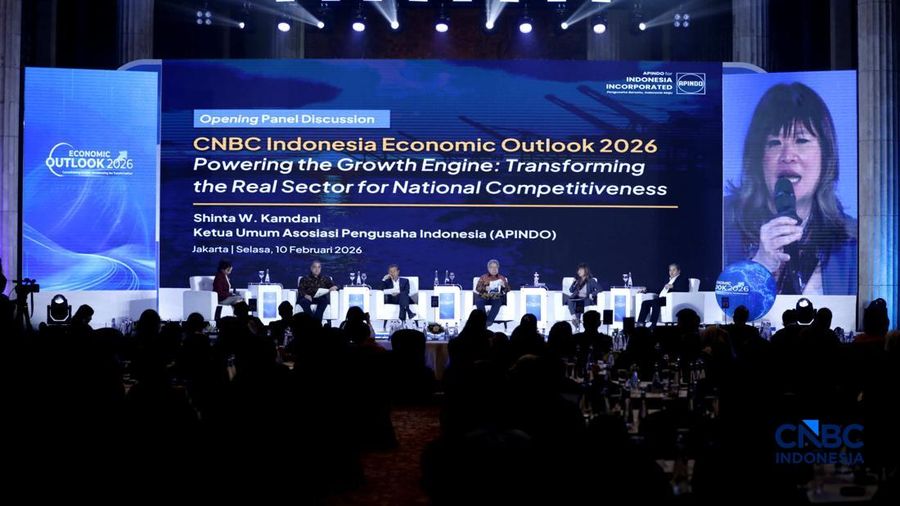
Indonesia’s business climate remains under pressure as Apindo warns that foreign investment barriers continue to limit competitiveness and job creation.
Speaking at several high-level economic forums, the Indonesian Employers Association highlighted structural weaknesses that go beyond short-term economic cycles. These issues include high business costs, slow licensing processes, and deep labor market challenges.
Although unemployment stands at around 7.5 million people, Apindo stressed that the bigger concern lies in the quality and stability of employment. Without structural reform, these barriers risk weakening investor confidence and slowing Indonesia’s long-term growth prospects.
Foreign Investment Barriers Remain a Structural Issue
Foreign investment barriers in Indonesia, according to Apindo, stem largely from administrative inefficiencies rather than market demand. The association pointed to lengthy licensing timelines that place Indonesia far behind regional peers.
Establishing a foreign-owned company in Indonesia can take up to 65 days, while some neighboring countries complete the process in just one day. As a result, investors often delay or redirect capital to more efficient markets.
Apindo Chairwoman Shinta Widjaja Kamdani stressed that these delays remain a critical obstacle. She stated, “Establishing a foreign company in Indonesia takes 65 days, while in other countries it only takes around one day. This remains a major obstacle to attracting foreign investment.”
High Business Costs Weigh on Investor Confidence
High business costs further weaken Indonesia’s appeal as an investment destination. Apindo identified logistics, energy, and financing as the most pressing cost components. Indonesia’s logistics costs reach 14.29% of gross domestic product, which exceeds Singapore’s 8% and remains higher than Malaysia, the Philippines, and India.
In addition, borrowing costs add pressure on companies. Loan interest rates in Indonesia range from 8% to 14%, well above the ASEAN-5 average of 4% to 6%.
Shinta emphasized that cost efficiency must improve for Indonesia to compete regionally. She said, “There are several priorities, starting with how to reduce high costs. In principle, Indonesia must be able to compete with other countries.”
Indonesia Licensing Delays and Regulatory Complexity
Indonesia’s licensing delays also create uncertainty that investors find difficult to manage. Beyond company registration, property ownership transfers can take up to 90 days, while final court rulings may require as long as 150 days.
Moreover, regulatory intervention remains high. Apindo noted that 44% of companies report having their product prices regulated, compared with only 2% in benchmark economies.
Internal Apindo surveys further revealed that businesses struggle with excessive documentation requirements, slow recommendations from government agencies, and frequent technical issues in the OSS system. Consequently, licensing processes often stretch over months or even years, particularly for environmental approvals.
Labor and Industrial Constraints Add Pressure
Labor market conditions and industrial trends add another layer of pressure. Apindo highlighted that deindustrialization has reduced manufacturing’s contribution to GDP from around 23–24% to approximately 19%.
This decline limits the creation of formal jobs. Shinta explained that manufacturing once served as the backbone of decent employment, yet informal work now dominates the sector. She said, “In the past, manufacturing was the backbone of decent jobs because it created formal employment. But today, 64% of manufacturing jobs are informal.”
At the same time, workforce quality remains a concern. About 36.5% of Indonesian workers have only completed elementary school, while industries increasingly demand higher skills.
Apindo Urges Structural Reforms to Restore Competitiveness
Apindo views structural reform as a prerequisite for restoring competitiveness and attracting sustainable investment. The association called for simpler regulations, lower business costs, and faster licensing processes. It also urged stronger upstream industries to reduce reliance on imported raw materials, which currently account for 70% of inputs.
Shinta warned that millions of Indonesians depend on unstable livelihoods. She stated, “If we include their families, around 180 million Indonesians depend on unstable livelihoods. This is our main issue.” Without decisive reform, Apindo believes Indonesia risks falling further behind its regional peers.
Source: cnbcindonesia.com, investortrust.id
Image: Tri Susilo / CNBC Indonesia