
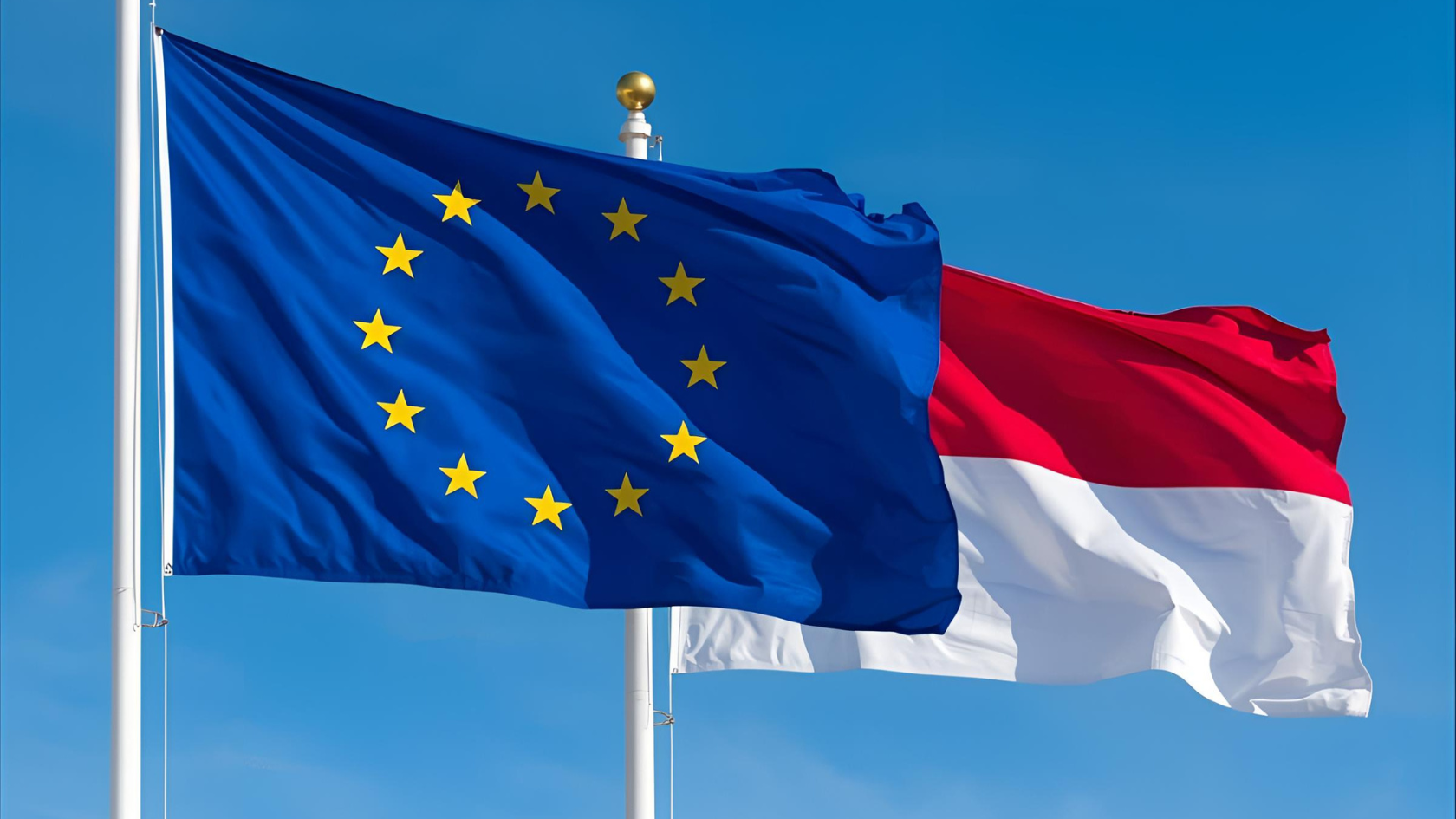
European investment in Indonesia continues to grow as both sides strengthen cooperation under the Indonesia–European Union Comprehensive Economic Partnership Agreement (IEU-CEPA). The Ministry of Investment (BKPM) confirmed that several European countries have begun exploring new partnerships after the agreement was finalized. The deal marks a milestone that opens broader opportunities for trade and investment, particularly in sectors aligned with Indonesia’s sustainability and downstreaming goals.
European Investment in Indonesia Expands Post IEU-CEPA
Following the IEU-CEPA signing, several European countries—both EU members and non-members like Switzerland—have started exploratory talks with Indonesia. BKPM Deputy for Investment Promotion, Nurul Ichwan, said, “Some agreements under IEU-CEPA apply communally to all EU members, but others require bilateral deals between Indonesia and each country.” He added, “There are already countries approaching us, including those outside the EU such as Switzerland, which is exploring opportunities to boost its investments in Indonesia.”
Nurul explained that while some investment frameworks are negotiated through the European Union, others involve direct government-to-government discussions. Switzerland, which already has a separate agreement with Indonesia, has indicated plans to leverage that framework to expand its investments further.
Growth Opportunities in Food, Energy, and Manufacturing
Although specific sectors have not been disclosed, BKPM expects strong European interest in food and beverage, renewable energy, and advanced manufacturing. These industries align closely with Indonesia’s commitment to sustainability and industrial downstreaming. Investments in these areas could generate new jobs and accelerate technology transfer, supporting the nation’s goal of becoming a regional hub for green and value-added industries.
Officials from the Ministry of Trade also noted that such cooperation supports Indonesia’s energy transition and strengthens economic resilience through diversified industrial growth.
IEU-CEPA Investment Growth Expected to Reach 20 Percent
Investment Minister Rosan Roeslani aims to achieve a 20 percent annual increase in European investment in Indonesia following the IEU-CEPA implementation. “Between 2020 and 2025, European investment grew by an average of 15 percent per year, totaling around US$14.5 billion,” he said. “With IEU-CEPA finalized, we expect that growth to reach 20 percent annually.”
Rosan emphasized that the agreement enhances investor confidence by offering legal certainty and stronger protections. The government’s ongoing reforms and focus on sustainability further position Indonesia as a reliable and attractive investment destination for European businesses.
IEU-CEPA to Eliminate Barriers and Expand Market Access
The Ministry of Trade highlighted that IEU-CEPA will remove up to 98 percent of EU tariffs and eliminate many non-tariff barriers. Djatmiko Bris Witjaksono, Director General of International Trade Negotiations, said, “This agreement opens the door for investment, removes nearly all trade barriers, and ensures certainty for Indonesia’s labor-intensive sectors.” He added that the partnership will benefit key export industries such as textiles, agriculture, footwear, and industrial goods.
The deal also creates new opportunities for Indonesian professionals—including architects, engineers, IT specialists, and nurses—to work in Europe, strengthening people-to-people and professional exchange between both regions.
Stronger Indonesia–EU Relations Ahead
The implementation of IEU-CEPA marks a new era in Indonesia–EU relations. The ongoing investment discussions demonstrate shared optimism and commitment to long-term cooperation. As follow-up negotiations progress, concrete investment deals are expected to materialize, further strengthening Indonesia’s global competitiveness and sustainability goals. This partnership paves the way for inclusive, innovative, and environmentally responsible economic growth in both regions.
Source: antaranews.com, tempo.co
Image: Canva Images