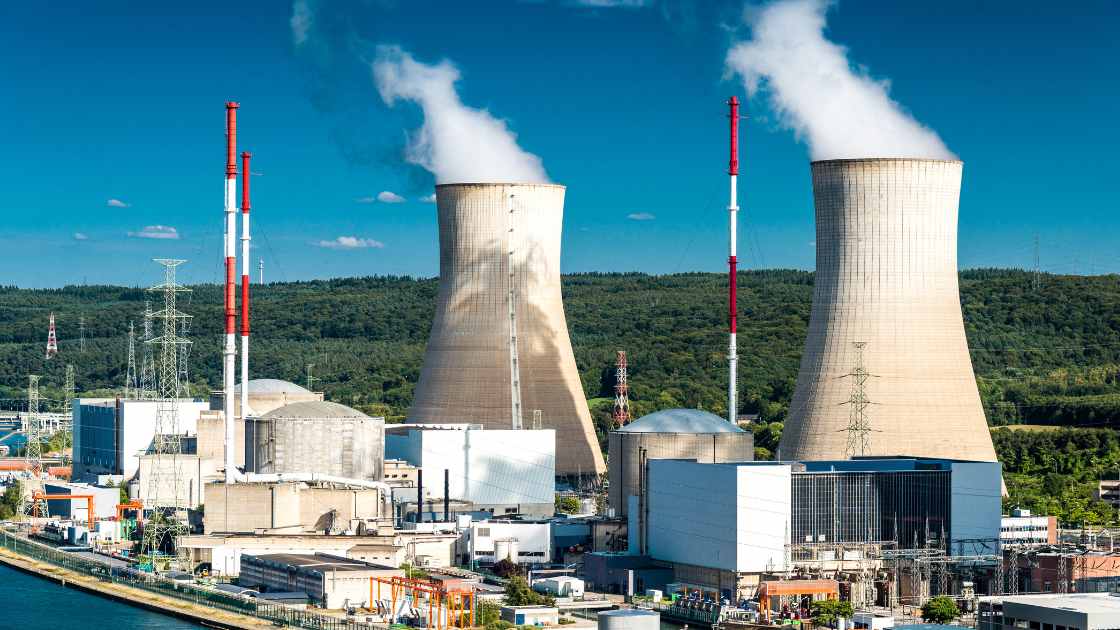
Indonesia’s first nuclear power plant is set to become a reality, with the government naming Sumatra and Kalimantan as initial development sites. Backed by Pertamina New & Renewable Energy (NRE), the project forms part of the national electricity roadmap outlined in the Electricity Supply Business Plan (RUPTL) for 2025 to 2035. The plant will support the country’s energy diversification goals and strengthen its commitment to a clean energy transition.
PLTN Development Included in RUPTL 2025–2035
The Indonesian government has included the nuclear power project in the RUPTL 2025–2035, marking a strategic shift in the nation’s energy mix. Authorities plan to build two nuclear reactors, each with a capacity of 250 megawatts (MW), bringing the total to 500 MW. These will operate under the electricity systems in Sumatra and Kalimantan.
Jisman P. Hutajulu, Director General of Electricity at the Ministry of Energy and Mineral Resources (ESDM), shared insights into the planned locations.
“Then for nuclear we have 250 MW, in two units. In the RUPTL, we have established them in the system, not pinpointed exactly. So they’re in the Sumatra system and the Kalimantan system. They could be around North Sumatra, near the Riau Islands, or around Bangka Belitung and West Kalimantan,” he said, as reported by Detik.com.
Commercial operations are targeted for 2032 or 2033. The government is also preparing to establish a Nuclear Energy Program Implementation Organization (NEPIO) to oversee development.
Pertamina NRE’s Role in Indonesia Nuclear Power Plant Project
Pertamina NRE has expressed strong interest in joining the nuclear initiative. The company views the project as an opportunity to support national goals while expanding its renewable energy portfolio.
“Yes, we are interested, because we always want to contribute. Whatever the government expects in the RUPTL, especially since we are part of the new and renewable energy sector,” said John Anis, President Director of Pertamina NRE, as cited by Bisnis.com.
He noted that Pertamina NRE remains open to working on both upstream and downstream segments of the nuclear value chain.
“Of course, the government will decide whether [Pertamina NRE] will collaborate with PLN or others, and that’s not an issue,” he added.
Technology, Fuel Source, and International Benchmarking
Pertamina NRE is currently conducting feasibility studies on multiple fronts. The company is evaluating nuclear technology options, including small modular reactors (SMRs), and assessing viable development sites.
John emphasized the importance of global benchmarking. “As the government finalizes regulations, we are exploring various technologies and potential partners,” he explained. Countries under review for collaboration and technology models include Russia, China, Canada, Switzerland, and the United States.
Meanwhile, the ESDM Ministry is working on regulations for processing uranium and thorium, the two main radioactive elements proposed for nuclear fuel. Significant uranium deposits have been discovered in Melawi Regency, West Kalimantan, estimated at 24,112 tons according to the regional geological atlas.
Clean Energy Transition and Regulatory Framework
The nuclear power plant supports Indonesia’s broader clean energy agenda. It complements ongoing efforts to develop solar, wind, and geothermal projects across the archipelago. Floating solar plants like the one in Cirata and potential wind sites along Java’s northern coast are already in progress.
Deputy Minister of ESDM Yuliot Tanjung stated,“We are preparing the Government Regulation so that purification and processing of radioactive materials [uranium/thorium] can be implemented for energy.”
Yuliot also stressed the importance of safety and oversight. The government is involving the National Research and Innovation Agency (BRIN) and the Nuclear Energy Regulatory Agency (BAPETEN) in the regulatory process. Strict licensing procedures will apply to radioactive material exploration.
Read More: BRICS Countries Invited to Invest in Renewable Energy
Outlook for Indonesia Nuclear Power Plant Development
Looking ahead, the Indonesia nuclear power plant project reflects a significant milestone in the country’s clean energy transformation. The government aims to finalize regulations, conduct thorough feasibility studies, and confirm key partnerships within the next few years.
Yuliot noted that the plant is expected to adopt small modular reactor (SMR) technology.
“We are still studying the use of SMR technology,” he said, adding that both Russia and China have proven experience in this field.
With regulatory support, international collaboration, and backing from major players like Pertamina NRE, Indonesia is poised to launch its nuclear era by the early 2030s.
Source: finance.detik.com, hijau.bisnis.com
Image: jotily / Getty Images