
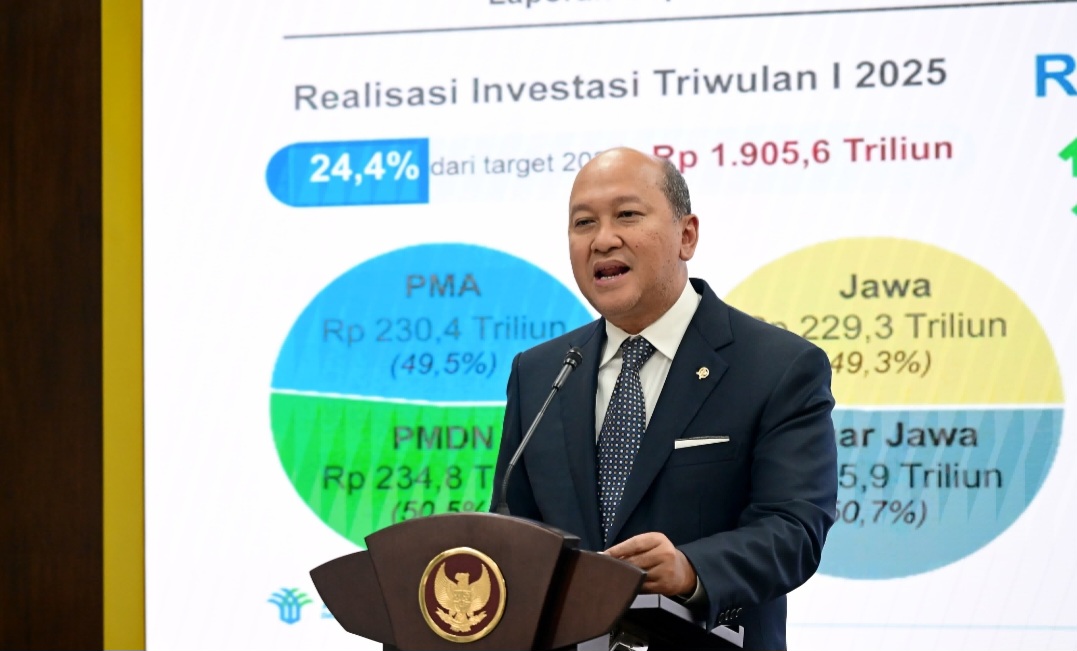
Mining investment in Indonesia continues to be a key driver of the country’s economic growth. According to Minister of Investment and Head of the Investment Coordinating Board (BKPM) Rosan P. Roeslani, the downstream mining sector has significantly contributed to national investment figures. In the first quarter of 2025, Indonesia recorded total investments of IDR 465.2 trillion (approximately USD 29.3 billion), marking a 15.9% increase compared to the same period last year.
Strong Contribution from Downstream Mining Sector
Rosan highlighted that downstream activities from the mining industry, including smelting and metal processing, have accounted for 22% to 23% of Indonesia’s total investment over the past three years.
“We can see that the contribution from the mining industry is truly extraordinary and significant, including its derivative products and downstream activities,” Rosan stated as reported by CNBC Indonesia. He emphasized that this achievement underlines the critical role of mining investment in Indonesia’s broader economic development.
According to the INDEF Policy Brief No. 07/2023, investments in mining, particularly in nickel, significantly drive GDP growth, regional development, and job creation.
Sectoral Breakdown of Mining Investment in Indonesia
Breaking down the sectors, investments were largely directed towards the basic metal industry, metal goods excluding machinery and equipment, and smelting operations, which together accounted for 14.5% of total investment. Other significant sectors included transportation, warehousing, and electronics at 14.3%, mining at 10.4%, other services at 8.8%, and industrial and office estates at 8.1%.
“Investments have been heavily channeled into sectors like basic metals, smelters, and metal goods,” Rosan explained. These figures reflect the growing focus on value-added industries aligned with Indonesia’s downstreaming policy.
Economic Resilience Amid Global Challenges
Despite rising geopolitical and geoeconomic tensions, mining investment in Indonesia has remained resilient. Rosan noted that the country’s positive investment performance amidst global uncertainties demonstrates the strength and attractiveness of Indonesia’s economic fundamentals. “Even amid rising global tensions, Indonesia continues to show strong investment growth,” he said.
The INDEF policy brief also emphasized that mining and its downstream activities can stabilize the economy, particularly during challenging global conditions.
Outlook for Mining Investment in Indonesia
The success of downstream mining initiatives reflects Indonesia’s strategic push to enhance value-added production domestically. The increase in investments not only boosts the national GDP but also stimulates regional economies, particularly in provinces like Southeast Sulawesi, South Sulawesi, North Maluku, and Central Sulawesi. These areas have seen significant growth in GDP and employment due to rising nickel mining and processing activities.
As Indonesia moves further into 2025, the outlook for mining investment remains positive. “We reported to President Prabowo Subianto that investment figures in Q1-2025 have reached remarkable levels, demonstrating our economic strength,” Rosan added. With ongoing support for downstream projects and a focus on sustainable practices aligned with ESG (Environmental, Social, and Governance) standards, mining investment in Indonesia is poised to continue playing a vital role in the nation’s economic future.
Source: cnbcindonesia.com, INDEF Policy Brief No. 07/2023 (Impact of Mining Sector Investment on National and Regional Economic Performance)
Image: (SinPo.id/Setpres)