
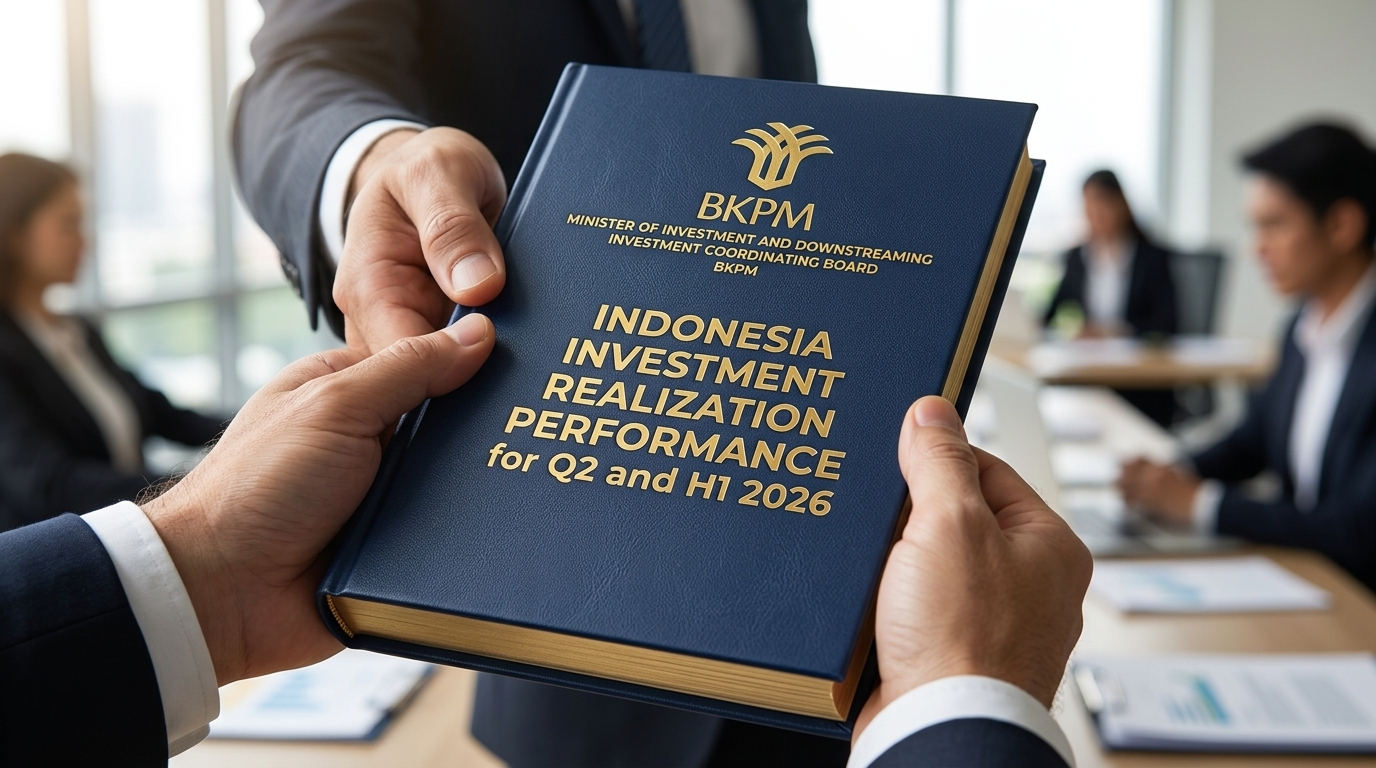
Indonesia’s Ministry of Investment and Downstream Industry, also known as the Investment Coordinating Board/BKPM, has released its investment realization figures for the first half of 2026.
Indonesia attracted IDR 1,010.6 trillion in realized investment during the first half of 2026, which represents 49.5% of the country’s full-year investment target.
Foreign direct investment contributed IDR 507.64 trillion, or 50.2% of the total, while domestic investors accounted for IDR 502.93 trillion, or 49.8%. The investment activity supported around 1.45 million jobs, a 15.0% increase compared with the same period last year.
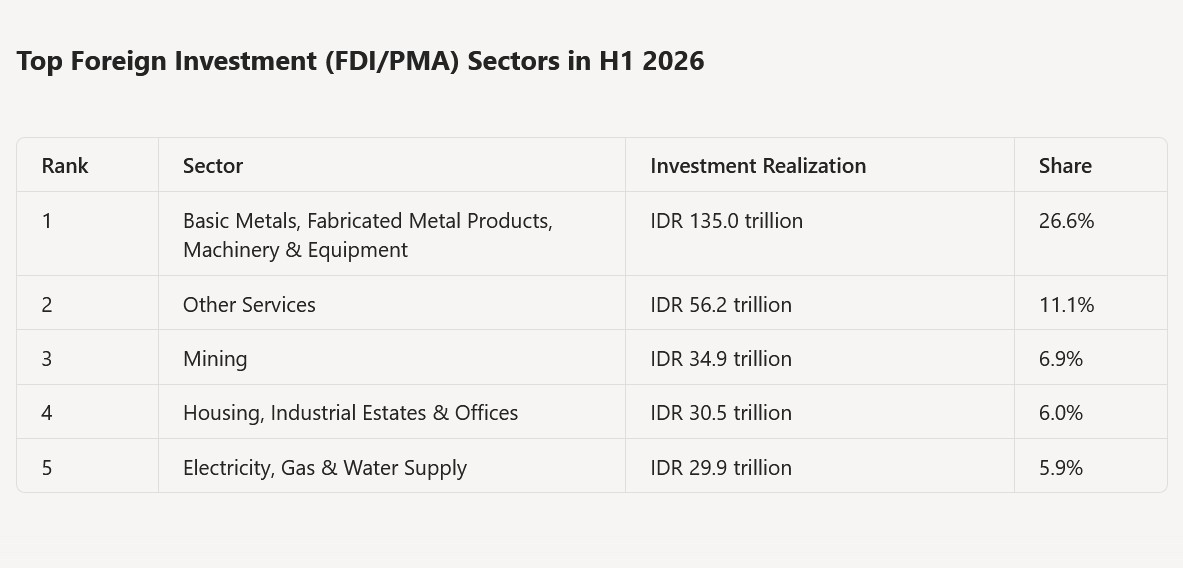
Foreign capital was concentrated in Indonesia’s manufacturing and resource-related industries. The basic metals, fabricated metal products, machinery, and equipment industry received the largest share of FDI, at IDR 135.0 trillion, or 26.6% of total foreign investment.
Other services followed with IDR 56.2 trillion, representing 11.1% of FDI. This category includes activities such as data centers and other service-based investments.
Indonesia’s natural-resource base continued to draw foreign capital into mining, which recorded IDR 34.9 trillion, or 6.9% of total FDI.
Property also remained a major destination for foreign investors. Housing, industrial estates, and office developments attracted IDR 30.5 trillion, equivalent to 6.0% of total foreign investment.
Electricity, gas, and water utilities rounded out the leading FDI sectors with IDR 29.9 trillion, or 5.9% of foreign investment, as infrastructure development continued to expand.
Domestic Investors Focused on Connectivity
Domestic investment followed a different pattern. Rather than being concentrated in heavy industry and metal processing, local capital was directed toward sectors that support logistics, connectivity, and Indonesia’s domestic supply chains.
Transportation, warehousing, and telecommunications led domestic investment realization, attracting IDR 74.5 trillion, or 14.8% of the national total. This reflects the continued expansion of logistics infrastructure and digital networks by Indonesian businesses.
Domestic investors also remained active in mining, which recorded IDR 70.1 trillion, or 13.9% of total domestic investment. Other services came next with IDR 57.7 trillion, or 11.5% of domestic investment.
Property-related activities continued to appeal to local investors as well. Housing, industrial estates, and office developments attracted IDR 55.3 trillion, or 11.0% of total domestic investment.
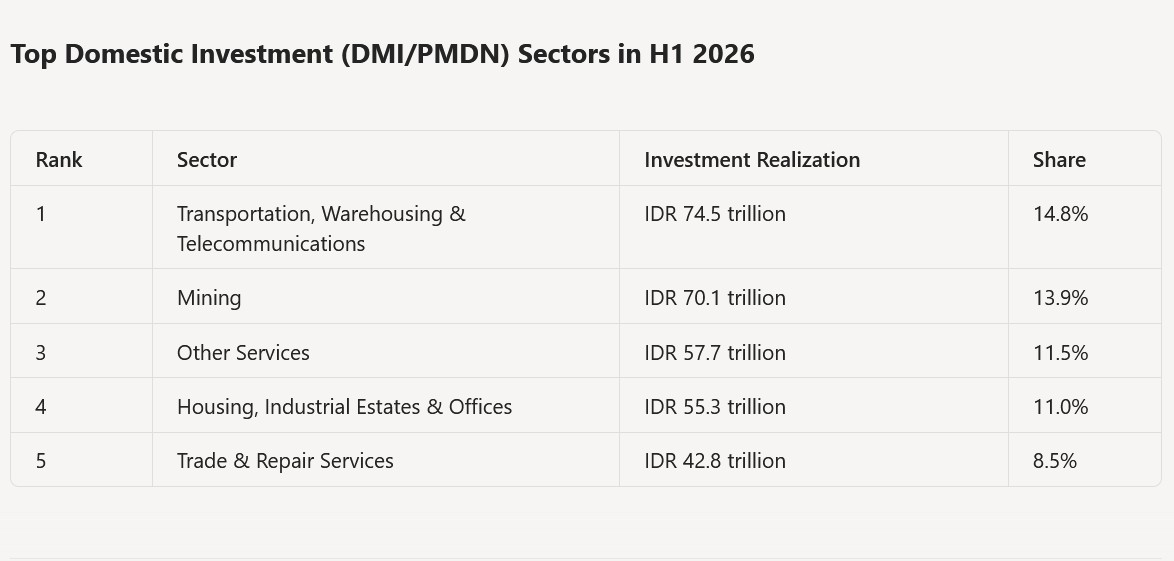
Trade and repair completed the top five, receiving IDR 42.8 trillion, or 8.5% of domestic investment realization.
The difference between the leading FDI and domestic investment sectors shows how varied Indonesia’s investment landscape has become. Foreign capital is leaning toward manufacturing and resource-based industries, while domestic investors are strengthening logistics, digital connectivity, and local supply chains.
Looking ahead, ensuring that investment translates into productive capacity and reaches a broader range of sectors will be important for supporting industrial development and creating more employment opportunities across Indonesia.