
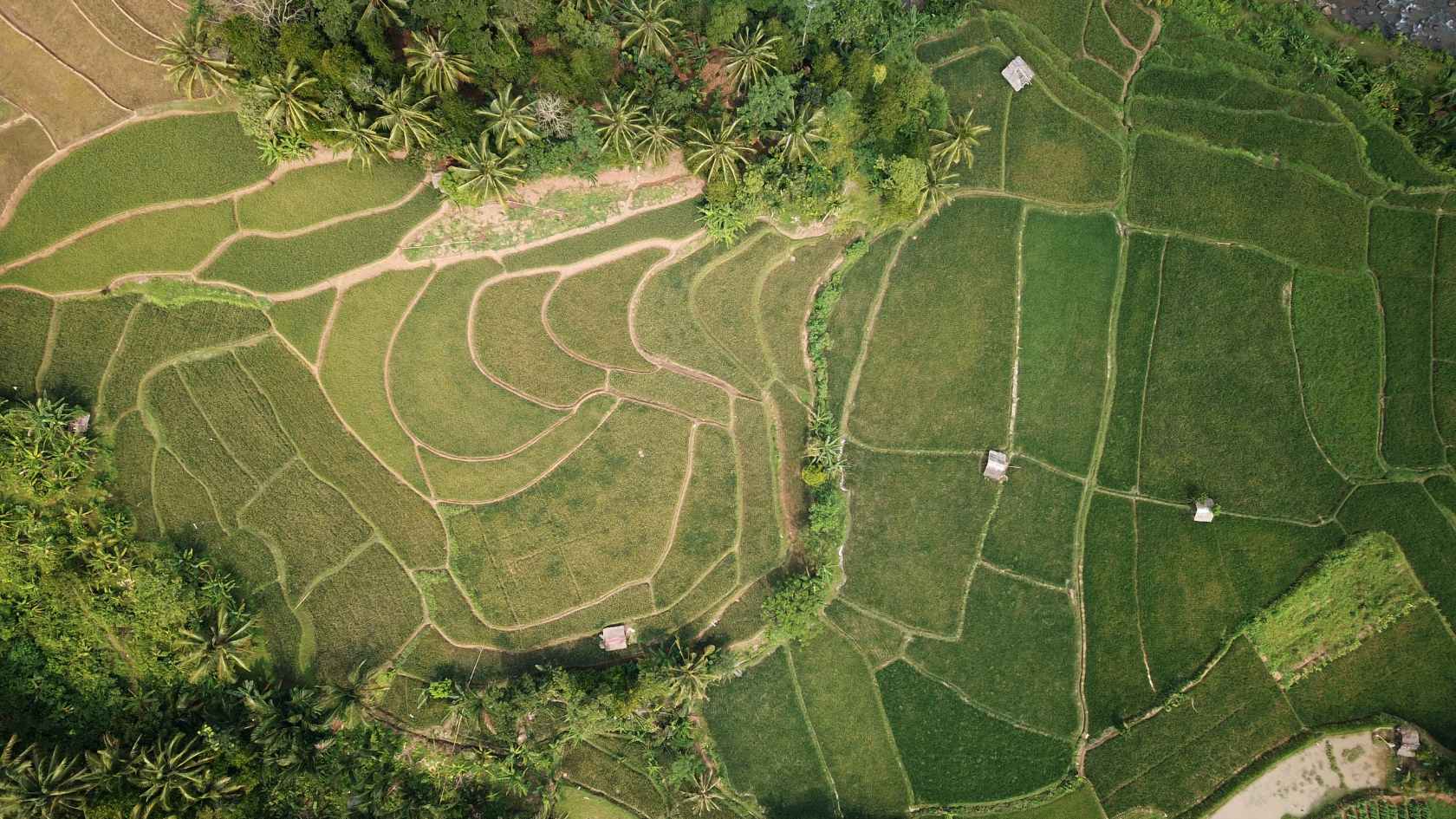
The government introduced a set of farmland protection policies to ensure land-use decisions follow national development goals and support future food stability. These policies include a temporary pause on rice field conversion to give authorities time to strengthen spatial planning and prevent the loss of productive farmland. The land conversion moratorium plays a key role in this effort by helping the government manage land systematically while improving data accuracy.
Land Conversion Moratorium Covers Most Regions
The government applied the land conversion moratorium to manage farmland protection more effectively. It exempted 100 regencies and cities because they either met the 87 percent protection target or did not have protected rice fields at all. Some examples include Sabang City in Aceh, Siak Regency in Riau, and Padang Pariaman Regency in West Sumatra. Jambi City, Mesuji Regency in Lampung, and Natuna Regency in the Riau Islands also qualified.
Minister of Agrarian Affairs and Spatial Planning/National Land Agency (ATR/BPN), Nusron Wahid, stressed the need for caution when local leaders issue land conversion permits. He explained that only non-LP2B land is eligible for conversion. He stated, “Sawah LP2B cannot be converted under any circumstances.” He also warned that many rice fields disappear because of inaccurate recommendations. The exemptions help areas with sufficient protection continue development while other regions reorganize their spatial plans.
Food Security Strategy Drives Policy Decisions
The moratorium supports a broader food security strategy designed to balance agricultural needs with national development. The government aims to protect 87 percent of total rice field area as LP2B in its medium-term plan.
Nusron highlighted the importance of allocating land responsibly for energy, industry, housing, and food production. He stated, “Our task at ATR/BPN is to ensure proper space allocation — where food self-sufficiency happens, where energy is developed, where development takes place, and where the Three Million Houses program is implemented — so everything can run harmoniously without obstructing each other.”
He emphasized that land management must not allow one national priority to overshadow another. According to him, the country must preserve rice fields to remain resilient, especially as many nations protect their food supplies more aggressively. He added, “All of this is for Indonesia. We must balance food security, industrial resilience, energy, and housing. None should overpower the others; everything must progress together.”
Data Alignment Efforts Shape Future Investment
Ensuring accurate land-use data plays a crucial role in the moratorium. Nusron explained that inconsistencies exist across datasets, including protected rice fields, sustainable agricultural zones, and food reserve areas. He acknowledged that these mismatches often generate unnecessary permits and create confusion for investors and regional governments.
To solve this, the government began a data cleansing process that will continue until February 2026. The project will produce one unified map used by both national and regional authorities. Nusron said, “During this moratorium stage, we are organizing everything. Out of the 100 regencies and cities, 64 already have clean data. The remaining 36 do not have rice fields at all, and we understand that. Replacement locations will be identified.”
Regions that fall short of the 87 percent LP2B target must take corrective action. Industrial areas can purchase replacement land and convert it into rice fields, or local governments can provide alternative land as compensation. Nusron clarified, “The most important thing is that rice fields and food production remain available, regardless of ownership schemes or location.”
Policy Reinforces Long-Term Farmland Security
The moratorium strengthens long-term farmland security by giving the government time to align data, regulate spatial planning, and protect critical food resources. Nusron reiterated that the policy does not restrict investment but ensures land decisions remain fair, transparent, and sustainable. He concluded, “What we are doing is transparent. We are hiding nothing.” With unified data and clearer boundaries, Indonesia will move toward stronger food resilience while supporting balanced national development.
Source: antaranews.com
Image: Tom Fisk / Pexels