
Indonesia’s creative sector has recorded a 134 percent jump in investment, surpassing its 2025 target as the sector outperforms its 2025 target and strengthening its position in national economic growth.
The government set an investment target of IDR 136 trillion (approximately US$8.8 billion) for 2025, yet realization has already reached 134 percent of that figure.
This strong performance highlights rising investor confidence and reinforces the creative economy’s expanding role in exports, employment, and GDP contribution. As momentum builds, the sector continues to attract both domestic and foreign capital.
Indonesia’s Creative Economy Investment Exceeds 2025 Target
Building on earlier projections, the ministry confirmed that investment performance had significantly surpassed its annual benchmark by December, based on data from the Ministry of Investment. This achievement shows that the sector not only met expectations but significantly surpassed them.
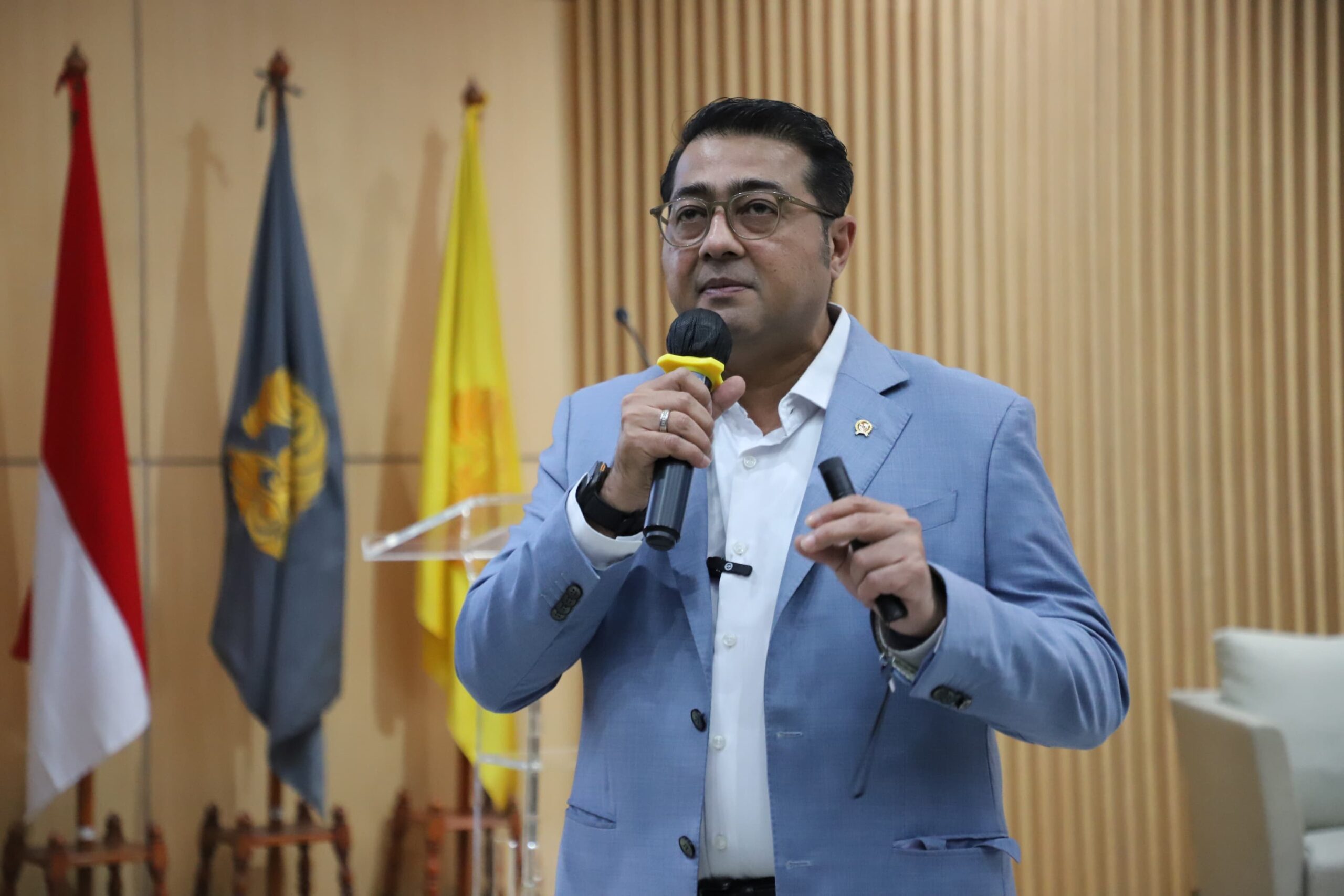
Minister Teuku Riefky Harsya emphasized the ministry’s performance indicators during a recent event in Central Jakarta. He stated, “Our target or KPI, the ministry’s report card, consists of four indicators. First is investment, where we were given a target of IDR 136 trillion for 2025. As of December, data from the Ministry of Investment shows it has reached 134 percent of the target. So, the investment coming in accounts for nearly 10 percent of the total national investment realization.”
This figure demonstrates that the creative sector now contributes nearly one-tenth of total national investment. Such a share confirms its growing strategic importance within Indonesia’s broader economic landscape.
Indonesia Creative Economy Investment Attracts Foreign Capital
Strong investment realization also signals increasing foreign interest in the creative sector. As capital flows into the industry, global investors actively explore opportunities in local intellectual property and creative assets.
Riefky underlined this trend, stating, “It means foreign investors are increasingly interested in investing in the creative economy sector. If there are local IPs or local intellectual property to be invested in by foreign companies, they will certainly need appraisal services to assess their business potential.”
This development opens new opportunities for intellectual property valuation services and strengthens the global integration of Indonesia’s creative businesses. As foreign capital expands, local creators gain broader access to international markets and partnerships.
Exports and Employment Surpass Government Targets
Beyond investment, export performance also exceeded expectations. The government set an export target of US$26.4 billion for the creative economy sector. By November, realization had already reached 110 percent of that target.
Riefky explained the credibility of the data, saying, “From the given target of US$26.4 billion, by November it had reached 110 percent. The data comes from BPS based on 266 KBLI codes. So everything calculated is not an assumption by the ministry but already has its corresponding KBLI code.”
The sector’s strong export performance reflects solid global demand across creative industries classified under 266 Indonesian Standard Industrial Classification codes.
Meanwhile, employment absorption also exceeded projections. The government targeted 25.5 million workers in the creative sector. By August, the industry had already absorbed 27.4 million workers. This growth underscores the sector’s role as a major job creator and a driver of inclusive economic expansion.
Creative Economy GDP Growth Outpaces National Average
In addition to investment, exports, and employment, the creative sector also posted stronger GDP growth than the national average. Although official GDP figures will be released at the end of February, earlier calculations show the sector outperforming overall economic growth.
Riefky noted, “Indeed, GDP figures will only be released at the end of February. But if we look at the 2025 data, calculating 2024 GDP, when the national average was 5.03 percent, the creative economy sector was 1.5 percent higher than that.”
This higher growth rate signals resilience and sustained expansion. While many sectors face global uncertainty, the creative economy continues to build momentum.
Strong Momentum for Indonesia’s Creative Sector
Indonesia’s Creative Economy Investment performance confirms the sector’s accelerating growth trajectory. Investment has exceeded targets, exports have surpassed projections, employment has expanded, and GDP growth has outpaced the national average.
Together, these indicators reflect rising investor confidence and increasing global engagement. As the sector strengthens its foundation, it positions itself as a key pillar of Indonesia’s long-term economic development strategy.
Source: tribunnews.com
Image: Sinpo.id / Kemenekraf