
Indonesia Business Classification Expands Under KBLI 2025

Indonesia’s business classification has entered a new phase following the official release of KBLI 2025 by the Central Statistics Agency (BPS). This updated classification responds to rapid economic shifts, especially the rise of digital platforms, creative industries, and sustainability-driven sectors. Rather than serving as a routine administrative update, KBLI 2025 establishes a stronger statistical foundation for mapping Indonesia’s evolving economy. As a result, policymakers, businesses, and researchers now share a more relevant framework to understand how economic activities develop and interact across sectors.


Indonesia Business Classification Expands to Capture New Sectors

Under KBLI 2025, Indonesia introduces a broader and more detailed framework to address today’s evolving economic landscape. Previously, many fast-growing activities lacked precise categorization. Now, KBLI 2025 accommodates sectors such as digital platform intermediation, factoryless goods production, and digital content creation. In addition, it recognizes emerging activities linked to carbon trading, carbon storage, and renewable energy.

This expansion allows BPS to record economic activity more accurately and comprehensively. Moreover, it ensures that new business models no longer sit outside the formal statistical system. As economic activity continues to diversify, KBLI 2025 helps prevent data gaps that could distort national economic analysis.


KBLI 2025 Update Aligns with Global ISIC Standards

The KBLI 2025 update aligns Indonesia’s classification system with the International Standard Industrial Classification of All Economic Activities (ISIC) Revision 5. The United Nations recommends this standard, and many economies, including the European Union and Singapore, already apply it. Consequently, Indonesia strengthens the global comparability of its economic data.

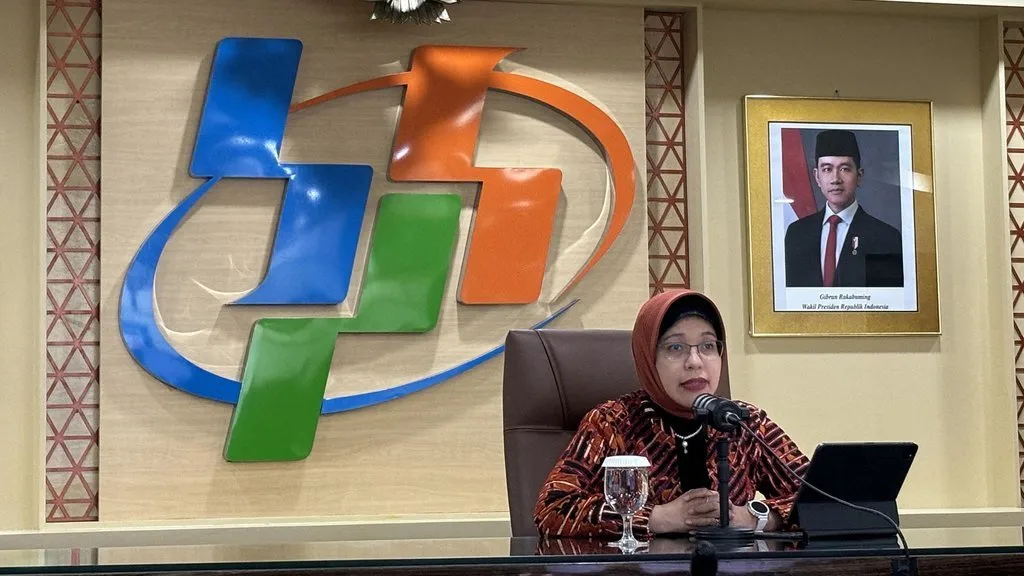
Head of Statistics Indonesia Amalia Adininggar Widyasanti emphasized the importance of this alignment. She stated, “Through this release, we introduce KBLI 2025, which refers to ISIC Revision 5. KBLI 2025 is important to ensure that business classifications in Indonesia remain relevant to economic, technological, and new business model developments, while still maintaining international comparability.” This alignment helps investors and policymakers evaluate Indonesia’s economy using globally recognized benchmarks.


Expanded Categories Reflect Indonesia’s Economic Complexity

Beyond new sectors, KBLI 2025 also introduces structural changes. The classification now includes 22 categories, labeled A to V, compared to 21 categories in KBLI 2020. This adjustment reflects the increasing complexity of Indonesia’s economic structure.

In detail, KBLI 2025 consists of 87 main divisions, 257 divisions, 519 subdivisions, and 1,560 groups. These additions allow finer distinctions between business activities. As a result, economic data can better capture how businesses operate, scale, and connect across industries. This detailed structure also supports more precise licensing, regulation, and statistical reporting.


KBLI 2025 Becomes Core Reference for Economic Census 2026

KBLI 2025 will serve as the primary reference for the Economic Census 2026. BPS confirmed that all stages of the census will apply the updated classification system. Therefore, every recorded business and economic activity will follow KBLI 2025 standards.

To further improve accuracy, BPS plans to use artificial intelligence in the classification process. Amalia explained, “By using AI technology, the classification of economic activities in society based on KBLI 2025 will be recorded more accurately.” This approach supports better data quality, which remains essential for analyzing employment trends, economic potential, and sectoral growth. In addition, KBLI 2025 will underpin updates to the Statistical Business Register and other official economic statistics.


Strengthening Economic Data for Future Policy Direction

KBLI 2025 plays a crucial role in strengthening Indonesia’s economic data infrastructure. With clearer classifications and broader coverage, the government gains a more accurate picture of national economic conditions. This clarity supports targeted development programs and sustainable growth strategies. Ultimately, through the 2026 Economic Census and beyond, KBLI 2025 helps guide evidence-based policymaking while keeping Indonesia aligned with global economic standards.


Source: tempo.co, cnnindonesia.com 

Image: tirto.id / Nabila Ramadhanty Putri Darmadi.

Latest Article
Indonesia Builds Blood Plasma Factory To End Imports
Indonesia is taking a decisive step toward healthcare self-sufficiency by developing its first blood...
Indonesia Creative Economy Investment Hits USD 8.4 Billion
Indonesia’s creative economy investment continued its strong upward trajectory in 2025, as the...
Indonesia Business Classification Expands Under KBLI 2025
Indonesia’s business classification has entered a new phase following the official release of KBLI...
Villa Rental Fraud in Bali: How Tourists Can Avoid Scams
Villa rental fraud in Bali has become a growing concern for tourists, as scam cases continue to rise...
Indonesia WFA Year-End Rules Supported, But Not All Jobs
Indonesia’s WFA year-end rules have gained support from business groups, but employers stress that...

Andrzej Barski

Director of Seven Stones Indonesia

Andrzej is Co-owner/ Founder and Director of Seven Stones Indonesia. He was born in the UK to Polish parents and has been living in Indonesia for more than 33-years. He is a skilled writer, trainer and marketer with a deep understanding of Indonesia and its many cultures after spending many years travelling across the archipelago from North Sumatra to Irian Jaya.

His experience covers Marketing, Branding, Advertising, Publishing, Real Estate and Training for 5-Star Hotels and Resorts in Bali and Jakarta, which has given him a passion for the customer experience. He’s a published author and a regular contributor to local and regional publications. His interests include conservation, eco-conscious initiatives, spirituality and motorcycles. Andrzej speaks English and Indonesian.

Terje H. Nilsen

Director of Seven Stones Indonesia

Terje is from Norway and has been living in Indonesia for over 20-years. He first came to Indonesia as a child and after earning his degree in Business Administration from the University of Agder in Norway, he moved to Indonesia in 1993, where he has worked in leading positions in education and the fitness/ wellness industries all over Indonesia including Jakarta, Banjarmasin, Medan and Bali.

He was Co-owner and CEO of the Paradise Property Group for 10-years and led the company to great success. He is now Co-owner/ Founder and Director of Seven Stones Indonesia offering market entry services for foreign investors, legal advice, sourcing of investments and in particular real estate investments. He has a soft spot for eco-friendly and socially sustainable projects and investments, while his personal business strengths are in property law, tourism trends, macroeconomics, Indonesian government and regulations. His personal interests are in sport, adventure, history and spiritual experiences.

Terje’s leadership, drive and knowledge are recognised across many industries and his unrivalled network of high level contacts in government and business spans the globe. He believes you do good and do well but always in that order. Terje speaks English, Indonesian and Norwegian.

Contact Our Consultants

Ridwan Jasin Zachrie

CFO of Seven Stones Indonesia, Jakarta

Ridwan is one of Indonesia’s top executives with a long and illustrious career in the financial world. He holds several professional certifications including being a Certified Business Valuer (CBV) issued by the Australian Academy of Finance and Management; Broker-Dealer Representative (WPPE); and The Directorship Certification for Directors and Commissioners, issued by the Indonesian Institute of Commissioners and Directors.

His experience includes being the Managing Director at one of the top investment banking groups in the region, the Recapital Group, the CFO at State-owned enterprises in fishery industry and the CEO at Tanri Abeng & Son Holding. He’s also been an Independent Commissioner in several Financial Service companies and on the Audit and Risk Committee at Bank BTPN Tbk, Berau Coal Energy Tbk, Aetra Air Jakarta as well as working for Citibank, Bank Mandiri and HSBC. His last position was as CFO at PT Citra Putra Mandiri – OSO Group.

Ridwan has won a number of prestigious awards including the Best CFO Awards 2019 (Institute of Certified Management Accountant Australia-Indonesia); Asia Pacific Young Business Leader awarded by Asia 21 Network New York USA (Tokyo 2008); UK Alumni Business Awards 2008 awarded by the British Council; and The Most Inspiring Human Resources Practitioners’ version of Human Capital Magazine 2010.

He’s a member of the Board of Trustees of the Alumni Association of the Faculty of Law, Trisakti University, Co-Founder of the Paramadina Public Policy Institute and actively writes books, publications and articles in the mass media. He co-authored “Korupsi Mengorupsi Indonesia” in 2009, which helps those with an interest in understanding governance in Indonesia and the critical issue of corruption. Ridwan speaks Indonesian and English.

Per Fredrik Ecker

Managing Director of Seven Stones Indonesia, Jakarta

Per is the Managing Director of the Seven Stones Indonesia (SSI) Jakarta office and has more than 25-years’ experience in Indonesia, China, and Western Europe. He previously worked in senior management positions with Q-Free ASA, Siemens AG, and other companies in the telecom sector. Over the last six years, he has been the Chairman of the Indonesia-Norway Business Council (INBC) and recently become elected to be on the board of EuroCham Indonesia.

His most recent experience is within Intelligent Transport Solutions (ITS), Telecom, and other sectors within the Indonesian market. He is today through his position in SSI and by representing Norway Connect, promoting Nordic and European companies that would like to explore business opportunities in the Indonesian market. He’s also playing an active role to help create the Nordic House concept in Jakarta that will provide an excellent platform for Nordic companies entering Indonesia, where they’ll find a community that can offer support with trusted information and affordable services to enter this market.