
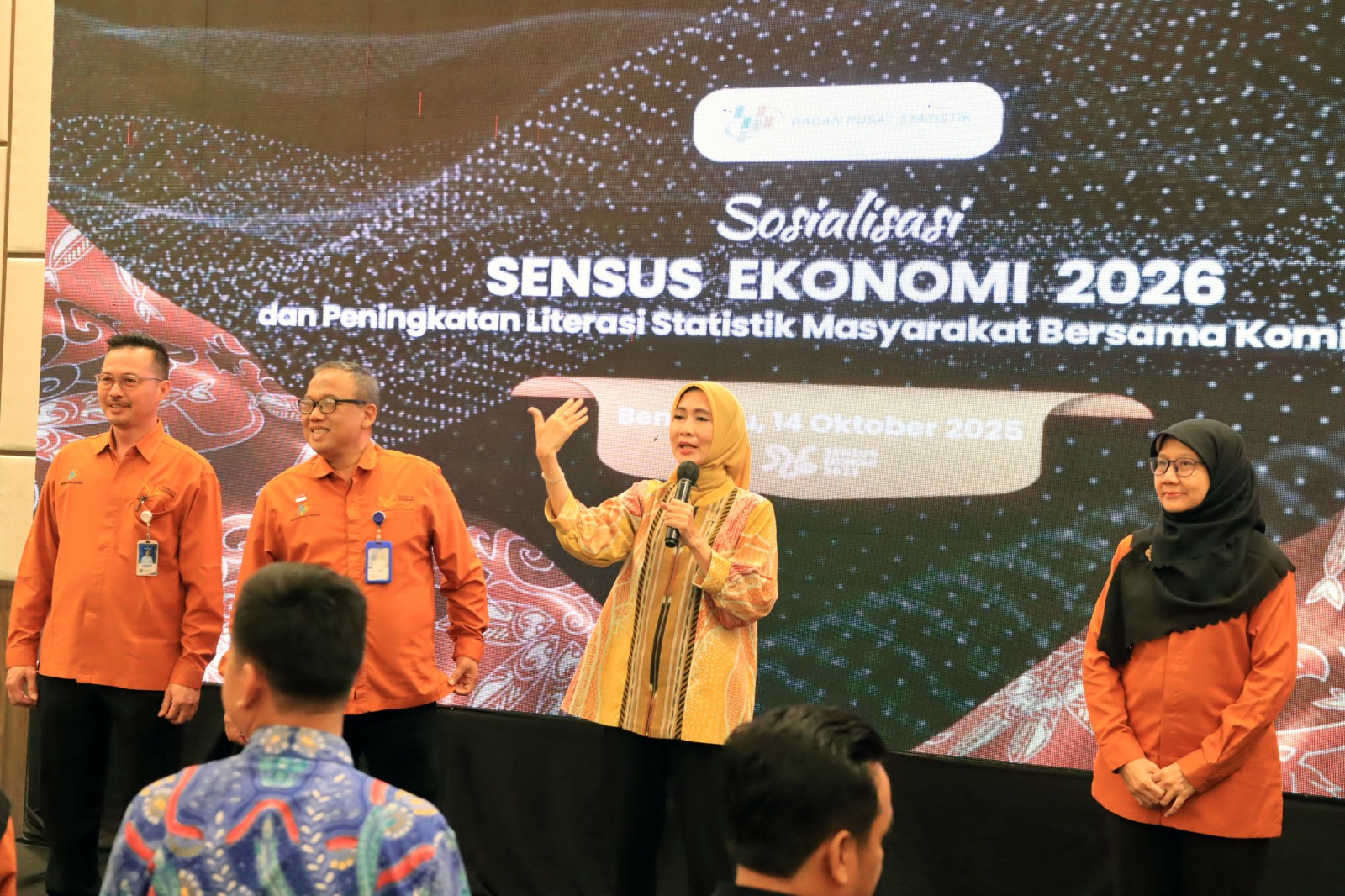
The Economic Census 2026 marks a major step in strengthening Indonesia’s business mapping and improving the accuracy of economic data. The Central Statistics Agency (BPS) continues to intensify preparations as the country moves toward a full nationwide enumeration in May–July 2026. BPS views the census as a critical opportunity to generate updated and reliable economic information that supports better policy and investment decisions.
BPS Strengthens Preparations Ahead of SE2026
BPS has carried out extensive coordination meetings to finalize its strategy for the 2026 census. The agency evaluates technical activities for 2025, including field trials and operational readiness across ministries and regional governments. These steps help ensure smooth implementation in all provinces.
During a recent coordination meeting, BPS Chief Amalia Adininggar Widyasanti highlighted the importance of this national effort. She stated, “Complete and accurate data is the foundation for decision-making. The government and business players need it to formulate policies and strategies that are more targeted.” Her remarks emphasize how SE2026 will guide both public and private sectors.
How the Economic Census 2026 Modernizes Data Collection
BPS designed SE2026 with a modern and fully digital approach. The agency equips census officers with tablets connected to a secure central system. This system includes automated validation features that reduce errors and allow real-time monitoring. As a result, data processing becomes faster and more accurate.
Large businesses can use a self-enumeration option, which lets them complete questionnaires through a secure online link provided by BPS. This approach gives companies more flexibility and reduces the time needed for field visits.
BPS also integrates generative artificial intelligence (gen-AI) into its tools. A gen-AI chatbot on the SE2026 portal helps businesses and the public access information quickly. Additionally, gen-AI supports the identification of Indonesia’s standard business classifications, helping officers categorize business activities with greater precision.
Indonesia Business Mapping Gains New Accuracy
The 2026 census will deliver a detailed map of Indonesia’s business landscape. BPS collects information from all non-agricultural sectors, covering micro, small, medium, and large enterprises. This ensures a complete picture of economic activity.
SE2026 also expands the scope of data collection to reflect today’s economic shifts. The census includes:
- Creative economy sectors
- Digital-based businesses
- Environmental and green economy activities
These additions provide a more accurate view of emerging economic drivers in both urban and rural areas.
National Business Data Supports Better Policy Direction
Updated national business data helps the government strengthen economic planning. SE2026 results support GDP rebasing efforts, improve the national data framework, and guide policy interventions in specific regions or industries.
For businesses, the census delivers strategic insights that support expansion plans and investment decisions. Companies can analyze local business clusters and sector strengths, while investors can identify high-growth areas, such as tourism zones with concentrated hotel development or regions with strong creative industry activity.
Accurate data also helps reduce disparities by showing which communities progress and which require targeted support.
Public Participation Strengthens Census Accuracy
BPS highlights the crucial role of public and business participation. Business owners and households contribute to higher data accuracy when they provide correct and complete information. BPS continues to promote public awareness so communities understand the value of joining the census.
Key areas where the public contributes include:
- Providing accurate information about business activities
- Supporting census officers during field visits
- Sharing census updates within communities
These efforts help BPS achieve strong response rates and high-quality national data.
Economic Census 2026 Builds Indonesia’s Future
The Economic Census 2026 builds a stronger foundation for Indonesia’s economic future. Comprehensive data enables the government, businesses, and communities to understand opportunities and challenges more clearly. With precise information, Indonesia can advance toward more inclusive, competitive, and sustainable economic growth.
Source: beritasatu.com, mediaindonesia.com, ekbis.sindonews.com
Image: Rio / Bengkuluekspress