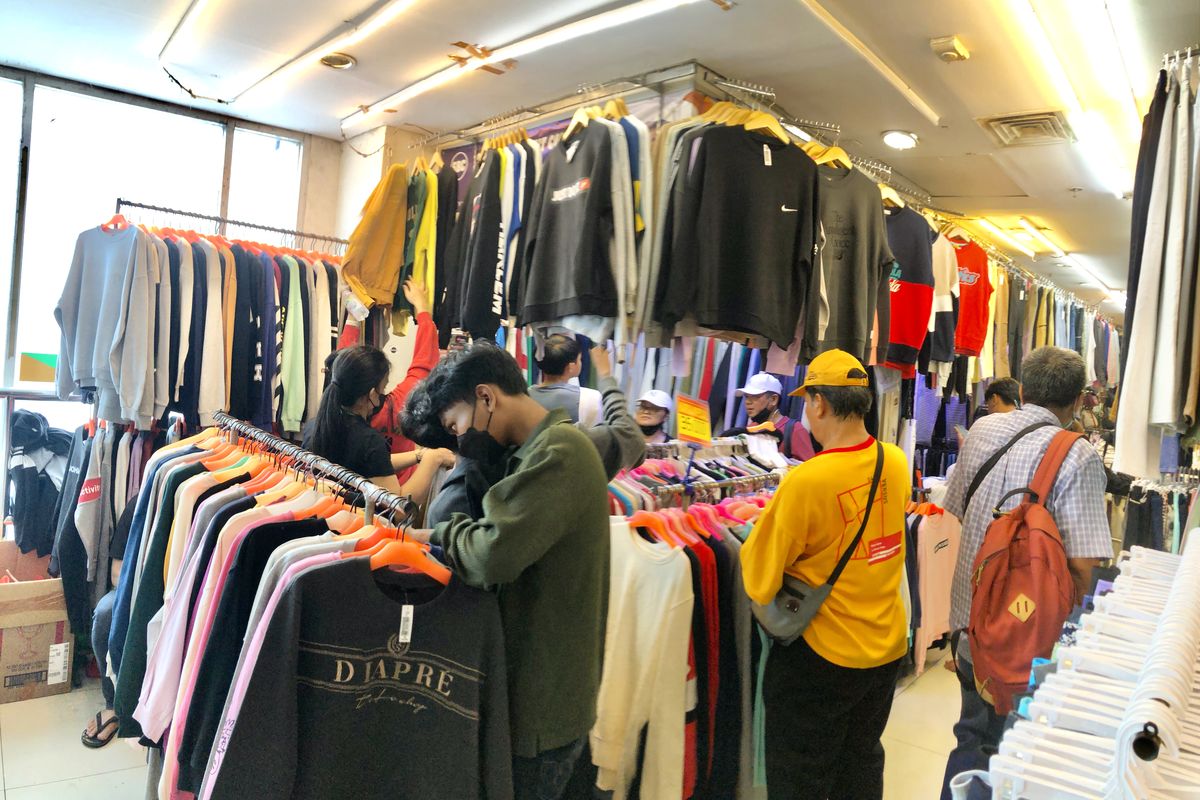
The Thrifting Business in Indonesia faces a turning point as the government intensifies action against illegally imported clothing. Finance Minister Purbaya Yudhi Sadewa warned that anyone involved in importing secondhand clothing illegally will face arrest, stressing the damage these imports cause to domestic textile producers.
While authorities promise tougher enforcement, Purbaya also proposes reshaping local thrift stalls into legal MSMEs that sell domestically made goods. The dual strategy seeks to stop unlawful imports that undercut local manufacturers while offering a legal pathway for small traders to continue operating.
Government Declares War on Illegal Imports
Finance Minister Purbaya Yudhi Sadewa said the government will take decisive action against illegal imports of used clothing bales (balpres). He issued a blunt warning: “Rejection? Whoever rejects, I’ll arrest first. If thrifting actors refuse, I’ll arrest them right away — that means they’re the culprits. Clear,” he said at Menara Bank Mega, Jakarta, on October 27, 2025.
Purbaya argued that past enforcement relied too much on destroying seized goods and imprisoning offenders without imposing fines, which cost the state. “Turns out, so far, the goods are just destroyed and the importers go to jail. I don’t get any money, and they aren’t fined. So I lose — I have to spend money to destroy those goods and feed the people in prison,” he said. The minister vowed stricter penalties, including additional fines and blacklisting.
Thrifting Business Faces Stricter Oversight
The Thrifting Business will face closer oversight under the new enforcement push, but Purbaya clarified that the focus targets illegal importers rather than small resellers. He said opposition to the ban would be treated as evidence of wrongdoing: “Even better, it’s a win for me. They’re admitting, ‘I’m an illegal importer,’ right?”
This signals that public resistance could accelerate enforcement. Authorities plan to expand inspections, step up prosecutions, and add penalties beyond imprisonment. Repeat offenders may face heavy fines and be blacklisted from future import activities. The intent is to protect domestic prices and the livelihoods of local textile workers from unfair competition.
Turning Thrifting Business into Legal MSMEs
Purbaya also proposed a practical alternative for markets like Pasar Senen: convert informal thrift stalls into legal MSMEs that stock domestically made clothing. “Oh no (we won’t close them). Later, they’ll be filled with locally made goods,” he said. The plan would encourage thrift vendors to source new or secondhand items produced in Indonesia, creating demand for local textile manufacturers and jobs in production.
Purbaya stressed the goal is not to preserve illegal activity but to build legal businesses: “Do you want to revive illegal MSMEs? That’s not our goal. Our goal is to revive legal MSMEs that can also create jobs in the local production sector. So, we want to revive local textile producers.”
Industry Associations Back the Crackdown
Textile industry groups welcomed Purbaya’s approach. Danang Girindrawardana, Executive Director of the Indonesian Textile Association (API), voiced strong support: “We support Mr. Purbaya. In fact, we encourage him to immediately prosecute the perpetrators.”
Danang urged that enforcement should lead to court action: “I’m waiting for legal action based on his findings.” Redma Gita Wiraswasta, Chairman of APSyFI, also praised the move: “This is a very good step, one we’ve waited years for. After law enforcement, the next step should be improving customs procedures.”
Toward a Balanced and Sustainable Textile Market
The government’s dual strategy, harsh action against illegal imports and programs to legalize thrift stalls, aims to balance enforcement with economic opportunity. If implemented consistently, the policy could revive domestic textile production, create jobs, and formalize informal trade.
Success will depend on steady enforcement, clear incentives for vendors to source locally, and support for MSMEs. Ultimately, the government wants a sustainable, fair market where the Thrifting Business operates legally and contributes to Indonesia’s industrial recovery.
Source: olenka.id, amp.suara.com
Image: KOMPAS.COM / DINNO BASKORO