
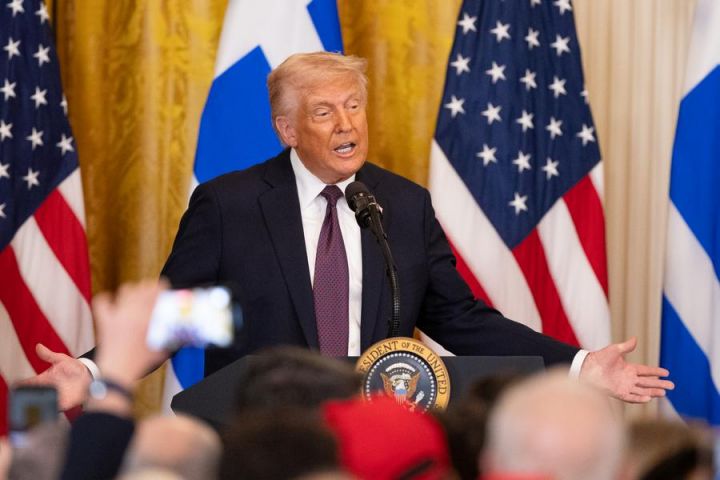
The Trump tariff impact is raising concerns over Indonesia’s economic outlook. In its latest June 2025 Economic Outlook, the Organisation for Economic Co-operation and Development (OECD) revised Indonesia’s projected growth rate to 4.7% from its earlier 4.9% forecast.
The new projection highlights the country’s growing exposure to global trade instability. Along with the OECD, the World Bank, the International Monetary Fund (IMF), and Bank Indonesia (BI) have also cut their growth forecasts. These changes reflect persistent uncertainty in global trade and its ripple effects on emerging economies.
OECD Revises Down 2025 Indonesia Growth Forecast
The OECD downgraded its 2025 economic growth forecast for Indonesia for the second time this year, citing weakening commodity prices and deepening global trade risks. The projection now stands at 4.7%, down from 4.9% in March 2025. The organization attributed this revision to “moderate growth in exports and consumption,” which has been compounded by a drop in commodity prices and weakening global demand.
This updated forecast falls in line with recent adjustments made by other global institutions. BI, the World Bank, and the IMF have all set their 2025 forecasts for Indonesia at 4.7%, reflecting a consistent shift in economic expectations among key stakeholders.
Trump Tariff Impact Could Pressure Trade and Currency
The Trump tariff impact is expected to ripple across global markets, particularly affecting export-dependent economies like Indonesia. The United States has begun outlining plans to reimpose tariffs, raising fears of a broader trade war. For Indonesia, this could reduce demand for key exports and place further pressure on the country’s trade balance.
Bank Indonesia Governor Perry Warjiyo as reported by Bisnis.com acknowledged these risks, stating, “The global economic growth is slowing, particularly in China, the United States, and India. There is also a high risk of rising global inflation, which prompts several central banks to maintain high interest rates.”
Higher tariffs and slower global growth could trigger capital outflows from Indonesia. The rupiah, already under pressure, may face additional depreciation. These developments could make it more difficult for Indonesia to maintain economic stability through monetary tools alone.
Read More: Indonesia’s “Special Team” to Negotiate Lower US Import Tariffs
Export Risks and China Slowdown Worsen Outlook
Alongside trade tensions, Indonesia must also contend with a decelerating Chinese economy. As Indonesia’s largest export destination, any downturn in China translates directly into lower demand for Indonesian commodities such as coal, palm oil, and rubber. This sharp decline in commodity prices further narrows the country’s revenue from international trade.
OECD economists wrote in the report, “Fiscal support is planned to be gradually reduced, while monetary policy is expected to be more accommodative to maintain the momentum of economic growth.”
Combined with tariff risks, the slowdown in China heightens the vulnerability of Indonesia’s economy to global shocks.
Fiscal and Monetary Policies Face Growing Challenges
Indonesia’s policy tools face limitations in addressing this economic squeeze. Although Bank Indonesia has room to adjust rates, global inflation and currency volatility limit its flexibility. The central bank projects a 2025 growth range between 4.6% and 5.4%, yet the outlook remains fragile.
The World Bank and IMF have aligned their projections with the OECD at 4.7%. Economists are also urging the government to take more proactive measures. “The government should dare to revise the 2025 State Budget macro assumptions,” said economist Bhima Yudhistira.
He added, “There is no need to insist on maintaining the 5.2% economic growth target. It’s better to revise the macro assumptions to be more realistic.”
Economists Say Trump Tariff Impact a Major Concern
The Trump tariff impact is not only a short-term disruption but could have longer-term consequences. According to Chief Economist of Bank Permata Josua Pardede, “The impact of Trump’s re-election is more focused on the potential increase in trade protectionism.” He warned that protectionist policies could affect Indonesia’s exports and limit opportunities to benefit from global supply chain shifts.
Yudhistira echoed this concern, noting, “Indonesia is a country that still relies heavily on exports of raw commodities, so when the global economy weakens, it will automatically reduce demand.”
Read More: Indonesia Braces for Trump Tariff Impact on Key Sectors
Outlook Remains Cautious Amid Global Volatility
Global trade volatility and the Trump tariff impact on Indonesia have clouded the country’s near-term economic prospects. As the OECD and other institutions lower growth expectations, Indonesia faces rising external risks that limit its fiscal and monetary responses.
To navigate this environment, policymakers may need to adjust their assumptions and focus on export diversification, fiscal prudence, and targeted stimulus. Otherwise, Indonesia risks falling short of its growth goals in an increasingly uncertain global economy.
Source: ekonomi.bisnis.com
Image: Xinhua/Hu Yousong