
Indonesia Imposes $266K in Foreign Worker Fines on 12 Firms

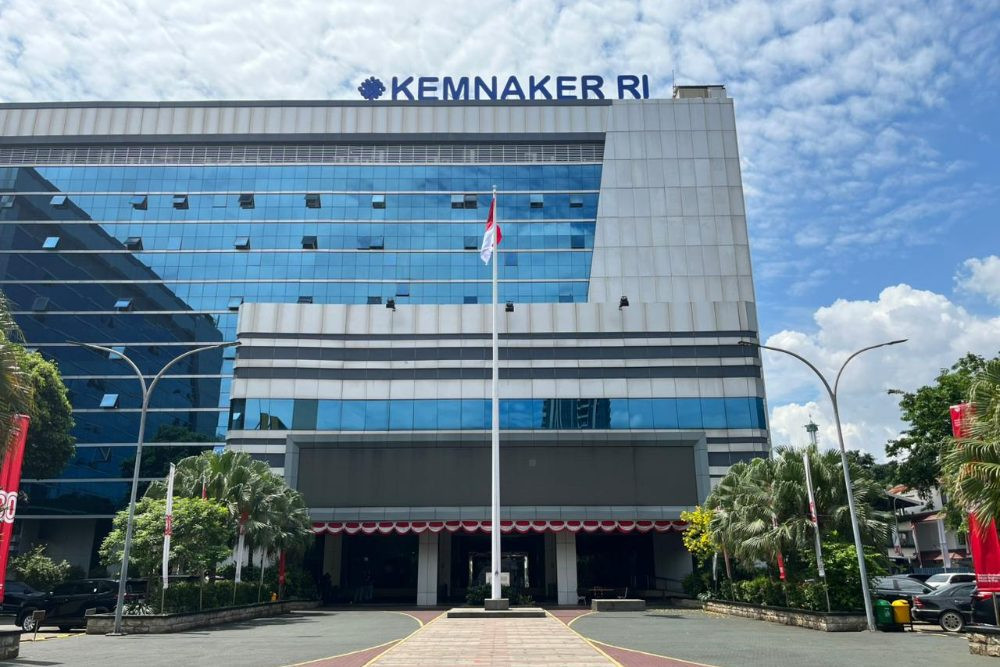
Indonesia has imposed $266K in foreign worker fines on 12 companies for violating employment regulations. The Ministry of Manpower, or Kementerian Ketenagakerjaan (Kemnaker), carried out the enforcement between January and February 2026 across six provinces.

Authorities found that the companies failed to comply with rules governing the use of foreign workers. As a result, the government issued financial penalties totaling Rp4.48 billion, approximately $266,000. Officials also confirmed that inspections will continue throughout the year to strengthen labor law compliance.


Foreign Worker Fines Reach $266K Across Six Provinces

The Ministry of Manpower confirmed the total amount of the penalties. “The total fine amounts to Rp4,482,000,000. The enforcement was carried out from January to February 2026 in six provinces,” said Ismail Pakaya in a press statement on Monday (23/2/2026).

Authorities imposed different penalty amounts on each company. “The amount of the fine imposed on each company differs, depending on the number of foreign workers found to have been employed in violation of the regulations,” he emphasized. Regulators based the calculations on how many foreign workers each firm employed outside the permitted framework.

Central Sulawesi recorded the highest number of violating companies. Meanwhile, the largest fine was targeted at PT BAP in West Kalimantan, which received Rp2.17 billion (approximately $129,000) in penalties. PT BIS in North Sumatra followed with Rp972 million (approximately $58,000). Other affected provinces included Central Kalimantan, the Riau Islands, and Jakarta.


Legal Basis Behind Indonesia’s Foreign Worker Fines

Officials grounded the enforcement actions in Government Regulation No. 34 of 2021 on the Employment of Foreign Workers. In addition, authorities relied on provisions under the Job Creation Law to guide inspections and sanctions. These rules set clear standards for companies that hire foreign nationals.

Through this legal framework, the government aims to ensure proper documentation, permits, and compliance procedures. Inspectors reviewed whether companies followed administrative and reporting requirements. When firms failed to meet these standards, authorities issued financial penalties in line with existing regulations.

The ministry also urged non-compliant businesses to take corrective action immediately. “If companies fail to make adjustments, actions will be taken in accordance with prevailing laws and regulations,” Ismail said. This warning signals that regulators will not tolerate continued violations.


Labor Ministry Intensifies Foreign Worker Compliance in 2026

Beyond the recent sanctions, the ministry plans to expand labor compliance inspections throughout 2026. Ismail stressed that oversight of foreign workers remains a public concern and requires consistent supervision. Authorities, therefore, plan to conduct swift, precise, and measurable enforcement to ensure effective implementation of labor standards in workplaces.

He explained that compliance operations related to labor norms, particularly concerning the employment of foreign workers, will continue throughout 2026. The ministry seeks to provide certainty for workers and businesses that follow the law while addressing violations firmly.

Meanwhile, Director of Labor Norm Inspection Development Rinaldi Umar described how inspectors uncovered the violations. He stated that provincial labor inspectors worked together with ministry officials who conducted direct field visits. This coordinated approach allowed regulators to verify compliance on the ground.

Rinaldi also noted that enforcement may not stop with the current penalties. “In addition to the companies that have already been fined, several companies are still in the process of payment and calculation of fines. It is possible that state revenue from this sector will increase,” he said. This statement suggests that total foreign worker fines could rise further in the coming months.


What the Foreign Worker Fines Mean for Businesses

The latest foreign worker fines send a clear message to companies operating in Indonesia. Authorities expect strict compliance with employment regulations and will impose financial penalties when violations occur. Companies that hire foreign workers must therefore review their permits, reporting procedures, and workforce documentation.

As inspections continue throughout 2026, businesses face greater regulatory scrutiny. Firms that act proactively can reduce legal risk and avoid costly sanctions. However, companies that ignore the rules may encounter additional penalties under Indonesia’s labor laws.


Source: inews.id, mureks.co.id 

Image: BISNIS/Reyhan Fernanda Fajarihza.

Latest Article
Indonesia Imposes $266K in Foreign Worker Fines on 12 Firms
Indonesia has imposed $266K in foreign worker fines on 12 companies for violating employment regulations....
Eid Holiday 2026 Expected to Lift Hotel Occupancy in Indonesia
Indonesia’s hospitality industry expects the Eid Holiday in 2026 to lift hotel occupancy nationwide as...
Indonesia Property Brokers Shift from Middlemen to Advisors
Indonesian property brokers are redefining their role in a rapidly evolving market. They no longer focus...
Prabowo Attends US Business Summit, Secures $38.4 Billion in Deals
President Prabowo Subianto brought U.S-Indonesia investment deals into the global spotlight at the US...
Indonesia Creative Economy Investment Surges 134%
Indonesia’s creative sector has recorded a 134 percent jump in investment, surpassing its 2025 target...

Andrzej Barski

Director of Seven Stones Indonesia

Andrzej is Co-owner/ Founder and Director of Seven Stones Indonesia. He was born in the UK to Polish parents and has been living in Indonesia for more than 33-years. He is a skilled writer, trainer and marketer with a deep understanding of Indonesia and its many cultures after spending many years travelling across the archipelago from North Sumatra to Irian Jaya.

His experience covers Marketing, Branding, Advertising, Publishing, Real Estate and Training for 5-Star Hotels and Resorts in Bali and Jakarta, which has given him a passion for the customer experience. He’s a published author and a regular contributor to local and regional publications. His interests include conservation, eco-conscious initiatives, spirituality and motorcycles. Andrzej speaks English and Indonesian.

Terje H. Nilsen

Director of Seven Stones Indonesia

Terje is from Norway and has been living in Indonesia for over 20-years. He first came to Indonesia as a child and after earning his degree in Business Administration from the University of Agder in Norway, he moved to Indonesia in 1993, where he has worked in leading positions in education and the fitness/ wellness industries all over Indonesia including Jakarta, Banjarmasin, Medan and Bali.

He was Co-owner and CEO of the Paradise Property Group for 10-years and led the company to great success. He is now Co-owner/ Founder and Director of Seven Stones Indonesia offering market entry services for foreign investors, legal advice, sourcing of investments and in particular real estate investments. He has a soft spot for eco-friendly and socially sustainable projects and investments, while his personal business strengths are in property law, tourism trends, macroeconomics, Indonesian government and regulations. His personal interests are in sport, adventure, history and spiritual experiences.

Terje’s leadership, drive and knowledge are recognised across many industries and his unrivalled network of high level contacts in government and business spans the globe. He believes you do good and do well but always in that order. Terje speaks English, Indonesian and Norwegian.

Contact Our Consultants

Ridwan Jasin Zachrie

CFO of Seven Stones Indonesia, Jakarta

Ridwan is one of Indonesia’s top executives with a long and illustrious career in the financial world. He holds several professional certifications including being a Certified Business Valuer (CBV) issued by the Australian Academy of Finance and Management; Broker-Dealer Representative (WPPE); and The Directorship Certification for Directors and Commissioners, issued by the Indonesian Institute of Commissioners and Directors.

His experience includes being the Managing Director at one of the top investment banking groups in the region, the Recapital Group, the CFO at State-owned enterprises in fishery industry and the CEO at Tanri Abeng & Son Holding. He’s also been an Independent Commissioner in several Financial Service companies and on the Audit and Risk Committee at Bank BTPN Tbk, Berau Coal Energy Tbk, Aetra Air Jakarta as well as working for Citibank, Bank Mandiri and HSBC. His last position was as CFO at PT Citra Putra Mandiri – OSO Group.

Ridwan has won a number of prestigious awards including the Best CFO Awards 2019 (Institute of Certified Management Accountant Australia-Indonesia); Asia Pacific Young Business Leader awarded by Asia 21 Network New York USA (Tokyo 2008); UK Alumni Business Awards 2008 awarded by the British Council; and The Most Inspiring Human Resources Practitioners’ version of Human Capital Magazine 2010.

He’s a member of the Board of Trustees of the Alumni Association of the Faculty of Law, Trisakti University, Co-Founder of the Paramadina Public Policy Institute and actively writes books, publications and articles in the mass media. He co-authored “Korupsi Mengorupsi Indonesia” in 2009, which helps those with an interest in understanding governance in Indonesia and the critical issue of corruption. Ridwan speaks Indonesian and English.

Per Fredrik Ecker

Managing Director of Seven Stones Indonesia, Jakarta

Per is the Managing Director of the Seven Stones Indonesia (SSI) Jakarta office and has more than 25-years’ experience in Indonesia, China, and Western Europe. He previously worked in senior management positions with Q-Free ASA, Siemens AG, and other companies in the telecom sector. Over the last six years, he has been the Chairman of the Indonesia-Norway Business Council (INBC) and recently become elected to be on the board of EuroCham Indonesia.

His most recent experience is within Intelligent Transport Solutions (ITS), Telecom, and other sectors within the Indonesian market. He is today through his position in SSI and by representing Norway Connect, promoting Nordic and European companies that would like to explore business opportunities in the Indonesian market. He’s also playing an active role to help create the Nordic House concept in Jakarta that will provide an excellent platform for Nordic companies entering Indonesia, where they’ll find a community that can offer support with trusted information and affordable services to enter this market.