
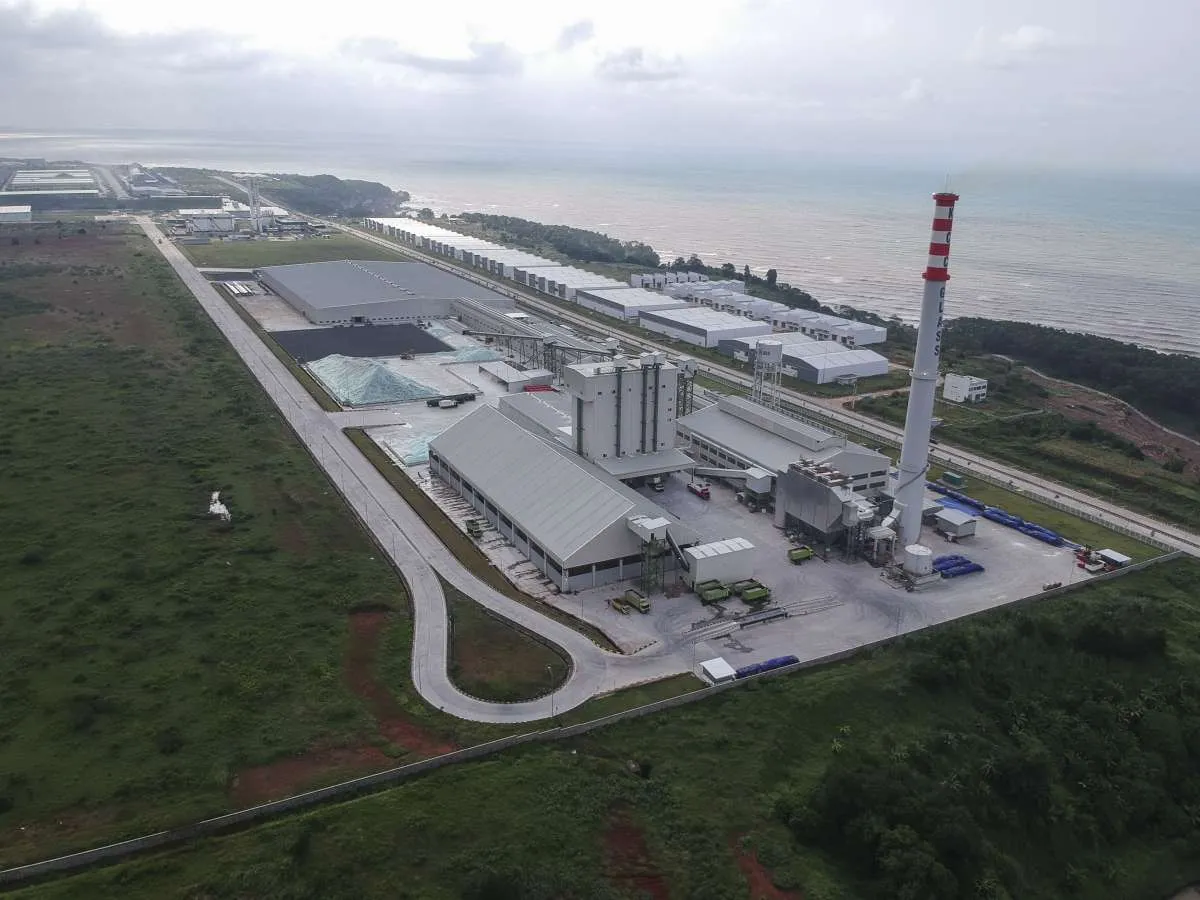
Indonesia Industrial Estates Reach 175 Sites, Investment Up 9.26%

Indonesia’s industrial sector closed 2025 with strong momentum as industrial estates expanded in scale, investment value, and economic impact. The Ministry of Industry recorded steady growth in industrial estate development, while industry stakeholders highlighted the structural reforms needed to sustain performance in 2026. Together, these trends position industrial estates as a central pillar of Indonesia’s manufacturing and investment strategy amid shifting global supply chains.


Indonesia Industrial Estates Expand Nationwide

Indonesia’s industrial estates reached a total of 175 locations by the end of 2025, reflecting continued progress in industrial zone development across the country. Around 59.4 percent of these estates operate on Java, while the remaining locations support industrial expansion beyond the island. Over the past year, nine new industrial estates entered operation, including four outside Java, reinforcing the government’s push for more balanced regional development.

Director General of Industrial Resilience, Regional Development, and International Industrial Access at the Ministry of Industry, Tri Supondy, confirmed the expansion during the ministry’s year-end briefing. “Over the past year, nine new industrial estates have been added, four of which are located outside Java.” he said, as reported by RM.id. This expansion also increased the national industrial estate land area by 4.32 percent, or 4,079.53 hectares, strengthening capacity for future industrial activity.


Industrial Estate Investment Drives Economic Growth

The expansion of industrial estates translated directly into stronger industrial estate investment performance. Realized investment rose by 9.26 percent compared with the previous year, signaling sustained investor confidence in Indonesia’s industrial ecosystem. At the same time, job absorption within industrial estates increased by 15 percent, underlining their role as a major employment generator.

Industrial estates also made a measurable contribution to national output. According to the Ministry of Industry, industrial estate activity supported a 9.44 percent contribution to Gross Domestic Product in the third quarter of 2025. In addition, the number of tenants operating within industrial estates grew by 1.12 percent, reflecting steady demand from manufacturing and logistics companies seeking integrated industrial locations.


Investor Interest Strengthens Key Industrial Corridors

Foreign investor interest remained strong throughout 2025, driven by demand in high-growth sectors. Investors from Japan, Singapore, China, South Korea, Russia, and Eastern Europe showed increasing interest in battery and electric vehicle manufacturing, modern logistics, renewable energy, data centers, and high-technology manufacturing.

Several industrial corridors emerged as focal points for investment activity. These included the Batam–Bintan–Karimun corridor in the Riau Islands, West Java’s Bekasi–Karawang–Purwakarta–Subang belt, as well as key locations in Central Java and East Java. Improved infrastructure readiness and stronger government support helped position these regions as competitive industrial destinations within Southeast Asia.


Industrial Infrastructure Challenges Persist into 2026

Despite the positive performance, industrial estate operators continue to face structural constraints. Spatial planning remains one of the most pressing challenges. Many industrial estates, including National Strategic Projects, still experience delays in obtaining Spatial Utilization Approval and Spatial Utilization Conformity Confirmation, even though regulations mandate faster processing.

Addressing this issue, Indonesian Industrial Estates Association Chairman Akhmad Ma’ruf Maulana stated, “Spatial planning is the lifeblood of industrial estates. As long as basic permits are not synchronized, investment acceleration will always be held back. This must become a cross-ministerial priority for resolution in 2026.”

Utilities and basic infrastructure also require attention. Electricity availability and subsidized natural gas supplies have yet to fully align with rising industrial demand. In several locations, limited logistics access continues to increase production costs and reduce distribution efficiency, creating challenges for manufacturers operating within industrial estates.


Digital and Green Industrial Estate Development Advances

At the same time, 2025 marked a critical phase in the transformation of industrial estates toward digitalization and sustainability. Estate operators adopted digital estate systems, applied artificial intelligence for estate monitoring, and integrated licensing processes through the OSS-RBA platform. These measures improved governance efficiency and strengthened competitiveness in an increasingly technology-driven industrial environment.

Industry stakeholders also expanded cross-ministerial coordination and international partnerships. Cooperation initiatives with partners from Japan, China, Russia, and Singapore aimed to integrate Indonesian industrial estates more deeply into global supply chains that continue to evolve rapidly.


Outlook: Industrial Estate Growth and 2026 Prospects

Looking ahead, stakeholders expressed measured optimism for 2026. Global supply chain shifts and industrial relocation from East Asia present significant opportunities for Indonesia. However, future gains depend on resolving spatial planning, utility, and infrastructure constraints.

Summing up the outlook, Akhmad Ma’ruf Maulana said, “If spatial planning and utility issues can be resolved, 2026 could become a year of accelerated investment. Industrial estates have the potential to become the main engine of economic growth toward the 8 percent target.” With continued reform and coordination, industrial estates are poised to remain a driving force in Indonesia’s economic strategy.


Source: rm.id, mediaindonesia.com

Image: Harviyan Perdana Putra / ANTARA FOTO

Latest Article
Indonesia Tax Enforcement Tightens Under New PMK 111 Rule
Indonesia’s tax enforcement has entered a stricter phase following the enactment of Minister of...
Indonesia Economy in 2026 Set to Stay Resilient and Stable
The Indonesian economy in 2026 is expected to remain resilient and stable, supported by steady growth,...
Indonesia Oil Imports Unaffected by US Venezuela Tensions
Rising US Venezuela tensions have drawn global attention as markets assess potential disruptions to energy...
Indonesia Industrial Estates Reach 175 Sites, Investment Up 9.26%
Indonesia’s industrial sector closed 2025 with strong momentum as industrial estates expanded in scale,...
Indonesia Capital Market Outlook Stays Positive Heading into 2026
Indonesia’s capital market remains positive heading into 2026, despite ongoing global uncertainty...

Andrzej Barski

Director of Seven Stones Indonesia

Andrzej is Co-owner/ Founder and Director of Seven Stones Indonesia. He was born in the UK to Polish parents and has been living in Indonesia for more than 33-years. He is a skilled writer, trainer and marketer with a deep understanding of Indonesia and its many cultures after spending many years travelling across the archipelago from North Sumatra to Irian Jaya.

His experience covers Marketing, Branding, Advertising, Publishing, Real Estate and Training for 5-Star Hotels and Resorts in Bali and Jakarta, which has given him a passion for the customer experience. He’s a published author and a regular contributor to local and regional publications. His interests include conservation, eco-conscious initiatives, spirituality and motorcycles. Andrzej speaks English and Indonesian.

Terje H. Nilsen

Director of Seven Stones Indonesia

Terje is from Norway and has been living in Indonesia for over 20-years. He first came to Indonesia as a child and after earning his degree in Business Administration from the University of Agder in Norway, he moved to Indonesia in 1993, where he has worked in leading positions in education and the fitness/ wellness industries all over Indonesia including Jakarta, Banjarmasin, Medan and Bali.

He was Co-owner and CEO of the Paradise Property Group for 10-years and led the company to great success. He is now Co-owner/ Founder and Director of Seven Stones Indonesia offering market entry services for foreign investors, legal advice, sourcing of investments and in particular real estate investments. He has a soft spot for eco-friendly and socially sustainable projects and investments, while his personal business strengths are in property law, tourism trends, macroeconomics, Indonesian government and regulations. His personal interests are in sport, adventure, history and spiritual experiences.

Terje’s leadership, drive and knowledge are recognised across many industries and his unrivalled network of high level contacts in government and business spans the globe. He believes you do good and do well but always in that order. Terje speaks English, Indonesian and Norwegian.

Contact Our Consultants

Ridwan Jasin Zachrie

CFO of Seven Stones Indonesia, Jakarta

Ridwan is one of Indonesia’s top executives with a long and illustrious career in the financial world. He holds several professional certifications including being a Certified Business Valuer (CBV) issued by the Australian Academy of Finance and Management; Broker-Dealer Representative (WPPE); and The Directorship Certification for Directors and Commissioners, issued by the Indonesian Institute of Commissioners and Directors.

His experience includes being the Managing Director at one of the top investment banking groups in the region, the Recapital Group, the CFO at State-owned enterprises in fishery industry and the CEO at Tanri Abeng & Son Holding. He’s also been an Independent Commissioner in several Financial Service companies and on the Audit and Risk Committee at Bank BTPN Tbk, Berau Coal Energy Tbk, Aetra Air Jakarta as well as working for Citibank, Bank Mandiri and HSBC. His last position was as CFO at PT Citra Putra Mandiri – OSO Group.

Ridwan has won a number of prestigious awards including the Best CFO Awards 2019 (Institute of Certified Management Accountant Australia-Indonesia); Asia Pacific Young Business Leader awarded by Asia 21 Network New York USA (Tokyo 2008); UK Alumni Business Awards 2008 awarded by the British Council; and The Most Inspiring Human Resources Practitioners’ version of Human Capital Magazine 2010.

He’s a member of the Board of Trustees of the Alumni Association of the Faculty of Law, Trisakti University, Co-Founder of the Paramadina Public Policy Institute and actively writes books, publications and articles in the mass media. He co-authored “Korupsi Mengorupsi Indonesia” in 2009, which helps those with an interest in understanding governance in Indonesia and the critical issue of corruption. Ridwan speaks Indonesian and English.

Per Fredrik Ecker

Managing Director of Seven Stones Indonesia, Jakarta

Per is the Managing Director of the Seven Stones Indonesia (SSI) Jakarta office and has more than 25-years’ experience in Indonesia, China, and Western Europe. He previously worked in senior management positions with Q-Free ASA, Siemens AG, and other companies in the telecom sector. Over the last six years, he has been the Chairman of the Indonesia-Norway Business Council (INBC) and recently become elected to be on the board of EuroCham Indonesia.

His most recent experience is within Intelligent Transport Solutions (ITS), Telecom, and other sectors within the Indonesian market. He is today through his position in SSI and by representing Norway Connect, promoting Nordic and European companies that would like to explore business opportunities in the Indonesian market. He’s also playing an active role to help create the Nordic House concept in Jakarta that will provide an excellent platform for Nordic companies entering Indonesia, where they’ll find a community that can offer support with trusted information and affordable services to enter this market.