
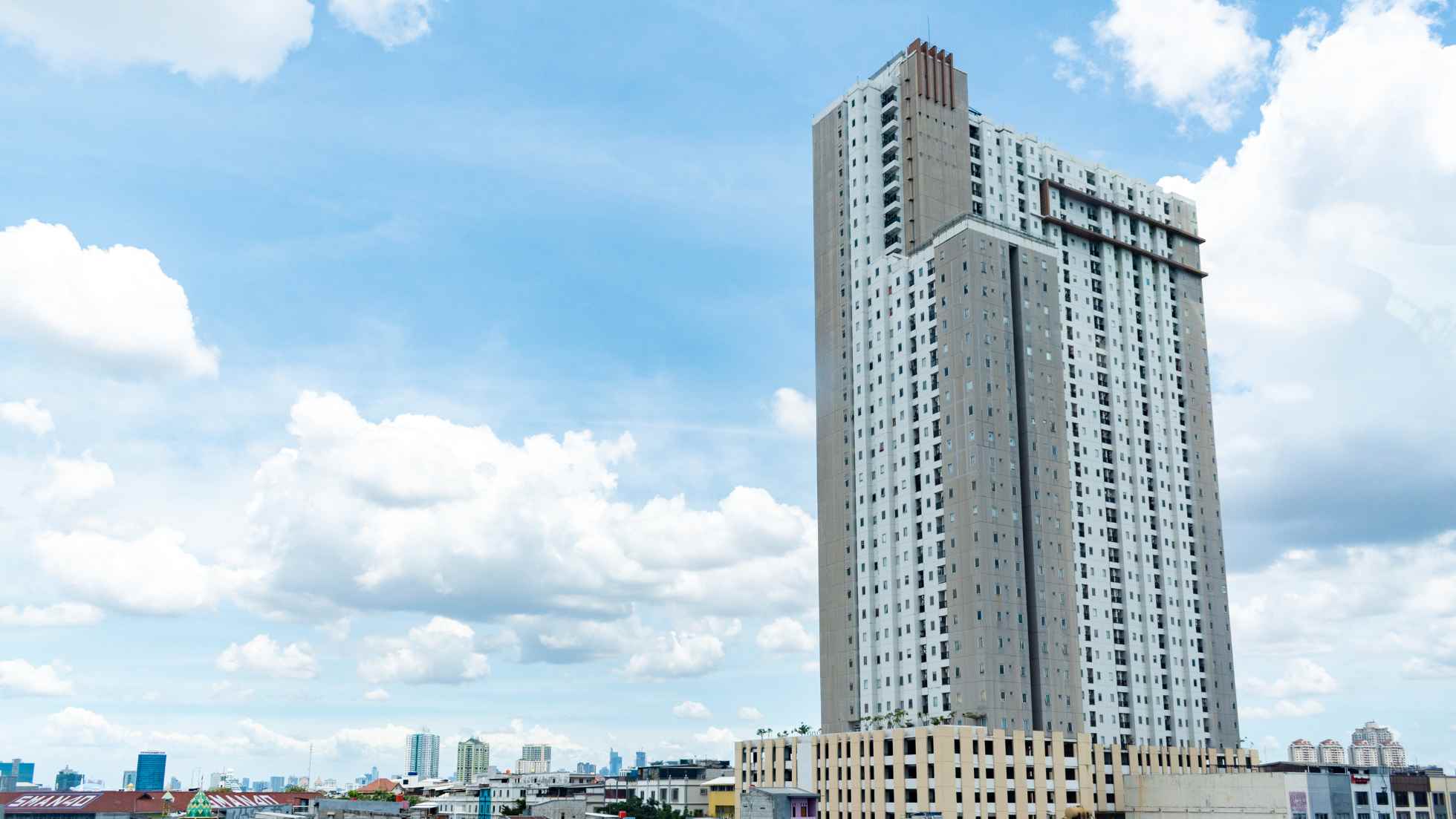
Jakarta Apartment Sales have plunged dramatically over the past decade, raising concerns for both developers and policymakers. Minister of Housing and Settlement Areas (PKP) Maruarar Sirait, better known as Ara, acknowledged the slowdown and urged developers to propose solutions. The government is now preparing new policies to help revive the struggling apartment market while continuing to support low-income housing programs.
Jakarta Apartment Sales Decline Over the Decade
Data from Jones Lang LaSalle (JLL) shows a steep fall in sales, from a peak of 20,000 units per year between 2012 and 2014 to just 150 units in the first half of 2025. This drastic decline has left thousands of apartment units in Jakarta unsold.
According to Yunus Karim, Head of Research at JLL Indonesia, the market downturn began in 2015. “The market is still adopting a wait-and-see approach,” Yunus explained, noting that sales rates have stagnated between 58 and 60 percent. While the market once relied heavily on investors, the trend has shifted slightly toward end-users. However, their numbers remain limited.
Government Response to Unsold Apartments
Ara expressed concern about the growing number of vacant units in Jakarta. He called on Real Estat Indonesia (REI) to gather proposals from its members.
“Now, may I also focus on the commercial sector? Here, Mr. Totok, many REI developers probably still have vacant apartments. Mr. Joko, please gather input—what policies are needed?” Ara said during the Housing People’s Business Credit (KUR) Socialization event in Jakarta.
He stressed that developers must recommend the right schemes to stimulate commercial real estate demand. Ara confirmed that he plans to meet with REI and other developer associations to discuss potential regulations.
Proposed Schemes for the Commercial Housing Sector
The minister emphasized the importance of practical solutions. “What kind of scheme is needed? Banks currently have the funds. There’s the Housing KUR program too, right?” Ara asked developers. One proposal already under review is the rent-to-own model, which would allow buyers to lease apartments with the option to purchase later.
This scheme could provide opportunities for people facing challenges with credit checks. “I accept it, but we’ll test it first. If it works well, I will turn it into state policy,” Ara explained. By opening the door to innovative payment schemes, the government hopes to help developers reduce vacant inventory while creating pathways for more people to own homes.
Support for Low-Income Housing
While Ara pushes for reforms in the commercial housing sector, he also stressed the government’s commitment to low-income housing. Policies already in place include exemptions from value-added tax (VAT), the land and building rights acquisition fee (BPHTB), and building approval permits (PBG). In addition, the government has set the largest subsidized mortgage (KPR) quota in history.
“The government already has policies to waive BPHTB, building approval permits, and VAT for housing,” Ara said earlier. These measures aim to make homeownership more accessible for low-income families while balancing the needs of the commercial market.
Future Outlook for Jakarta Apartment Sales
Despite current challenges, JLL projects limited new apartment launches in the next two quarters. The slight shift toward end-user buyers signals a potential long-term change in the market. Developers, however, remain cautious and continue to wait for stronger policy support.
“Think about it. I’m sure after lunch or dinner, REI can come up with recommendations for the commercial sector—what government policies are needed to stimulate the commercial economy,” Ara urged. For now, recovery depends on how quickly new regulations can address market stagnation and restore confidence among both investors and homebuyers.
Real Estate Regulations to Shape the Market
The sharp fall in Jakarta Apartment Sales underscores the urgent need for effective real estate regulations. Ara’s call for developer input marks an important step toward revitalizing the commercial housing sector.
At the same time, the government’s continued support for low-income housing shows a balanced approach to the broader market. With the right policies, Indonesia has the opportunity to stabilize apartment sales and create a healthier housing landscape for both developers and buyers.
Source: kompas.com, detik.com
Image: Anastasia Nadila / Canva