
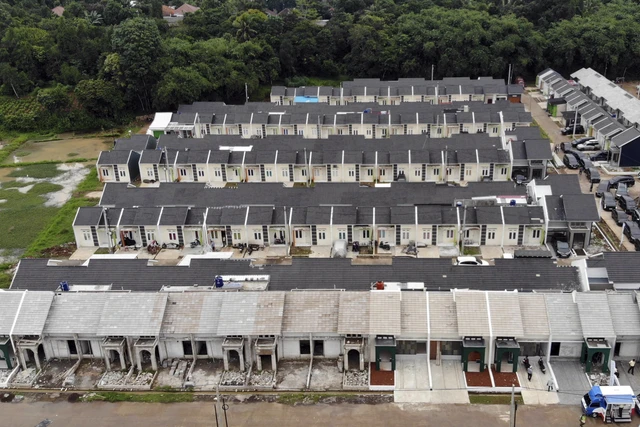
Indonesia is pushing to meet its ambitious housing target with the help of the affordable housing credit scheme. The government recently launched the Housing People’s Business Credit (KUR) program, aiming to address the housing backlog and expand access to homeownership for low- and middle-income groups. With housing demand rising, this initiative is expected to stimulate both supply and demand while involving developers, contractors, and MSMEs.
Housing KUR Program Launched in Jakarta
The Ministry of Housing and Settlement Areas (PKP) held the first major socialization event for the Housing KUR program in Jakarta on August 28, 2025. The event targeted developers, contractors, and vendors. Minister Maruarar Sirait described the initiative as crucial for accelerating the national housing goal.
“This event will invite the entire housing ecosystem, from developers, contractors, regional-owned enterprises, associations, to building material traders,” he told Kompas.com in an exclusive phone interview on August 24, 2025.
Although the launch began in Jakarta, West Java will be the next focus due to its large number of contractors and developers. Ara explained that the province holds the biggest potential for the program’s success, calling it a “fertile ground” for housing development.
Affordable Housing Credit to Boost Indonesia Housing Target
The affordable housing credit scheme provides financing through two key channels: developers and the public. Developers can access loans ranging from IDR 500 million to IDR 5 billion, with a maximum cumulative disbursement of IDR 20 billion. This financing could enable each developer to build 40–50 homes. Joko Suranto, Chairman of Real Estate Indonesia (REI), said the target was realistic given current construction capacity.
On the demand side, individuals can apply for investment credit from IDR 10 million to IDR 500 million. The program aims to give more families, especially those in the lower-middle-income group, the opportunity to own homes. By balancing both supply and demand, the government expects this credit to make a significant impact on housing absorption.
Subsidized Housing Scheme and Private Sector Role
In addition to the Housing KUR program, Minister Sirait revealed plans to involve the private sector in Indonesia’s subsidized housing scheme. So far, subsidized financing has been dominated by the state. However, Ara expressed hope for a breakthrough.
“Pray for us. I am praying and working hard. Hopefully, there will be subsidized housing financing, but accommodated by the private sector,” he said.
The new scheme would resemble the existing Housing Financing Liquidity Facility (FLPP) but allow more collaboration between public and private players. If successful, it would mark a major shift in Indonesia’s housing finance landscape.
Challenges: Weak Purchasing Power and Oversupply Risks
Despite the promise of new credit facilities, developers remain cautious. Weakened purchasing power continues to slow housing demand. Joko Suranto stressed that funding alone is not enough.
“The funds can only be effective when there are projects being carried out and houses are being sold. At present, house sales are still relatively sluggish,” he noted.
He added that the program could have greater impact in rural areas, where demand is clearer and housing projects can boost local economies by creating jobs and stimulating small businesses.
MSMEs as Key Players in Indonesia’s Housing Ecosystem
Micro, small, and medium enterprises (MSMEs) are expected to play a central role in housing development. From supplying bricks and sand to acting as small contractors, their contributions are essential. BPJS Employment, with 42 million participants, could serve as a base for housing absorption. Joko highlighted this potential, explaining, “Imagine if just 1 percent of BPJS participants joined this program, there would already be a demand for 420,000 homes.”
This integration would not only help balance supply but also provide opportunities for MSMEs to thrive with better financing support, reducing reliance on harmful online loans.
Driving Indonesia Housing Goals Forward
The affordable housing credit initiative is shaping up as a cornerstone for meeting Indonesia’s housing target. By combining government support, private sector participation, and MSME involvement, the program offers a multi-pronged solution to the housing backlog. With adequate oversight and effective implementation, it could drive property market growth and bring homeownership closer to millions of Indonesians.
Source: kompas.com, beritakini.co.id
Image: Yulius Satria Wijaya/ANTARA FOTO