Indonesia–Norway Strengthen FOLU Net Sink Program

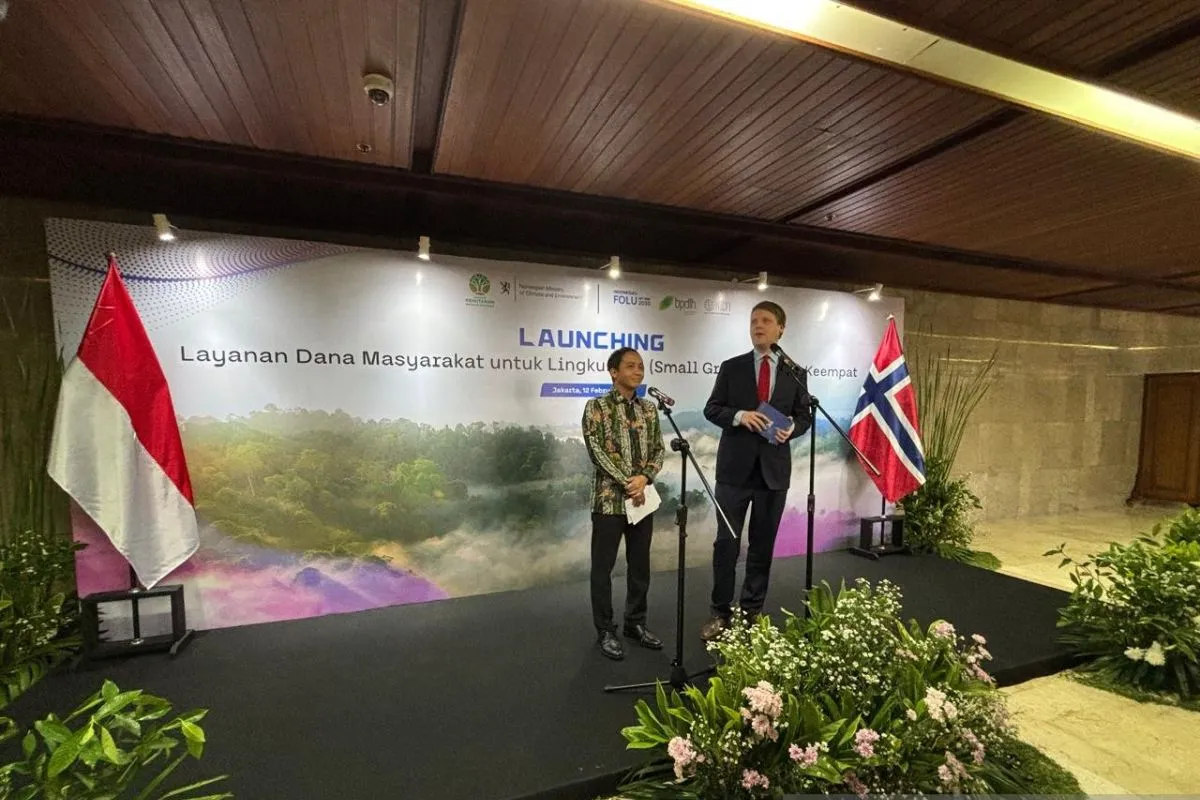
Community climate funding has become a key pillar in Indonesia’s effort to reduce emissions from forestry and land use. In this context, Indonesia and Norway have strengthened their bilateral cooperation by launching the fourth phase of the Community Environmental Fund Service, widely known as the Small Grant Program.

Valued at Rp7 billion, the program supports the national FOLU Net Sink 2030 target by directly financing community-led climate action. Through this initiative, both countries aim to ensure that forest protection, emissions reduction, and social welfare progress together measurably and inclusively.


Strengthening the FOLU Net Sink 2030 Target

The FOLU Net Sink 2030 target plays a central role in Indonesia’s climate strategy. The government aims to ensure that emissions from forestry and other land use fall below absorption levels by the end of the decade. To achieve this, Indonesia prioritizes programs that combine forest conservation with sustainable land management.

The Small Grant Program supports this approach by funding practical activities at the community level. Moreover, the program aligns local initiatives with national climate goals, which helps translate policy commitments into real action across provinces.

During the launch, Minister of Forestry Raja Juli Antoni highlighted the continuity of the initiative. He said, “Today, together with Minister Asmund Aukrust, I am proud to launch the Community Environmental Fund Service, which has now entered its fourth phase.” This statement reflects the government’s commitment to maintaining momentum toward the FOLU Net Sink target.


Community Climate Funding Through Results-Based Support

Community climate funding under this program operates through a results-based contribution mechanism. Indonesia and Norway designed this system to link funding with verified outcomes, particularly in reducing deforestation and improving forest governance. The Ministry of Forestry distributes the funds through the Environmental Fund Management Agency, ensuring accountability and transparency.

Raja Juli Antoni emphasized the importance of this cooperation. He stated, “On behalf of the Government of Indonesia, we express our deepest gratitude to the Government of Norway for the excellent cooperation that has taken place through the Result-Based Contribution mechanism.” Through this model, Indonesia has strengthened trust with its international partner while ensuring that climate finance reaches effective local initiatives.

Over three previous phases, the results-based program has distributed Rp19.31 billion to 561 community groups. These funds have reached more than 31,500 beneficiaries across 36 provinces. As a result, the program has proven its ability to scale community-based climate action nationwide.


Empowering Local Groups and Forest Communities

The Small Grant Program focuses strongly on empowering forest communities and civil society groups. Beneficiaries include youth organizations, social forestry groups, and conservation activists. By placing communities at the center, the program encourages local ownership of climate solutions. Furthermore, this approach strengthens climate resilience by linking environmental protection with livelihoods.

Norway’s Minister Asmund Aukrust praised Indonesia’s inclusive strategy. He underlined the global nature of climate change, stating, “No single country can solve it alone. That is why partnerships such as the one between Norway and Indonesia are extremely important.” His remarks reinforce the idea that effective climate action depends on collaboration across borders and communities.

To date, Norway has contributed US$260 million in recognition of Indonesia’s success in reducing deforestation. According to Aukrust, the fourth phase of the Small Grant Program demonstrates that climate support must reach people who live closest to forests. He said, “We are very proud of the partnership and friendship we share with Indonesia. We come to listen, learn, and reaffirm that we are in this struggle together.”


Grant Themes Focus on Youth, Welfare, and Biodiversity

In the fourth phase, the program introduces three thematic options to guide proposals. First, FOLU Goes to School focuses on youth engagement and environmental education. Second, FOLU Terra aims to improve community welfare through environmentally based economic activities. Third, FOLU Biodiversity supports biodiversity conservation and ecosystem protection.

The application period runs from 12 to 19 February 2026. Authorities have simplified the registration process to improve access. Communities can submit proposals online through the official platform, which helps widen participation and improve efficiency.


Indonesia–Norway Climate Partnership Moves Forward

Overall, the fourth phase of the Small Grant Program marks another milestone in Indonesia–Norway climate cooperation. By combining community climate funding with results-based support, both countries strengthen progress toward the FOLU Net Sink 2030 target.

The initiative also confirms that long-term climate action works best when it empowers local communities. As Indonesia and Norway move forward together, the partnership continues to set a practical example of inclusive and accountable climate collaboration.


Source: hijau.bisnis.com

Image:  ANTARA/Prisca Triferna

Latest Article
Indonesia–Norway Strengthen FOLU Net Sink Program
Community climate funding has become a key pillar in Indonesia’s effort to reduce emissions from forestry...
Apindo Flags Foreign Investment Barriers in Indonesia
Indonesia’s business climate remains under pressure as Apindo warns that foreign investment barriers...
Bali Green Investment Takes Center Stage at BEIF 2026 Forum
Bali’s investment in green energy has emerged as a central focus ahead of the Bali Economic and...
Indonesia Hotel Industry in 2026 Hit by Budget Reallocation Risks
The Indonesian hotel industry enters 2026 under growing pressure as government budget reallocation and...
Buying property in Bali Remains Attractive in 2026 Market
Buying property in Bali remains a key consideration for investors entering 2026, as market conditions...

Andrzej Barski

Director of Seven Stones Indonesia

Andrzej is Co-owner/ Founder and Director of Seven Stones Indonesia. He was born in the UK to Polish parents and has been living in Indonesia for more than 33-years. He is a skilled writer, trainer and marketer with a deep understanding of Indonesia and its many cultures after spending many years travelling across the archipelago from North Sumatra to Irian Jaya.

His experience covers Marketing, Branding, Advertising, Publishing, Real Estate and Training for 5-Star Hotels and Resorts in Bali and Jakarta, which has given him a passion for the customer experience. He’s a published author and a regular contributor to local and regional publications. His interests include conservation, eco-conscious initiatives, spirituality and motorcycles. Andrzej speaks English and Indonesian.

Terje H. Nilsen

Director of Seven Stones Indonesia

Terje is from Norway and has been living in Indonesia for over 20-years. He first came to Indonesia as a child and after earning his degree in Business Administration from the University of Agder in Norway, he moved to Indonesia in 1993, where he has worked in leading positions in education and the fitness/ wellness industries all over Indonesia including Jakarta, Banjarmasin, Medan and Bali.

He was Co-owner and CEO of the Paradise Property Group for 10-years and led the company to great success. He is now Co-owner/ Founder and Director of Seven Stones Indonesia offering market entry services for foreign investors, legal advice, sourcing of investments and in particular real estate investments. He has a soft spot for eco-friendly and socially sustainable projects and investments, while his personal business strengths are in property law, tourism trends, macroeconomics, Indonesian government and regulations. His personal interests are in sport, adventure, history and spiritual experiences.

Terje’s leadership, drive and knowledge are recognised across many industries and his unrivalled network of high level contacts in government and business spans the globe. He believes you do good and do well but always in that order. Terje speaks English, Indonesian and Norwegian.

Contact Our Consultants

Ridwan Jasin Zachrie

CFO of Seven Stones Indonesia, Jakarta

Ridwan is one of Indonesia’s top executives with a long and illustrious career in the financial world. He holds several professional certifications including being a Certified Business Valuer (CBV) issued by the Australian Academy of Finance and Management; Broker-Dealer Representative (WPPE); and The Directorship Certification for Directors and Commissioners, issued by the Indonesian Institute of Commissioners and Directors.

His experience includes being the Managing Director at one of the top investment banking groups in the region, the Recapital Group, the CFO at State-owned enterprises in fishery industry and the CEO at Tanri Abeng & Son Holding. He’s also been an Independent Commissioner in several Financial Service companies and on the Audit and Risk Committee at Bank BTPN Tbk, Berau Coal Energy Tbk, Aetra Air Jakarta as well as working for Citibank, Bank Mandiri and HSBC. His last position was as CFO at PT Citra Putra Mandiri – OSO Group.

Ridwan has won a number of prestigious awards including the Best CFO Awards 2019 (Institute of Certified Management Accountant Australia-Indonesia); Asia Pacific Young Business Leader awarded by Asia 21 Network New York USA (Tokyo 2008); UK Alumni Business Awards 2008 awarded by the British Council; and The Most Inspiring Human Resources Practitioners’ version of Human Capital Magazine 2010.

He’s a member of the Board of Trustees of the Alumni Association of the Faculty of Law, Trisakti University, Co-Founder of the Paramadina Public Policy Institute and actively writes books, publications and articles in the mass media. He co-authored “Korupsi Mengorupsi Indonesia” in 2009, which helps those with an interest in understanding governance in Indonesia and the critical issue of corruption. Ridwan speaks Indonesian and English.

Per Fredrik Ecker

Managing Director of Seven Stones Indonesia, Jakarta

Per is the Managing Director of the Seven Stones Indonesia (SSI) Jakarta office and has more than 25-years’ experience in Indonesia, China, and Western Europe. He previously worked in senior management positions with Q-Free ASA, Siemens AG, and other companies in the telecom sector. Over the last six years, he has been the Chairman of the Indonesia-Norway Business Council (INBC) and recently become elected to be on the board of EuroCham Indonesia.

His most recent experience is within Intelligent Transport Solutions (ITS), Telecom, and other sectors within the Indonesian market. He is today through his position in SSI and by representing Norway Connect, promoting Nordic and European companies that would like to explore business opportunities in the Indonesian market. He’s also playing an active role to help create the Nordic House concept in Jakarta that will provide an excellent platform for Nordic companies entering Indonesia, where they’ll find a community that can offer support with trusted information and affordable services to enter this market.