
Apindo Flags Foreign Investment Barriers in Indonesia

Indonesia’s business climate remains under pressure as Apindo warns that foreign investment barriers continue to limit competitiveness and job creation.

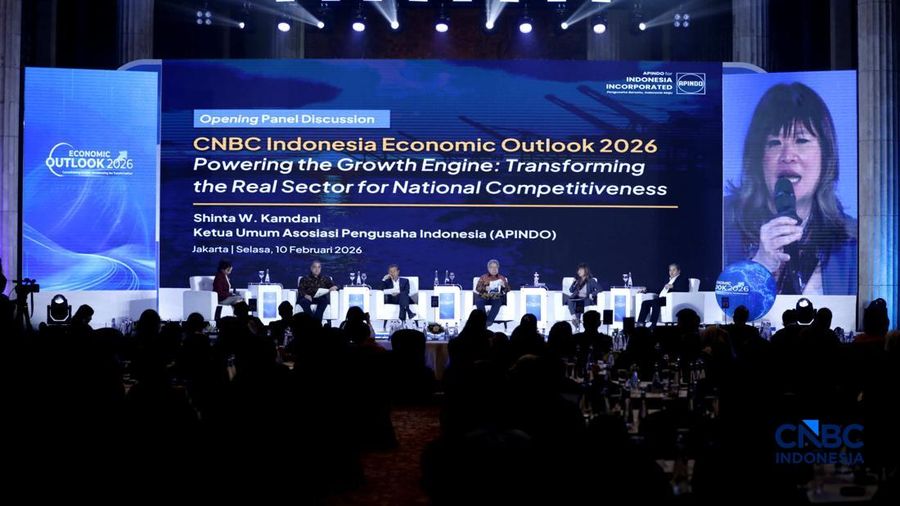
Speaking at several high-level economic forums, the Indonesian Employers Association highlighted structural weaknesses that go beyond short-term economic cycles. These issues include high business costs, slow licensing processes, and deep labor market challenges.

Although unemployment stands at around 7.5 million people, Apindo stressed that the bigger concern lies in the quality and stability of employment. Without structural reform, these barriers risk weakening investor confidence and slowing Indonesia’s long-term growth prospects.


Foreign Investment Barriers Remain a Structural Issue

Foreign investment barriers in Indonesia, according to Apindo, stem largely from administrative inefficiencies rather than market demand. The association pointed to lengthy licensing timelines that place Indonesia far behind regional peers.

Establishing a foreign-owned company in Indonesia can take up to 65 days, while some neighboring countries complete the process in just one day. As a result, investors often delay or redirect capital to more efficient markets.

Apindo Chairwoman Shinta Widjaja Kamdani stressed that these delays remain a critical obstacle. She stated, “Establishing a foreign company in Indonesia takes 65 days, while in other countries it only takes around one day. This remains a major obstacle to attracting foreign investment.”


High Business Costs Weigh on Investor Confidence

High business costs further weaken Indonesia’s appeal as an investment destination. Apindo identified logistics, energy, and financing as the most pressing cost components. Indonesia’s logistics costs reach 14.29% of gross domestic product, which exceeds Singapore’s 8% and remains higher than Malaysia, the Philippines, and India.

In addition, borrowing costs add pressure on companies. Loan interest rates in Indonesia range from 8% to 14%, well above the ASEAN-5 average of 4% to 6%.

Shinta emphasized that cost efficiency must improve for Indonesia to compete regionally. She said, “There are several priorities, starting with how to reduce high costs. In principle, Indonesia must be able to compete with other countries.”


Indonesia Licensing Delays and Regulatory Complexity

Indonesia’s licensing delays also create uncertainty that investors find difficult to manage. Beyond company registration, property ownership transfers can take up to 90 days, while final court rulings may require as long as 150 days.

Moreover, regulatory intervention remains high. Apindo noted that 44% of companies report having their product prices regulated, compared with only 2% in benchmark economies.

Internal Apindo surveys further revealed that businesses struggle with excessive documentation requirements, slow recommendations from government agencies, and frequent technical issues in the OSS system. Consequently, licensing processes often stretch over months or even years, particularly for environmental approvals.


Labor and Industrial Constraints Add Pressure

Labor market conditions and industrial trends add another layer of pressure. Apindo highlighted that deindustrialization has reduced manufacturing’s contribution to GDP from around 23–24% to approximately 19%.

This decline limits the creation of formal jobs. Shinta explained that manufacturing once served as the backbone of decent employment, yet informal work now dominates the sector. She said, “In the past, manufacturing was the backbone of decent jobs because it created formal employment. But today, 64% of manufacturing jobs are informal.”

At the same time, workforce quality remains a concern. About 36.5% of Indonesian workers have only completed elementary school, while industries increasingly demand higher skills.


Apindo Urges Structural Reforms to Restore Competitiveness

Apindo views structural reform as a prerequisite for restoring competitiveness and attracting sustainable investment. The association called for simpler regulations, lower business costs, and faster licensing processes. It also urged stronger upstream industries to reduce reliance on imported raw materials, which currently account for 70% of inputs.

Shinta warned that millions of Indonesians depend on unstable livelihoods. She stated, “If we include their families, around 180 million Indonesians depend on unstable livelihoods. This is our main issue.” Without decisive reform, Apindo believes Indonesia risks falling further behind its regional peers.


Source: cnbcindonesia.com, investortrust.id

Image: Tri Susilo / CNBC Indonesia 

Latest Article
Apindo Flags Foreign Investment Barriers in Indonesia
Indonesia’s business climate remains under pressure as Apindo warns that foreign investment barriers...
Bali Green Investment Takes Center Stage at BEIF 2026 Forum
Bali’s investment in green energy has emerged as a central focus ahead of the Bali Economic and...
Indonesia Hotel Industry in 2026 Hit by Budget Reallocation Risks
The Indonesian hotel industry enters 2026 under growing pressure as government budget reallocation and...
Buying property in Bali Remains Attractive in 2026 Market
Buying property in Bali remains a key consideration for investors entering 2026, as market conditions...
Moody’s Indonesia Outlook Sparks Market Caution, Minister Responds
Moody’s outlook for Indonesia has drawn fresh attention from global investors after the rating agency...

Andrzej Barski

Director of Seven Stones Indonesia

Andrzej is Co-owner/ Founder and Director of Seven Stones Indonesia. He was born in the UK to Polish parents and has been living in Indonesia for more than 33-years. He is a skilled writer, trainer and marketer with a deep understanding of Indonesia and its many cultures after spending many years travelling across the archipelago from North Sumatra to Irian Jaya.

His experience covers Marketing, Branding, Advertising, Publishing, Real Estate and Training for 5-Star Hotels and Resorts in Bali and Jakarta, which has given him a passion for the customer experience. He’s a published author and a regular contributor to local and regional publications. His interests include conservation, eco-conscious initiatives, spirituality and motorcycles. Andrzej speaks English and Indonesian.

Terje H. Nilsen

Director of Seven Stones Indonesia

Terje is from Norway and has been living in Indonesia for over 20-years. He first came to Indonesia as a child and after earning his degree in Business Administration from the University of Agder in Norway, he moved to Indonesia in 1993, where he has worked in leading positions in education and the fitness/ wellness industries all over Indonesia including Jakarta, Banjarmasin, Medan and Bali.

He was Co-owner and CEO of the Paradise Property Group for 10-years and led the company to great success. He is now Co-owner/ Founder and Director of Seven Stones Indonesia offering market entry services for foreign investors, legal advice, sourcing of investments and in particular real estate investments. He has a soft spot for eco-friendly and socially sustainable projects and investments, while his personal business strengths are in property law, tourism trends, macroeconomics, Indonesian government and regulations. His personal interests are in sport, adventure, history and spiritual experiences.

Terje’s leadership, drive and knowledge are recognised across many industries and his unrivalled network of high level contacts in government and business spans the globe. He believes you do good and do well but always in that order. Terje speaks English, Indonesian and Norwegian.

Contact Our Consultants

Ridwan Jasin Zachrie

CFO of Seven Stones Indonesia, Jakarta

Ridwan is one of Indonesia’s top executives with a long and illustrious career in the financial world. He holds several professional certifications including being a Certified Business Valuer (CBV) issued by the Australian Academy of Finance and Management; Broker-Dealer Representative (WPPE); and The Directorship Certification for Directors and Commissioners, issued by the Indonesian Institute of Commissioners and Directors.

His experience includes being the Managing Director at one of the top investment banking groups in the region, the Recapital Group, the CFO at State-owned enterprises in fishery industry and the CEO at Tanri Abeng & Son Holding. He’s also been an Independent Commissioner in several Financial Service companies and on the Audit and Risk Committee at Bank BTPN Tbk, Berau Coal Energy Tbk, Aetra Air Jakarta as well as working for Citibank, Bank Mandiri and HSBC. His last position was as CFO at PT Citra Putra Mandiri – OSO Group.

Ridwan has won a number of prestigious awards including the Best CFO Awards 2019 (Institute of Certified Management Accountant Australia-Indonesia); Asia Pacific Young Business Leader awarded by Asia 21 Network New York USA (Tokyo 2008); UK Alumni Business Awards 2008 awarded by the British Council; and The Most Inspiring Human Resources Practitioners’ version of Human Capital Magazine 2010.

He’s a member of the Board of Trustees of the Alumni Association of the Faculty of Law, Trisakti University, Co-Founder of the Paramadina Public Policy Institute and actively writes books, publications and articles in the mass media. He co-authored “Korupsi Mengorupsi Indonesia” in 2009, which helps those with an interest in understanding governance in Indonesia and the critical issue of corruption. Ridwan speaks Indonesian and English.

Per Fredrik Ecker

Managing Director of Seven Stones Indonesia, Jakarta

Per is the Managing Director of the Seven Stones Indonesia (SSI) Jakarta office and has more than 25-years’ experience in Indonesia, China, and Western Europe. He previously worked in senior management positions with Q-Free ASA, Siemens AG, and other companies in the telecom sector. Over the last six years, he has been the Chairman of the Indonesia-Norway Business Council (INBC) and recently become elected to be on the board of EuroCham Indonesia.

His most recent experience is within Intelligent Transport Solutions (ITS), Telecom, and other sectors within the Indonesian market. He is today through his position in SSI and by representing Norway Connect, promoting Nordic and European companies that would like to explore business opportunities in the Indonesian market. He’s also playing an active role to help create the Nordic House concept in Jakarta that will provide an excellent platform for Nordic companies entering Indonesia, where they’ll find a community that can offer support with trusted information and affordable services to enter this market.