
Traditional Bali Arak Enters Regulated and Global Market

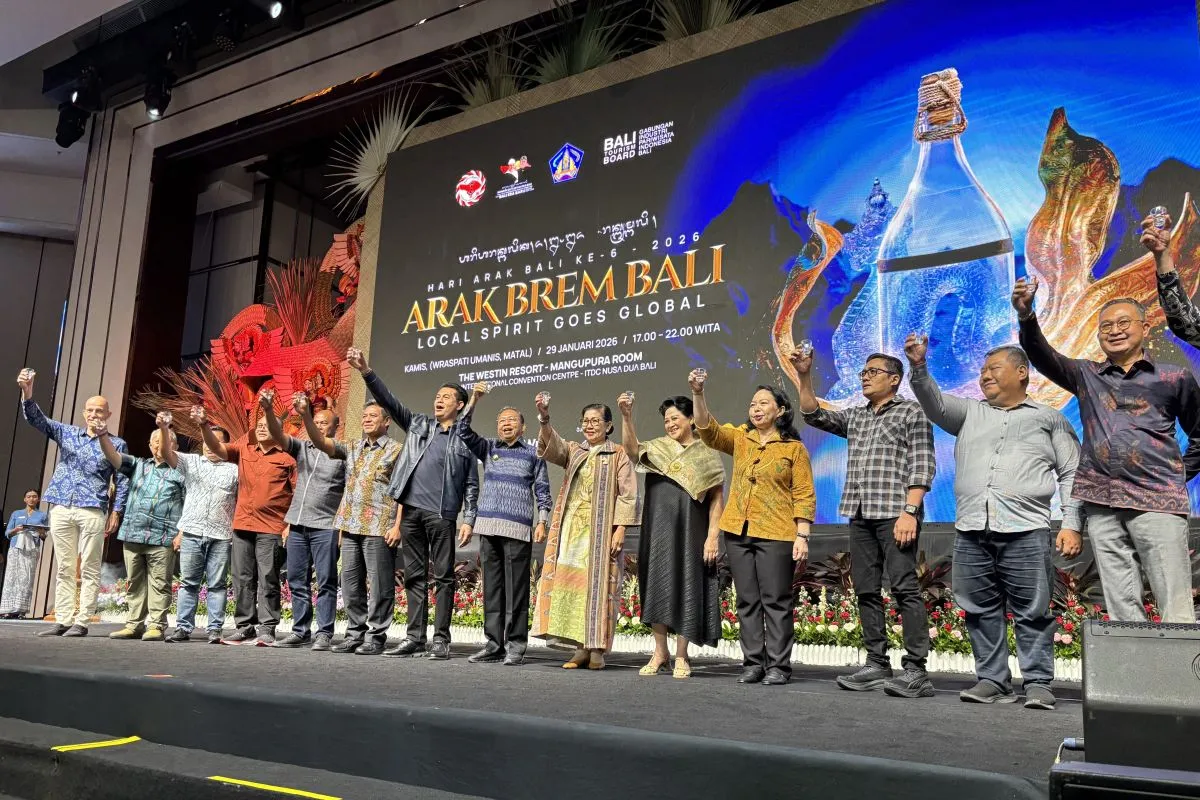
Officials and industry leaders raise a toast during the 6th Bali Arak Day celebration, marking Bali Arak’s transition into a regulated and global market.

Bali Arak has entered a new phase of development as Indonesia’s Ministry of Industry formally granted an industrial business license to support its production and distribution. This decision marks a major shift for Bali’s traditional fermented and distilled beverages, which now operate under a regulated, export-oriented framework.

For years, local producers struggled with high compliance costs and limited access to legal distribution channels. Now, government-backed licensing opens the door for wider market acceptance, improved quality standards, and stronger global competitiveness. More importantly, the move positions Bali arak not only as a cultural symbol, but also as a sustainable economic asset for local communities.


Bali Arak Receives Official Business License

The Ministry of Industry issued the business license during the 6th Bali Arak Day celebration in Badung. The license allows PT Kanti Barak Sejahtera, a subsidiary of Bali provincial government–owned Perumda Kerta Bali Saguna, to manage the production and distribution of alcoholic beverages in the province. Acting Director General of Agro Industry at the Ministry of Industry, Putu Juli Ardika, confirmed the handover and explained its purpose.

“At this moment, we are handing over an industrial business license that will be used by a subsidiary of Perumda Kerta Bali Saguna, which has been appointed to manage the alcoholic beverage production license for the Province of Bali under the name PT Kanti Barak Sejahtera,” he said.

Through this license, the government aims to simplify regulation and ensure legal certainty for producers. As a result, Bali arak can now develop within a clear industrial framework that supports accountability, safety, and long-term growth.


Arak Bali Industry Strengthens Local Producers

The new licensing system directly supports more than 1,472 arak farmers and artisans across Bali. Previously, many producers relied on third-party licensed companies, which increased operational costs and limited independence. Now, a centralized provincial license offers a more inclusive and affordable structure.

Putu Juli Ardika emphasized that the company managing the license should prioritize producer development. “Going forward, this company can focus on mentoring arak farmers and artisans, including improving quality, standardization, packaging, and marketing, so the product can be accepted by consumers and be export-oriented,” he said.

By focusing on training and quality control, the industry can raise product standards while preserving traditional production methods. This approach ensures that local producers remain competitive without losing cultural authenticity.


Bali Arak Brands Expand Across the Island

Currently, 58 legally registered Bali arak brands operate under 18 cooperatives spread across eastern, northern, southern, and western Bali. This expansion reflects steady industry growth since the issuance of Bali Governor Regulation Number 1 of 2020, which formally recognized arak and brem as cultural products.

Bali Governor Wayan Koster welcomed the new license, stating that it removes one of the last major obstacles for local producers. He urged PT Kanti Barak Sejahtera to unite cooperatives and brands under one legal umbrella. “I ask PT Kanti Barak Sejahtera to manage this license for production and distribution purposes, sheltering all cooperatives and arak producers in Bali so they no longer need to rely on costly third-party companies,” Koster said.

This structure allows producers to scale operations while maintaining consistent standards across the island.


Export Growth Signals Global Market Acceptance

Beyond domestic growth, Bali arak has started to gain international recognition. Export values for Category C alcoholic beverages, including Bali arak, increased throughout 2024 and 2025. Key export destinations include Thailand, China, the Netherlands, and the United Arab Emirates.

According to Putu Juli Ardika, traditional alcoholic beverages should not be viewed solely as commercial alcohol products. “Traditional alcoholic beverages should not be viewed merely as alcohol, but as integral parts of customary rituals and symbols of social togetherness,” he said.

He added that rising export demand shows strong global interest and a supportive industrial climate. “This shows that demand for Indonesian-produced alcoholic beverages continues to grow, and that the industrial climate is supportive of becoming an export-oriented production base,” he said.


Bali Arak Enters a New Industry Era

With formal licensing in place, Bali arak has transitioned from informal production into a regulated and globally competitive industry. The policy supports local farmers, strengthens cooperatives, and improves market access without sacrificing cultural value.

As export demand continues to grow, Bali arak stands poised to become both a symbol of heritage and a driver of economic development. This new chapter signals a sustainable future where tradition and industry advance together.


Source: antaranews.com, beritadewata.com

Image: ANTARA/Ni Putu Putri Muliantari 

Latest Article
Traditional Bali Arak Enters Regulated and Global Market
Bali Arak has entered a new phase of development as Indonesia’s Ministry of Industry formally granted...
Illegal Foreign Workers Cost Company Rp360 Million in Bintan
Illegal foreign workers have once again drawn regulatory attention in Indonesia, after authorities fined...
KBLI 2025 Changes Will Not Cancel Existing Business Licenses
Indonesia’s business community has closely watched the transition from KBLI (Indonesian Standard...
5 Corporate ‘Environmental Sins’ That End in Permit Loss
Corporate environmental violations are at the center of Indonesia’s latest enforcement wave. The government...
Indonesia Investment Outlook Strengthens at WEF Davos 2026
Indonesia’s investment outlook continues to strengthen as the Indonesia Pavilion drew strong global investor...

Andrzej Barski

Director of Seven Stones Indonesia

Andrzej is Co-owner/ Founder and Director of Seven Stones Indonesia. He was born in the UK to Polish parents and has been living in Indonesia for more than 33-years. He is a skilled writer, trainer and marketer with a deep understanding of Indonesia and its many cultures after spending many years travelling across the archipelago from North Sumatra to Irian Jaya.

His experience covers Marketing, Branding, Advertising, Publishing, Real Estate and Training for 5-Star Hotels and Resorts in Bali and Jakarta, which has given him a passion for the customer experience. He’s a published author and a regular contributor to local and regional publications. His interests include conservation, eco-conscious initiatives, spirituality and motorcycles. Andrzej speaks English and Indonesian.

Terje H. Nilsen

Director of Seven Stones Indonesia

Terje is from Norway and has been living in Indonesia for over 20-years. He first came to Indonesia as a child and after earning his degree in Business Administration from the University of Agder in Norway, he moved to Indonesia in 1993, where he has worked in leading positions in education and the fitness/ wellness industries all over Indonesia including Jakarta, Banjarmasin, Medan and Bali.

He was Co-owner and CEO of the Paradise Property Group for 10-years and led the company to great success. He is now Co-owner/ Founder and Director of Seven Stones Indonesia offering market entry services for foreign investors, legal advice, sourcing of investments and in particular real estate investments. He has a soft spot for eco-friendly and socially sustainable projects and investments, while his personal business strengths are in property law, tourism trends, macroeconomics, Indonesian government and regulations. His personal interests are in sport, adventure, history and spiritual experiences.

Terje’s leadership, drive and knowledge are recognised across many industries and his unrivalled network of high level contacts in government and business spans the globe. He believes you do good and do well but always in that order. Terje speaks English, Indonesian and Norwegian.

Contact Our Consultants

Ridwan Jasin Zachrie

CFO of Seven Stones Indonesia, Jakarta

Ridwan is one of Indonesia’s top executives with a long and illustrious career in the financial world. He holds several professional certifications including being a Certified Business Valuer (CBV) issued by the Australian Academy of Finance and Management; Broker-Dealer Representative (WPPE); and The Directorship Certification for Directors and Commissioners, issued by the Indonesian Institute of Commissioners and Directors.

His experience includes being the Managing Director at one of the top investment banking groups in the region, the Recapital Group, the CFO at State-owned enterprises in fishery industry and the CEO at Tanri Abeng & Son Holding. He’s also been an Independent Commissioner in several Financial Service companies and on the Audit and Risk Committee at Bank BTPN Tbk, Berau Coal Energy Tbk, Aetra Air Jakarta as well as working for Citibank, Bank Mandiri and HSBC. His last position was as CFO at PT Citra Putra Mandiri – OSO Group.

Ridwan has won a number of prestigious awards including the Best CFO Awards 2019 (Institute of Certified Management Accountant Australia-Indonesia); Asia Pacific Young Business Leader awarded by Asia 21 Network New York USA (Tokyo 2008); UK Alumni Business Awards 2008 awarded by the British Council; and The Most Inspiring Human Resources Practitioners’ version of Human Capital Magazine 2010.

He’s a member of the Board of Trustees of the Alumni Association of the Faculty of Law, Trisakti University, Co-Founder of the Paramadina Public Policy Institute and actively writes books, publications and articles in the mass media. He co-authored “Korupsi Mengorupsi Indonesia” in 2009, which helps those with an interest in understanding governance in Indonesia and the critical issue of corruption. Ridwan speaks Indonesian and English.

Per Fredrik Ecker

Managing Director of Seven Stones Indonesia, Jakarta

Per is the Managing Director of the Seven Stones Indonesia (SSI) Jakarta office and has more than 25-years’ experience in Indonesia, China, and Western Europe. He previously worked in senior management positions with Q-Free ASA, Siemens AG, and other companies in the telecom sector. Over the last six years, he has been the Chairman of the Indonesia-Norway Business Council (INBC) and recently become elected to be on the board of EuroCham Indonesia.

His most recent experience is within Intelligent Transport Solutions (ITS), Telecom, and other sectors within the Indonesian market. He is today through his position in SSI and by representing Norway Connect, promoting Nordic and European companies that would like to explore business opportunities in the Indonesian market. He’s also playing an active role to help create the Nordic House concept in Jakarta that will provide an excellent platform for Nordic companies entering Indonesia, where they’ll find a community that can offer support with trusted information and affordable services to enter this market.