
5 Corporate ‘Environmental Sins’ That End in Permit Loss

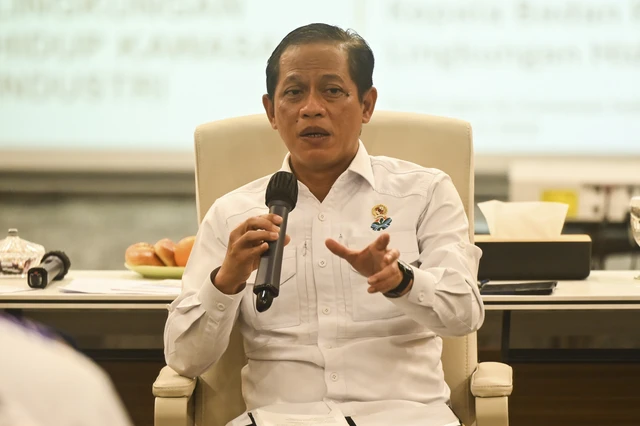
Minister of Environment Hanif Faisol Nurofiq explains measures against corporate environmental violations during a parliamentary meeting.

Corporate environmental violations are at the center of Indonesia’s latest enforcement wave. The government revoked business permits for 28 companies across West Sumatra, North Sumatra, and Aceh after regulators linked serious environmental breaches to recent hydrometeorological disasters. The Ministry of Environment backed these actions with scientific and spatial evidence to ensure accountability and legal strength.

Minister of Environment Hanif Faisol Nurofiq emphasized that his ministry relies on science when pursuing violators. “All enforcement actions taken by the Ministry of Environment are based on scientific evidence. Otherwise, they would be vague and easily challenged operationally,” he said during a working meeting with Commission XII of the House.

Authorities also monitored 68 companies in total, while another 45 firms still submitted reports and awaited field verification. Regulators expect to finish on-site audits by mid‑February 2026.

To understand what triggered the sweeping enforcement actions, lawmakers and regulators highlighted five core violations, framed here as corporate ‘environmental sins’ that are now grounds for permit revocation.

1. Ignoring Government Compliance Directives

Failure to comply with firm government orders ranks as the first ‘sin’ and often precedes harsher penalties. Regulators issued coercive directives after observing alleged misconduct in concession areas.

Officials evaluated conditions, verified spatial data, and supervised teams on the ground. Companies that dismissed these instructions faced escalating sanctions, from warnings to permit termination. These measures sought to prevent environmental risks from growing into damaging disasters.

2. Financial Penalties Becoming Legal Liabilities

Unpaid administrative fines formed the second major violation. When companies refused to pay the fines imposed for non‑compliance, the government treated those unpaid penalties as legal liabilities.

Regulators then intensified enforcement actions and increased scrutiny. Officials viewed unpaid fines as indicators of deliberate avoidance, which created further grounds for revocation and more aggressive oversight.

3. Delays Trigger Corporate Environmental Violations

Delays in paying fines and complying with enforcement orders represented the third violation. Such delays allowed companies to prolong operational benefits while avoiding corrective measures.

Regulators flagged these delays as manipulative tactics that hindered recovery efforts and complicated environmental restoration. They also opened the door to civil lawsuits and criminal probes as regulators sought to deter future violations.

4. Suspension Breaches Raise Regulatory Red Flags

The fourth violation involved companies breaching permit suspensions. When the government suspended business permits, firms were expected to halt operational activities and comply with additional requirements.

Violating these suspensions raised serious regulatory red flags because it implied continued exploitation without legal approval. Lawmakers from Commission XII argued that such breaches contributed to disasters affecting public welfare, including floods, landslides, land and forest fires, and clean water shortages.

5. Irreversible Corporate Environmental Violations

The fifth and most severe violation involved causing environmental damage that regulators deemed difficult or impossible to restore. Officials took this category seriously because it carried real consequences for people and ecosystems.

Spatial analysis identified multiple entities with impacts significant enough to justify civil and criminal action. The Ministry filed civil lawsuits against six entities in North Sumatra with claims totaling IDR 4.8 trillion (USD 295M). Similar suits may target other companies in Sumatra.

In addition to lawsuits, two potential criminal cases remain under investigation, and four more are pending. Hanif confirmed the ministry’s support for these investigations, adding that his office would prepare needed documents. Some cases were forwarded to regional governments, while two others were transferred to the Ministry of Forestry due to jurisdictional issues.

Permit Revocation Signals Tougher Enforcement

Members of Commission XII welcomed the tougher stance. One lawmaker noted that 22 of the 28 permit revocations stemmed from recommendations from the Ministry of Forestry, while six came from the Ministry of Agrarian Affairs and Spatial Planning. Legislators supported focusing more state budget resources on enforcement to prevent future disasters.

They also criticized weaknesses in environmental impact assessments, arguing that assessments often became formalities that legitimized exploitation instead of preventing harm. Lawmakers urged nationwide audits to prevent future disasters and avoid repeating conditions that led to the recent events in Sumatra.

The tougher enforcement signals a shift toward accountability for environmental misconduct. As officials closed the session, one legislator stated, “We will fully support any policy that protects the environment in Indonesia.”


Source: hukumonline.com

Image: Rivan Awal Lingga / Kumparan.com

Latest Article
5 Corporate ‘Environmental Sins’ That End in Permit Loss
Corporate environmental violations are at the center of Indonesia’s latest enforcement wave. The government...
Indonesia Investment Outlook Strengthens at WEF Davos 2026
Indonesia’s investment outlook continues to strengthen as the Indonesia Pavilion drew strong global investor...
Indonesia Secures 6.7 Billion USD in Mineral Investments
Indonesia reached USD 6.7 billion in mineral investments in 2025, reflecting the aggressive push to upgrade...
New Semarang Flights Fuel Central Java Foreign Investment
Semarang international flights now accelerate investor mobility as Central Java courts more foreign capital....
Prabowo meets British PM to Strengthen Indonesia–UK Partnership
President Prabowo Subianto flew to London to meet with British Prime Minister Keir Starmer to strengthen...

Andrzej Barski

Director of Seven Stones Indonesia

Andrzej is Co-owner/ Founder and Director of Seven Stones Indonesia. He was born in the UK to Polish parents and has been living in Indonesia for more than 33-years. He is a skilled writer, trainer and marketer with a deep understanding of Indonesia and its many cultures after spending many years travelling across the archipelago from North Sumatra to Irian Jaya.

His experience covers Marketing, Branding, Advertising, Publishing, Real Estate and Training for 5-Star Hotels and Resorts in Bali and Jakarta, which has given him a passion for the customer experience. He’s a published author and a regular contributor to local and regional publications. His interests include conservation, eco-conscious initiatives, spirituality and motorcycles. Andrzej speaks English and Indonesian.

Terje H. Nilsen

Director of Seven Stones Indonesia

Terje is from Norway and has been living in Indonesia for over 20-years. He first came to Indonesia as a child and after earning his degree in Business Administration from the University of Agder in Norway, he moved to Indonesia in 1993, where he has worked in leading positions in education and the fitness/ wellness industries all over Indonesia including Jakarta, Banjarmasin, Medan and Bali.

He was Co-owner and CEO of the Paradise Property Group for 10-years and led the company to great success. He is now Co-owner/ Founder and Director of Seven Stones Indonesia offering market entry services for foreign investors, legal advice, sourcing of investments and in particular real estate investments. He has a soft spot for eco-friendly and socially sustainable projects and investments, while his personal business strengths are in property law, tourism trends, macroeconomics, Indonesian government and regulations. His personal interests are in sport, adventure, history and spiritual experiences.

Terje’s leadership, drive and knowledge are recognised across many industries and his unrivalled network of high level contacts in government and business spans the globe. He believes you do good and do well but always in that order. Terje speaks English, Indonesian and Norwegian.

Contact Our Consultants

Ridwan Jasin Zachrie

CFO of Seven Stones Indonesia, Jakarta

Ridwan is one of Indonesia’s top executives with a long and illustrious career in the financial world. He holds several professional certifications including being a Certified Business Valuer (CBV) issued by the Australian Academy of Finance and Management; Broker-Dealer Representative (WPPE); and The Directorship Certification for Directors and Commissioners, issued by the Indonesian Institute of Commissioners and Directors.

His experience includes being the Managing Director at one of the top investment banking groups in the region, the Recapital Group, the CFO at State-owned enterprises in fishery industry and the CEO at Tanri Abeng & Son Holding. He’s also been an Independent Commissioner in several Financial Service companies and on the Audit and Risk Committee at Bank BTPN Tbk, Berau Coal Energy Tbk, Aetra Air Jakarta as well as working for Citibank, Bank Mandiri and HSBC. His last position was as CFO at PT Citra Putra Mandiri – OSO Group.

Ridwan has won a number of prestigious awards including the Best CFO Awards 2019 (Institute of Certified Management Accountant Australia-Indonesia); Asia Pacific Young Business Leader awarded by Asia 21 Network New York USA (Tokyo 2008); UK Alumni Business Awards 2008 awarded by the British Council; and The Most Inspiring Human Resources Practitioners’ version of Human Capital Magazine 2010.

He’s a member of the Board of Trustees of the Alumni Association of the Faculty of Law, Trisakti University, Co-Founder of the Paramadina Public Policy Institute and actively writes books, publications and articles in the mass media. He co-authored “Korupsi Mengorupsi Indonesia” in 2009, which helps those with an interest in understanding governance in Indonesia and the critical issue of corruption. Ridwan speaks Indonesian and English.

Per Fredrik Ecker

Managing Director of Seven Stones Indonesia, Jakarta

Per is the Managing Director of the Seven Stones Indonesia (SSI) Jakarta office and has more than 25-years’ experience in Indonesia, China, and Western Europe. He previously worked in senior management positions with Q-Free ASA, Siemens AG, and other companies in the telecom sector. Over the last six years, he has been the Chairman of the Indonesia-Norway Business Council (INBC) and recently become elected to be on the board of EuroCham Indonesia.

His most recent experience is within Intelligent Transport Solutions (ITS), Telecom, and other sectors within the Indonesian market. He is today through his position in SSI and by representing Norway Connect, promoting Nordic and European companies that would like to explore business opportunities in the Indonesian market. He’s also playing an active role to help create the Nordic House concept in Jakarta that will provide an excellent platform for Nordic companies entering Indonesia, where they’ll find a community that can offer support with trusted information and affordable services to enter this market.