
Indonesia’s investment outlook continues to strengthen as the government sets a more ambitious target for 2026. The Ministry of Investment and Downstreaming/BKPM aims to realize Rp2,100 trillion (approximately US$131 billion) in new investment, reflecting a 10.4% increase from the 2025 target of Rp1,905 trillion. The government views this increase as evidence of improved investor confidence, despite intense global competition and ongoing geopolitical tensions.
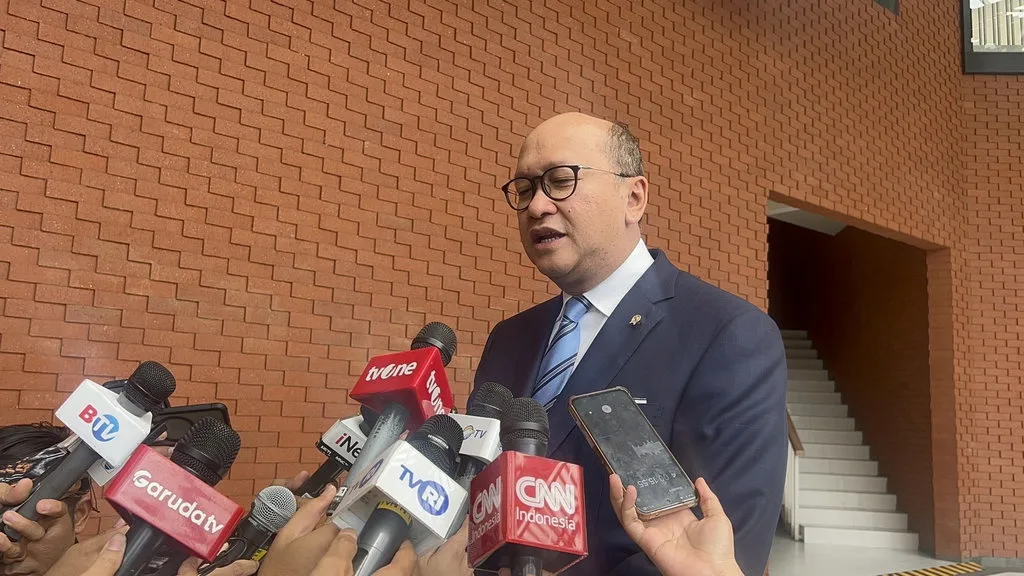
Rosan Perkasa Roeslani, Minister of Investment and Head of BKPM, underscored the scale of the target. “In terms of amount, it is extraordinary because the figures continue to rise. For example, in 2024 it is Rp 1,600 trillion, 2025 Rp 1,905 trillion, and in 2026 more than Rp 2,100 trillion. So, the increase is significant,” he told reporters as reported by Sinpo.id.
Indonesia Investment Outlook Strengthens for 2026
The rising targets reflect the government’s broader economic strategy. Officials believe stronger domestic demand, improved access to financing, and streamlined licensing procedures will support investment expansion. Additionally, officials see Indonesia as well-positioned to compete with regional peers for foreign capital.
Rosan acknowledged the sharper competition within Southeast Asia. He pointed to the data center industry as an example, noting how Indonesia competes directly with Malaysia and Thailand. However, he argued Indonesia maintains advantages, including competitive digital electricity pricing, a large demographic base, and relative national stability.
Government Bets on Danantara to Accelerate Capital Flows
The government also counts on Danantara to help accelerate capital flows. The institution will focus on investment partnerships, particularly in industries that require long-term capital and strategic coordination. Danantara will spend most of 2025 finalizing its organizational framework, regulatory structure, and key government regulations.
New investments under Danantara are scheduled to begin in October 2025, with full acceleration expected in 2026. Rosan explained that Danantara will not act alone. Instead, it will collaborate with foreign investors under a tandem scheme. “We are investing together and taking calculated risks together. This gives confidence to foreign investors,” he said.
Officials expect the tandem model to reinforce domestic investment while helping Indonesia attract more foreign capital into priority sectors.
Renewable Energy Investment Draws Strong Foreign Interest
Renewable energy investment stands out as one of Indonesia’s strongest opportunities. Rosan highlighted clean energy as a fast-growing sector driven by investor appetite and national energy planning. He stated that Indonesia’s renewable energy potential reaches 3,700 gigawatts, although installed capacity remains small at around 15.1 gigawatts.
Geothermal projects continue to attract Japanese investors, with a major geothermal investment in Aceh worth around US$900 million already securing financial closing and entering construction this year. Officials expect similar deals in solar, hydro, and geothermal energy as the sector matures.
Rosan emphasized the long-term energy transition. “We want to push sectors that have tremendous potential and very high appetite from both domestic and foreign investors, and renewable energy is one of them. It is already included in PLN’s long-term plan, where in the future, 76% of national energy will come from renewable sources,” he noted.
Digital Economy and Data Centers Among Top Growth Sectors
The digital economy, industrial estates, and data centers also remain on the government’s radar. Hyperscale companies have shown growing interest, and officials noted shifting investment patterns in the region. “Previously, many of them invested in Johor and Thailand, but since last year we have been speaking intensively and see that data center investment will grow significantly,” Rosan explained.
Waste-to-energy projects are also moving through the tendering phase. Investor response has been strong, and the government expects waste-to-energy to emerge as a meaningful contributor to the 2026 investment target.
Meeting Investment Targets Requires Skilled Workforce and Global Stability
Achieving the government’s targets will require both favorable policy conditions and a stronger workforce. Rosan underscored the importance of human capital development to support the needs of strategic sectors, including renewable energy and digital industries.
Despite global uncertainty, Indonesia expects long-term investment growth to remain strong. Over the last decade, Indonesia attracted roughly Rp9,100 trillion in investment. Meanwhile, officials project total investment between 2024 and 2029 to exceed Rp13,000 trillion.
The government believes the Rp2,100 trillion target for 2026 is achievable, although officials remain aware of global risks. Nevertheless, they view sustainability, technology adoption, and workforce development as essential pillars for ensuring lasting economic benefits.
Source: sinpo.id, kontan.co.id
Image: tirto.id/Ayu Mumpuni