
ASEAN Signals Readiness for BRICS Currency Adoption in 2026

ASEAN has signaled readiness to support a new regional currency initiative set to debut in 2026. Discussion of BRICS currency adoption has grown across Southeast Asia as governments explore alternatives for trade and settlement. Nine ASEAN nations have expressed willingness to consider the currency once it launches, marking a notable shift in regional payment strategies and reducing reliance on the U.S. dollar.


ASEAN Prepares for New BRICS Currency Framework

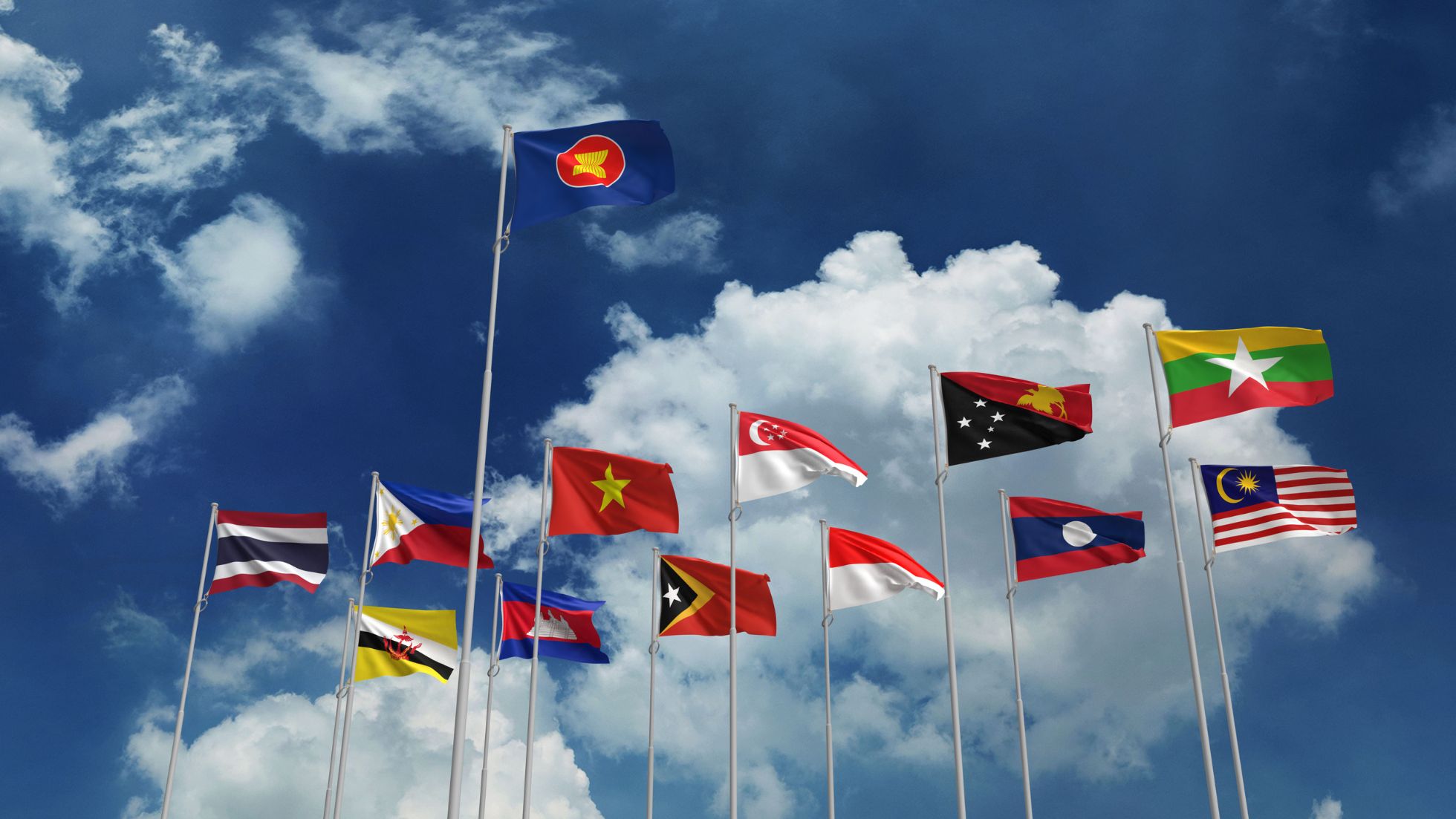
Nine ASEAN members—Brunei Darussalam, Cambodia, Laos, Malaysia, Myanmar, the Philippines, Singapore, Thailand, and Vietnam—have indicated openness to using the BRICS currency in regional trade and economic collaboration.

This stance aligns with their goal of strengthening regional integration and reducing reliance on U.S. dollar settlements. Indonesia, as ASEAN’s largest economy, has already joined BRICS and will adopt the currency in future bloc transactions. The alignment represents a new layer of financial coordination within Southeast Asia.


Drivers Behind BRICS Currency Adoption

ASEAN’s openness to BRICS currency adoption reflects a broader push toward financial diversification and reduced exposure to U.S. monetary policy. Many emerging economies have grown wary of dollar-linked vulnerabilities, including volatility, interest rate risk, and political influence.

China and Russia, acting as the main drivers of BRICS, encourage partner nations to decrease reliance on the U.S. dollar in trade settlements. Additionally, dissatisfaction over sanctions has reinforced interest in alternative systems that grant greater strategic autonomy.


Strategic Economic Shift with Indonesia at the Center

The potential adoption of a BRICS currency underscores a redistribution of global economic power and challenges the historical dominance of the U.S. dollar in trade. Analysts believe its launch could influence capital flows, trade routes, and future bilateral arrangements throughout Asia.

Indonesia’s strategic position within ASEAN enables it to bridge Southeast Asia and the BRICS bloc. As the region’s largest economy, Indonesia’s participation strengthens the initiative’s credibility and could support a more coordinated transition toward alternative settlement systems.


Challenges and Conditions for Adoption

Despite regional interest, ASEAN governments remain cautious. The BRICS currency must demonstrate price stability, transparent governance, and predictable convertibility. Policymakers acknowledge that the initiative requires supporting institutions, including clearing systems, payment infrastructure, and dispute resolution mechanisms.

Currency substitution also carries domestic risks. Sudden shifts in trade invoicing could affect inflation, reserves management, and investment flows. Therefore, most ASEAN economies signal gradual adoption rather than abrupt transition.


Broader Implications for Southeast Asia

A successful BRICS currency could reshape Southeast Asia’s economic architecture. Trade within ASEAN may become less dependent on Western financial centers, while new corridors of investment could link the region more closely to China, India, and the Middle East. Firms operating in logistics, commodities, and manufacturing may benefit from reduced transaction costs and currency volatility.

Still, competition between the U.S. dollar and alternative currencies is likely to intensify. Analysts expect a hybrid system to emerge, where multiple currencies coexist across different sectors and geographies. This multipolar environment could offer Southeast Asia greater flexibility at the cost of higher policy complexity.


What 2026 Could Mean for Global Markets

If the BRICS currency launches in 2026, it could alter established global trading systems. Financial markets will assess their convertibility, stability, and adoption rate. Western institutions may view the initiative as a competitive challenge to the dollar-driven order. Investors will watch closely for implementation details and regulatory frameworks. 2026 could mark the beginning of a financial landscape less dependent on the dollar and more responsive to Asian economic dynamics.


Source: sindonews.com, kalderanews.com 

Image: Canva Images 

Latest Article
ASEAN Signals Readiness for BRICS Currency Adoption in 2026
ASEAN has signaled readiness to support a new regional currency initiative set to debut in 2026. Discussion...
Indonesia Consumer Confidence Stable Despite Risks, BI Says
Consumer confidence in Indonesia showed resilience in December 2025 as the Consumer Confidence Index...
Indonesia Composite Index Tops 9,000 in Historic Milestone
The Indonesia Composite Index surged above the key 9,000 level on Thursday, marking a historic milestone...
Indonesia Tax Enforcement Tightens Under New PMK 111 Rule
Indonesia’s tax enforcement has entered a stricter phase following the enactment of Minister of...
Indonesia Economy in 2026 Set to Stay Resilient and Stable
The Indonesian economy in 2026 is expected to remain resilient and stable, supported by steady growth,...

Andrzej Barski

Director of Seven Stones Indonesia

Andrzej is Co-owner/ Founder and Director of Seven Stones Indonesia. He was born in the UK to Polish parents and has been living in Indonesia for more than 33-years. He is a skilled writer, trainer and marketer with a deep understanding of Indonesia and its many cultures after spending many years travelling across the archipelago from North Sumatra to Irian Jaya.

His experience covers Marketing, Branding, Advertising, Publishing, Real Estate and Training for 5-Star Hotels and Resorts in Bali and Jakarta, which has given him a passion for the customer experience. He’s a published author and a regular contributor to local and regional publications. His interests include conservation, eco-conscious initiatives, spirituality and motorcycles. Andrzej speaks English and Indonesian.

Terje H. Nilsen

Director of Seven Stones Indonesia

Terje is from Norway and has been living in Indonesia for over 20-years. He first came to Indonesia as a child and after earning his degree in Business Administration from the University of Agder in Norway, he moved to Indonesia in 1993, where he has worked in leading positions in education and the fitness/ wellness industries all over Indonesia including Jakarta, Banjarmasin, Medan and Bali.

He was Co-owner and CEO of the Paradise Property Group for 10-years and led the company to great success. He is now Co-owner/ Founder and Director of Seven Stones Indonesia offering market entry services for foreign investors, legal advice, sourcing of investments and in particular real estate investments. He has a soft spot for eco-friendly and socially sustainable projects and investments, while his personal business strengths are in property law, tourism trends, macroeconomics, Indonesian government and regulations. His personal interests are in sport, adventure, history and spiritual experiences.

Terje’s leadership, drive and knowledge are recognised across many industries and his unrivalled network of high level contacts in government and business spans the globe. He believes you do good and do well but always in that order. Terje speaks English, Indonesian and Norwegian.

Contact Our Consultants

Ridwan Jasin Zachrie

CFO of Seven Stones Indonesia, Jakarta

Ridwan is one of Indonesia’s top executives with a long and illustrious career in the financial world. He holds several professional certifications including being a Certified Business Valuer (CBV) issued by the Australian Academy of Finance and Management; Broker-Dealer Representative (WPPE); and The Directorship Certification for Directors and Commissioners, issued by the Indonesian Institute of Commissioners and Directors.

His experience includes being the Managing Director at one of the top investment banking groups in the region, the Recapital Group, the CFO at State-owned enterprises in fishery industry and the CEO at Tanri Abeng & Son Holding. He’s also been an Independent Commissioner in several Financial Service companies and on the Audit and Risk Committee at Bank BTPN Tbk, Berau Coal Energy Tbk, Aetra Air Jakarta as well as working for Citibank, Bank Mandiri and HSBC. His last position was as CFO at PT Citra Putra Mandiri – OSO Group.

Ridwan has won a number of prestigious awards including the Best CFO Awards 2019 (Institute of Certified Management Accountant Australia-Indonesia); Asia Pacific Young Business Leader awarded by Asia 21 Network New York USA (Tokyo 2008); UK Alumni Business Awards 2008 awarded by the British Council; and The Most Inspiring Human Resources Practitioners’ version of Human Capital Magazine 2010.

He’s a member of the Board of Trustees of the Alumni Association of the Faculty of Law, Trisakti University, Co-Founder of the Paramadina Public Policy Institute and actively writes books, publications and articles in the mass media. He co-authored “Korupsi Mengorupsi Indonesia” in 2009, which helps those with an interest in understanding governance in Indonesia and the critical issue of corruption. Ridwan speaks Indonesian and English.

Per Fredrik Ecker

Managing Director of Seven Stones Indonesia, Jakarta

Per is the Managing Director of the Seven Stones Indonesia (SSI) Jakarta office and has more than 25-years’ experience in Indonesia, China, and Western Europe. He previously worked in senior management positions with Q-Free ASA, Siemens AG, and other companies in the telecom sector. Over the last six years, he has been the Chairman of the Indonesia-Norway Business Council (INBC) and recently become elected to be on the board of EuroCham Indonesia.

His most recent experience is within Intelligent Transport Solutions (ITS), Telecom, and other sectors within the Indonesian market. He is today through his position in SSI and by representing Norway Connect, promoting Nordic and European companies that would like to explore business opportunities in the Indonesian market. He’s also playing an active role to help create the Nordic House concept in Jakarta that will provide an excellent platform for Nordic companies entering Indonesia, where they’ll find a community that can offer support with trusted information and affordable services to enter this market.