
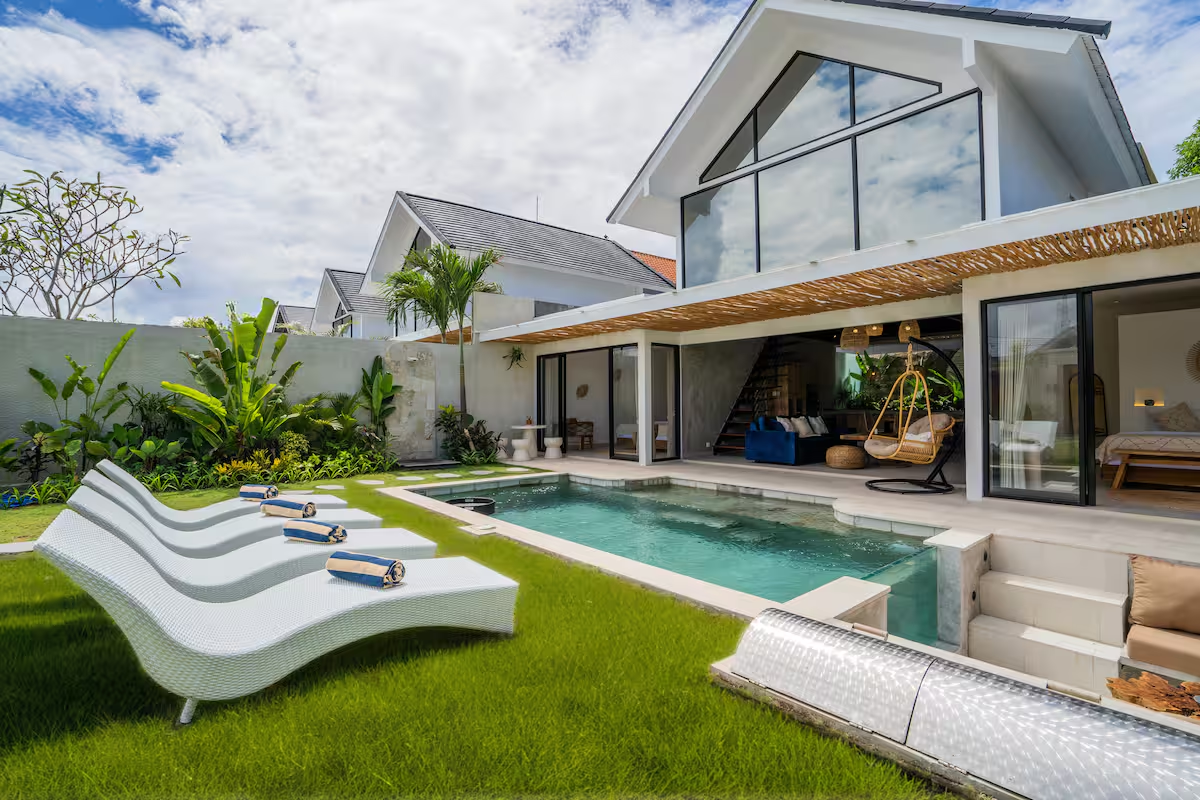
Bali property prices continue to rise as villa demand drives strong market activity across the island. Recent data from developers and Bank Indonesia show clear upward momentum, supported by higher production costs and growing interest in large residential units.
Bali Property Prices Rise to 10% — What’s Driving It?
Developers in Bali report steady growth in property values as demand accelerates. The Real Estate Indonesia (REI) Bali Chapter notes that prices have climbed between 2.5% and 10% over the past year. Chairman Anak Agung Made Darma Setiawan explains that several forces now push prices higher. He highlights increases in material and labor costs while pointing to a sharp rise in villa demand as a major contributor. “The cause is the increasing demand for villas. This also encourages villa investment in Bali to increase,” he said.
REI records material costs rising between 5% and 10%, while labor wages increased 3% to 5%. Setiawan considers these adjustments reasonable given Bali’s strong market appetite. Developers continue responding to demand, especially in areas where investors seek premium living spaces.
Read More: Indonesia Property Brokerage Rules Tighten Under New Policy
Villa Demand Pushes Market Activity in Key Areas
Villa demand continues to expand rapidly across Bali, and this trend influences pricing in both emerging and established hotspots. Investors actively target areas such as Canggu, Seseh, Kedungu, Nyanyi, and parts of Uluwatu due to strong tourism flows and high rental yields. Buyers also seek larger homes for personal use, reflecting lifestyle changes and the appeal of Bali’s outdoor-focused living environment.
Demand for villas also strengthens the construction pipeline as developers race to secure suitable land. This momentum spreads across neighborhoods that offer space, accessibility, and long-term value. New villa projects attract international buyers who consider Bali a stable and profitable real estate destination.
Read More: Bali Wellness Tourism Offers Big Potential for Investors
Bali Property Index Shows Strong Q3 Performance
Bank Indonesia’s latest Residential Property Price Survey highlights clear upward movement in Bali’s property market. The Residential Property Price Index (IHPR) grew 1.08% year on year (YoY) in the third quarter of 2025, up from 0.67% in the previous quarter. Growth occurred across all home-size categories. Small homes rose 1.66%, medium homes increased 1.12%, and large homes climbed 0.82%.
Bank Indonesia confirms that higher production costs remain the main driver of this growth. Most respondents attribute rising unit prices to more expensive construction materials and higher labor wages. These cost pressures continue shaping residential pricing across the island.
Read More: Bali Investment Climate Shows Strong Growth Momentum
Price Corrections Still Appear in Select Badung Zones
Despite the overall increase, some locations experience price corrections as supply expands. The Indonesian Real Estate Broker Association (Arebi) Bali notes that several areas in Badung with heavy development have started to adjust downwards.
Chairman Michael Hikma Gunawan explains that these localized shifts reflect supply and demand. “Some areas in Badung Regency with a lot of development have experienced corrections; we see this as a price correction in line with supply and demand,” he said. He adds that Denpasar still maintains strong buyer interest due to its stability and steady demand.
Financing and Market Challenges for Buyers in 2025
Although property prices continue to rise, buyers face several structural challenges. Higher mortgage interest rates, limited land availability, and larger down payment requirements influence purchase decisions. Rising construction costs also affect affordability, especially for primary home buyers.
Developers rely heavily on self-financing, which accounts for 55% of project funding. Bank loans contribute 36.6%, while buyer funds represent 6.3%. Non-bank financial institutions cover the remaining 2.2%. For consumers, mortgages remain the dominant financing method, covering 62.1% of home purchases. Installment-based cash payments and full cash options offer alternatives but appeal to a smaller segment.
What Rising Bali Property Prices Mean for Investors in 2025
Investors continue to respond positively to rising Bali property prices, particularly in the large home segment. Bank Indonesia reports a 0.7% increase in the market share of large home sales compared to the previous quarter, reflecting buyers’ confidence in long-term appreciation and solid rental potential.
This trend aligns with the island’s broader market momentum, supported by strong villa demand and rising construction costs. While select high-supply areas may experience temporary corrections, overall investor sentiment remains optimistic as Bali continues offering stable growth and attractive opportunities across key locations.
Source: bali.bisnis.com, merdeka.com
Image: Seven Stones Indonesia