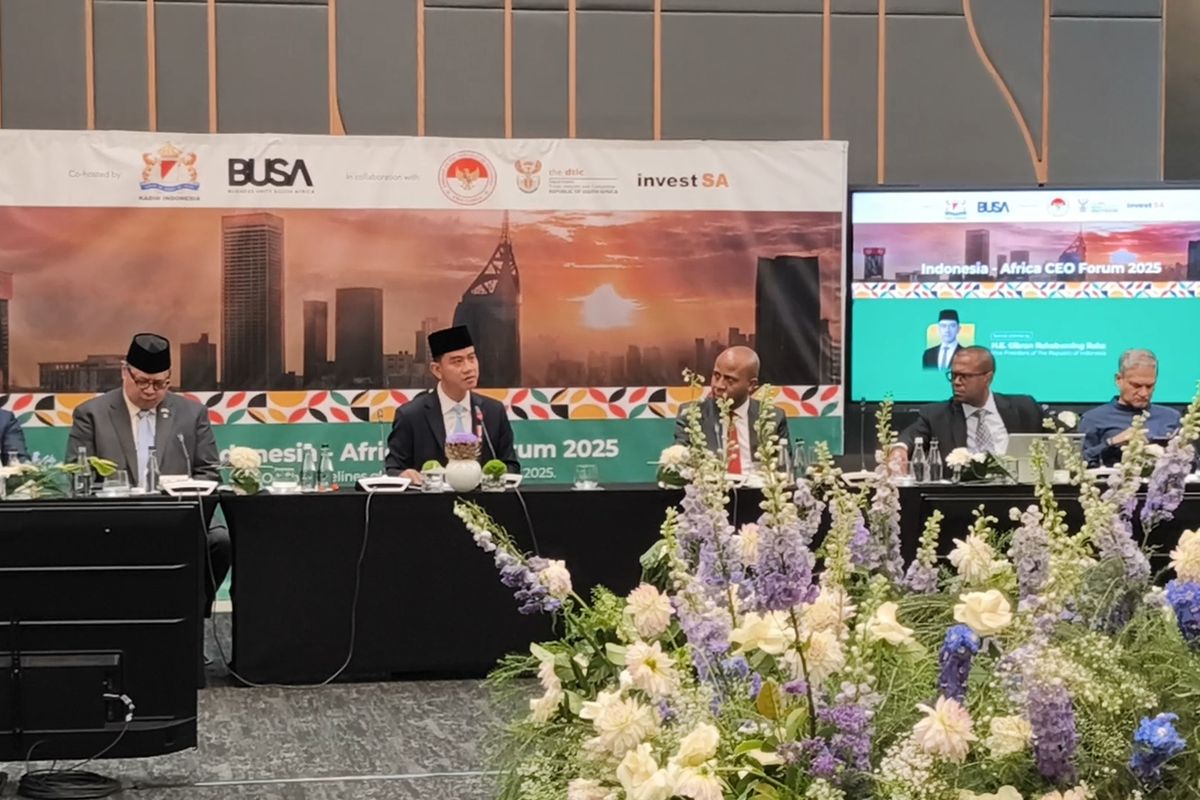
The Indonesia–South Africa Cooperation takes a major step forward as Indonesia launches the Indonesia–South Africa High-Level Business Council (ISA–HLBC) in Johannesburg.
The event marks Indonesia’s push to enhance economic diplomacy with Africa. Vice President Gibran Rakabuming Raka attended the forum alongside Coordinating Minister for Economic Affairs Airlangga Hartarto. Their presence highlights Indonesia’s commitment to expanding its role in the region. The launch forms part of the Indonesia–Africa CEO Forum 2025 and signals stronger engagement between both nations.
Indonesia–South Africa Cooperation Enters a New Phase
The establishment of the ISA–HLBC begins a new era for bilateral relations. Indonesia aims to use this platform to deepen ties and create structured collaboration with South Africa. As an upper-middle-income country, Indonesia sees multilateralism and strong G20 legitimacy as vital pillars for national economic transformation.
Airlangga emphasized this direction, stating, “The establishment of the Indonesia–South Africa High-Level Business Council (ISA–HLBC) is a concrete step to strengthen the strategic partnership between Indonesia and South Africa amid increasingly complex and uncertain global dynamics.” The initiative reflects Indonesia’s strategy to engage with Africa more assertively.
Read More: Indonesia-Norway Carbon Deal Targets 12 Million Ton Emission Cut
High-Level Business Council to Drive Strategic Partnership
The ISA–HLBC will play a central role in shaping long-term cooperation. The council brings together leaders from government and business to address key economic opportunities. Airlangga highlighted the importance of this collaboration during the forum.
He noted that the G20 remains a crucial platform to respond to global challenges, especially as unilateral policies threaten international trade stability. Airlangga also expressed appreciation for South Africa’s G20 Presidency. His remarks underscored Indonesia’s intention to build stronger bilateral and regional alliances.
Global Supply Chain Shifts Intensify Economic Collaboration
Rapid global changes push both countries to strengthen ties. Shifts in supply chain structures require adaptable and forward-looking economic strategies. Businesses face tighter market competition and new international trade rules. These pressures make coordinated responses essential.
Both governments, therefore, see ISA–HLBC as a timely initiative. The council encourages stronger alignment between the public and private sectors. This approach helps tackle emerging challenges while opening new growth opportunities. The collaboration positions both nations to address disruptions and capture benefits from global realignments.
Read More: CIIE 2025 Trade Opens New Path For Indonesia Export Expansion
Expanding Indonesia–South Africa Cooperation Through Investment
Investment becomes a key pillar of this growing partnership. Airlangga stressed that ISA–HLBC will expand structured and sustainable cooperation that creates value for both sides. He said, “The establishment of the Indonesia–South Africa High-Level Business Council (ISA–HLBC) is a strategic step toward expanding a more structured, sustainable, and value-driven economic partnership between the two countries.”
Indonesia and South Africa hold influential positions in the global economy. Both nations can strengthen resilient and inclusive supply chains. Their partnership also supports mutually beneficial trade and investment flows. The new council encourages deeper engagement and investment-led growth.
Long-Term Prospects for Bilateral Growth
The launch of ISA–HLBC sets the foundation for long-term collaboration. Indonesia and South Africa aim to build resilient economic links that support sustainable development. Their cooperation reinforces rules-based trade, inclusive growth, and stronger supply chain stability.
The initiative reflects Indonesia’s broader strategy to engage Africa through high-level diplomacy and targeted investment programs. As both countries strengthen ties, they unlock opportunities that support shared prosperity and future economic progress.
Source: wartaekonomi.co.id
Image: KOMPAS.com/Rahel