
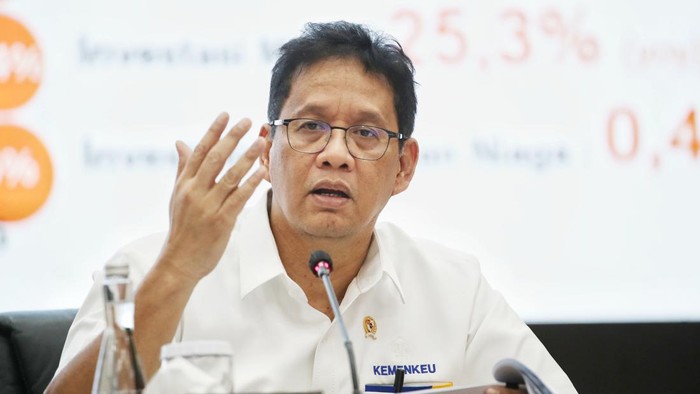
The Indonesia family office plan continues to spark debate as Finance Minister Purbaya Yudhi Sadewa firmly rejected the use of state funds to establish it. The initiative, first proposed by Luhut Binsar Pandjaitan, aims to attract large-scale foreign investments. However, Purbaya made it clear that no allocation from the State Budget (APBN) will support the project.
Purbaya Yudhi Sadewa Statement on State Budget Use
Purbaya emphasized that he would not divert public funds to finance the family office. He said his priority remains ensuring the national budget supports targeted and transparent programs.
“I’ve heard about this issue (family office) for a long time, but let it be. If DEN can build it on their own, then go ahead. I won’t reallocate the budget (APBN) for that,” Purbaya stated at the Directorate General of Taxes (DJP) headquarters in Jakarta on Monday, October 13.
He underscored that the Ministry of Finance will only fund programs that deliver clear results. “My focus is on allocating the budget properly so that implementation runs on time, hits the target, and there’s no leakage—that’s it,” he added.
Purbaya also clarified that he plays no role in establishing the family office and that his understanding of the concept remains limited. “No, I’m not involved. I just wish them well. I don’t fully understand the concept yet. Even though the DEN Chairman often talks about it, I’ve never seen the actual concept, so I can’t really comment,” he explained.
Understanding the Indonesia Family Office Plan
The Indonesia family office plan was first introduced by Luhut Binsar Pandjaitan during his time as Coordinating Minister for Maritime and Investment Affairs under President Joko Widodo. The initiative aims to create a platform where foreign investors can manage their wealth in Indonesia with favorable tax treatment.
According to Luhut, countries such as Singapore, Hong Kong, and Abu Dhabi already have thriving family office sectors. Singapore alone hosts around 1,500 family offices, which he believes can serve as a model for Indonesia. He envisioned that this structure could attract investments worth up to US$500 billion, equivalent to approximately Rp8,151.95 trillion, over the coming years. This amount would represent about 5 percent of the total global wealth managed by family offices, estimated at US$11.7 trillion.
Typically, family offices offer services like investment management, financial planning, and tax consulting. Luhut noted that under the proposed system, foreign investors could deposit funds without immediate taxation. Taxes would only apply if the investments generated job creation in Indonesia.
Luhut’s Ongoing Effort to Establish Family Office
Despite the Finance Minister’s firm stance, Luhut continues to push for the initiative. In late July, he confirmed that the family office project would proceed even with a change in government.
“I think it’s still moving forward. We’re pushing it continuously. We hope it can be decided by the president soon,” Luhut said at the Indonesia Stock Exchange (IDX) building on July 28.
He expressed optimism that the family office could begin operations within the year. “Yes, we hope it can happen this year,” he added.
Luhut sees the initiative as part of Indonesia’s long-term strategy to attract foreign investors, diversify the economy, and strengthen its financial ecosystem.
Balancing Investment Growth and Fiscal Responsibility
While the proposed family office could position Indonesia as a regional investment hub, the government faces the challenge of maintaining fiscal responsibility. Purbaya’s rejection of state funding highlights the importance of transparency and proper allocation in public spending.
Experts note that attracting private capital without compromising the state budget could help Indonesia balance growth and fiscal prudence. The country seeks to enhance its investment appeal while ensuring that new initiatives do not burden public finances.
Fiscal Discipline Amid Investment Ambitions
Purbaya’s stance reflects the government’s broader goal of fiscal discipline amid efforts to boost investment. His insistence on targeted spending shows a commitment to protecting national finances. Meanwhile, Luhut’s continued push for the family office underscores Indonesia’s ambition to join global financial centers like Singapore and Hong Kong.
As discussions continue, the success of the Indonesia family office plan will depend on how the government balances innovation with responsibility—ensuring investment growth without sacrificing fiscal integrity.
Source: cnnindonesia.com
Image: Pradita Utama / Detik Finance