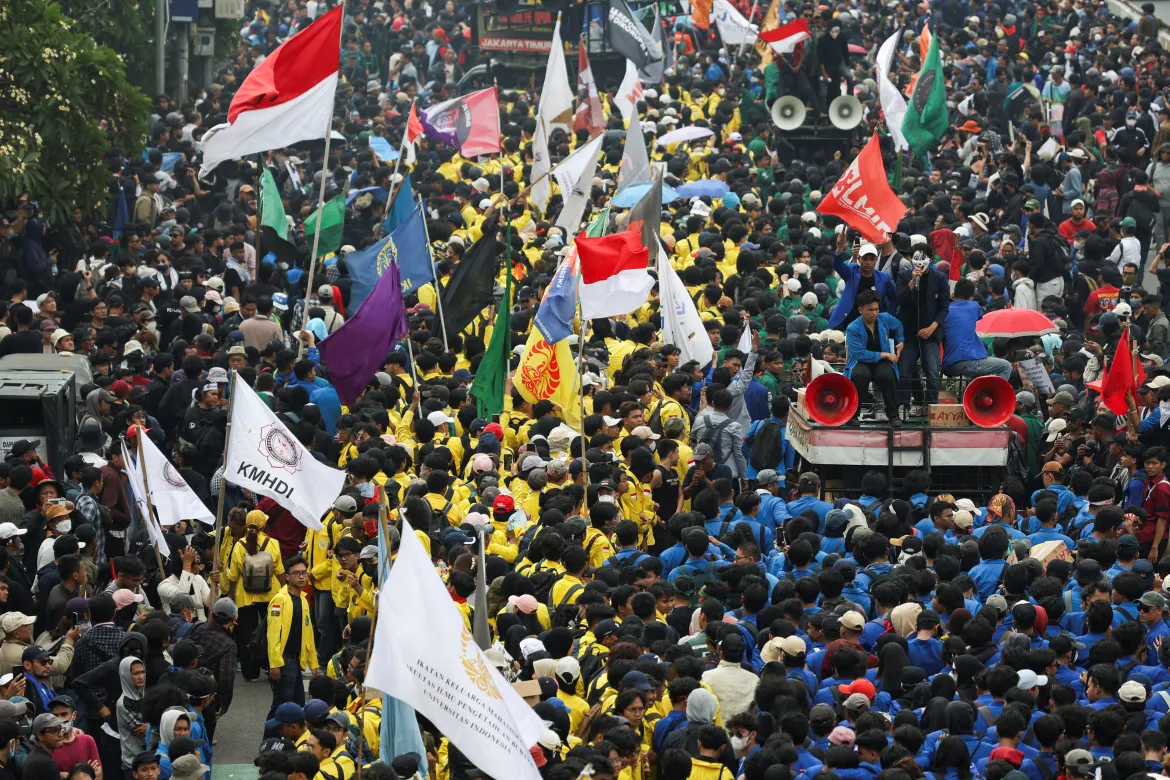
The ongoing protests in Indonesia have impacted the economy in significant ways, sparking concern across the business community. Demonstrations that turned violent in Jakarta and other regions have raised fears of disrupted investment, weaker consumer confidence, and slowing growth. Business leaders and government officials alike are calling for calm, dialogue, and security measures to stabilize the situation.
Business Concerns Amid Protests Grow in Indonesia
Entrepreneurs are sounding the alarm about the risks posed by the unrest. Sarman Simanjorang, Deputy Chairman of the Indonesian Chamber of Commerce and Industry (Kadin), urged for demonstrations to end peacefully. He warned that ongoing turmoil would disrupt daily business operations across key sectors.
“If people are afraid to leave their homes, then many business sectors will be disrupted, such as transportation, trade, culinary, malls or shopping centers, hotels, restaurants, logistics, and more,” Sarman said in a written statement. He added that prolonged disruption could undermine national growth targets.
Indonesian Chamber of Commerce and Industry Chairman Anindya Bakrie also highlighted the economic risks. He emphasized that Indonesia must face its economic challenges while maintaining public security. “During unstable security conditions, economic activities will be disrupted and society will suffer the consequences,” he said, as reported by Bisnis.com. According to him, dialogue remains the best way to express aspirations.
Read More: Rupiah Exchange Rate Falls Amid Jakarta Protest Impact
Retail Sector Losses in Indonesia During Unrest
The retail sector has already felt the impact of the demonstrations. In Jakarta, seven malls temporarily closed their operations, while many others reduced store hours. The closures significantly cut productivity and sales.
Roy Nicholas Mandey, Chairman of the Indonesian Global Retail Affiliation (AGRA), explained the scale of the problem. “If a store cuts its operating hours by one-third, productivity and sales will also fall by one-third,” he said, as cited by Kompas.com. He stressed that disruptions to retail would directly affect household consumption, a major driver of Indonesia’s economy.
To limit further damage, AGRA urged the government to guarantee public safety, maintain smooth logistics, and ensure fair protection for retailers and suppliers, including small and medium-sized enterprises. Roy also appealed to the public to avoid panic buying. “We guarantee that logistics and distribution will continue to be monitored and carried out optimally,” he assured.
Investor Confidence in Indonesia Faces New Pressure
Investor confidence in Indonesia has also come under pressure as the unrest attracted international media coverage. Concerns are growing that investors may view Indonesia as less secure, potentially delaying or reconsidering investments.
Anindya Bakrie cautioned that the instability could disrupt capital markets and discourage foreign tourists. He stated, “This instability will also disrupt our financial markets, such as IHSG transactions and pressure on the rupiah, as well as discourage foreign tourists from visiting Indonesia.”
Meanwhile, Coordinating Minister for Economic Affairs Airlangga Hartarto sought to reassure investors and businesses. He stressed the country’s strong fundamentals. “Our economic growth is still on a positive track. We hope investors and issuers understand that expressing aspirations is guaranteed in a democracy, as long as it is done properly,” he said during a press conference as reported by Rmol.id.
Airlangga highlighted Indonesia’s foreign reserves of USD 152 billion, a healthy banking system, and strong policy coordination. “With these solid fundamentals, short-term volatility will not change our positive economic trajectory,” he added.
Government Urged to Ensure Public Safety
Business groups are also pushing for security measures and greater dialogue to end the crisis. The Indonesian Retailers and Shopping Center Tenants Association (HIPPINDO) emphasized the importance of protecting public spaces, malls, and logistics hubs.
HIPPINDO Chairman Budihardjo Iduansjah said, “HIPPINDO supports the government’s efforts to guarantee public safety, including securing shopping centers, vital objects, and ensuring the smooth distribution of logistics and basic goods.” He underlined the sector’s critical role in employing millions of workers and sustaining the broader economy.
Anindya Bakrie echoed this sentiment, urging policymakers to open dialogue with demonstrators. He emphasized, “Only through respectful dialogue can people understand which demands can be met and which cannot yet be fulfilled.”
Economic Stability During Protests Remains the Priority
The business community agrees that restoring stability is essential for Indonesia’s economy to move forward. Entrepreneurs, retailers, and policymakers all stress the need for security guarantees, open dialogue, and calm public behavior.
As Sarman Simanjorang reminded, demonstrations must not harm unity or damage public facilities. Businesses insist that maintaining order and peace is the only path to reviving confidence, sustaining growth, and protecting jobs. For Indonesia, economic stability during protests is not just a goal but a necessity for national resilience.
Source: ekonomi.bisnis.com, kompas.com, rmol.id
Image: Ajeng Dinar Ulfiana/Reuters