
Affordable Housing Credit Drives Indonesia Housing Target Forward

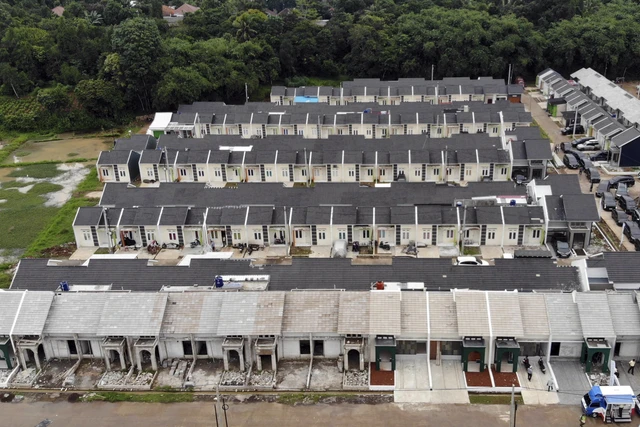
Housing complex for affordable housing credit

Indonesia is pushing to meet its ambitious housing target with the help of the affordable housing credit scheme. The government recently launched the Housing People’s Business Credit (KUR) program, aiming to address the housing backlog and expand access to homeownership for low- and middle-income groups. With housing demand rising, this initiative is expected to stimulate both supply and demand while involving developers, contractors, and MSMEs.


Housing KUR Program Launched in Jakarta

The Ministry of Housing and Settlement Areas (PKP) held the first major socialization event for the Housing KUR program in Jakarta on August 28, 2025. The event targeted developers, contractors, and vendors. Minister Maruarar Sirait described the initiative as crucial for accelerating the national housing goal.

“This event will invite the entire housing ecosystem, from developers, contractors, regional-owned enterprises, associations, to building material traders,” he told Kompas.com in an exclusive phone interview on August 24, 2025.

Although the launch began in Jakarta, West Java will be the next focus due to its large number of contractors and developers. Ara explained that the province holds the biggest potential for the program’s success, calling it a “fertile ground” for housing development.


Affordable Housing Credit to Boost Indonesia Housing Target

The affordable housing credit scheme provides financing through two key channels: developers and the public. Developers can access loans ranging from IDR 500 million to IDR 5 billion, with a maximum cumulative disbursement of IDR 20 billion. This financing could enable each developer to build 40–50 homes. Joko Suranto, Chairman of Real Estate Indonesia (REI), said the target was realistic given current construction capacity.

On the demand side, individuals can apply for investment credit from IDR 10 million to IDR 500 million. The program aims to give more families, especially those in the lower-middle-income group, the opportunity to own homes. By balancing both supply and demand, the government expects this credit to make a significant impact on housing absorption.


Subsidized Housing Scheme and Private Sector Role

In addition to the Housing KUR program, Minister Sirait revealed plans to involve the private sector in Indonesia’s subsidized housing scheme. So far, subsidized financing has been dominated by the state. However, Ara expressed hope for a breakthrough.

“Pray for us. I am praying and working hard. Hopefully, there will be subsidized housing financing, but accommodated by the private sector,” he said.

The new scheme would resemble the existing Housing Financing Liquidity Facility (FLPP) but allow more collaboration between public and private players. If successful, it would mark a major shift in Indonesia’s housing finance landscape.


Challenges: Weak Purchasing Power and Oversupply Risks

Despite the promise of new credit facilities, developers remain cautious. Weakened purchasing power continues to slow housing demand. Joko Suranto stressed that funding alone is not enough.

“The funds can only be effective when there are projects being carried out and houses are being sold. At present, house sales are still relatively sluggish,” he noted.

He added that the program could have greater impact in rural areas, where demand is clearer and housing projects can boost local economies by creating jobs and stimulating small businesses.


MSMEs as Key Players in Indonesia’s Housing Ecosystem

Micro, small, and medium enterprises (MSMEs) are expected to play a central role in housing development. From supplying bricks and sand to acting as small contractors, their contributions are essential. BPJS Employment, with 42 million participants, could serve as a base for housing absorption. Joko highlighted this potential, explaining, “Imagine if just 1 percent of BPJS participants joined this program, there would already be a demand for 420,000 homes.”

This integration would not only help balance supply but also provide opportunities for MSMEs to thrive with better financing support, reducing reliance on harmful online loans.


Driving Indonesia Housing Goals Forward

The affordable housing credit initiative is shaping up as a cornerstone for meeting Indonesia’s housing target. By combining government support, private sector participation, and MSME involvement, the program offers a multi-pronged solution to the housing backlog. With adequate oversight and effective implementation, it could drive property market growth and bring homeownership closer to millions of Indonesians.


Source: kompas.com, beritakini.co.id

Image: Yulius Satria Wijaya/ANTARA FOTO

Latest Article
NIB Registration Surges to 14.6 Million as MSMEs Dominate
Indonesia continues strengthening its business landscape as NIB registration reaches 14.6 million. The...
Australia Boosts Commitments to Expand Investment in Indonesia
Investment in Indonesia is gaining stronger traction as Australia accelerates its efforts to channel...
Tourism in Bali Close to 7 Million Visits by Year-End 2025
Tourism in Bali continues to strengthen as the province heads toward the final quarter of 2025. The Central...
Indonesian Customs Overhaul Ordered Amid Rising Scandals
Finance Minister Purbaya Yudhi Sadewa declares a full reform of the Directorate General of Customs and...
Finance Minister Purbaya to Launch Business Complaint Service
Finance Minister Purbaya Yudhi Sadewa has announced a key initiative to improve Indonesia’s business...

Andrzej Barski

Director of Seven Stones Indonesia

Andrzej is Co-owner/ Founder and Director of Seven Stones Indonesia. He was born in the UK to Polish parents and has been living in Indonesia for more than 33-years. He is a skilled writer, trainer and marketer with a deep understanding of Indonesia and its many cultures after spending many years travelling across the archipelago from North Sumatra to Irian Jaya.

His experience covers Marketing, Branding, Advertising, Publishing, Real Estate and Training for 5-Star Hotels and Resorts in Bali and Jakarta, which has given him a passion for the customer experience. He’s a published author and a regular contributor to local and regional publications. His interests include conservation, eco-conscious initiatives, spirituality and motorcycles. Andrzej speaks English and Indonesian.

Terje H. Nilsen

Director of Seven Stones Indonesia

Terje is from Norway and has been living in Indonesia for over 20-years. He first came to Indonesia as a child and after earning his degree in Business Administration from the University of Agder in Norway, he moved to Indonesia in 1993, where he has worked in leading positions in education and the fitness/ wellness industries all over Indonesia including Jakarta, Banjarmasin, Medan and Bali.

He was Co-owner and CEO of the Paradise Property Group for 10-years and led the company to great success. He is now Co-owner/ Founder and Director of Seven Stones Indonesia offering market entry services for foreign investors, legal advice, sourcing of investments and in particular real estate investments. He has a soft spot for eco-friendly and socially sustainable projects and investments, while his personal business strengths are in property law, tourism trends, macroeconomics, Indonesian government and regulations. His personal interests are in sport, adventure, history and spiritual experiences.

Terje’s leadership, drive and knowledge are recognised across many industries and his unrivalled network of high level contacts in government and business spans the globe. He believes you do good and do well but always in that order. Terje speaks English, Indonesian and Norwegian.

Contact Our Consultants

Ridwan Jasin Zachrie

CFO of Seven Stones Indonesia, Jakarta

Ridwan is one of Indonesia’s top executives with a long and illustrious career in the financial world. He holds several professional certifications including being a Certified Business Valuer (CBV) issued by the Australian Academy of Finance and Management; Broker-Dealer Representative (WPPE); and The Directorship Certification for Directors and Commissioners, issued by the Indonesian Institute of Commissioners and Directors.

His experience includes being the Managing Director at one of the top investment banking groups in the region, the Recapital Group, the CFO at State-owned enterprises in fishery industry and the CEO at Tanri Abeng & Son Holding. He’s also been an Independent Commissioner in several Financial Service companies and on the Audit and Risk Committee at Bank BTPN Tbk, Berau Coal Energy Tbk, Aetra Air Jakarta as well as working for Citibank, Bank Mandiri and HSBC. His last position was as CFO at PT Citra Putra Mandiri – OSO Group.

Ridwan has won a number of prestigious awards including the Best CFO Awards 2019 (Institute of Certified Management Accountant Australia-Indonesia); Asia Pacific Young Business Leader awarded by Asia 21 Network New York USA (Tokyo 2008); UK Alumni Business Awards 2008 awarded by the British Council; and The Most Inspiring Human Resources Practitioners’ version of Human Capital Magazine 2010.

He’s a member of the Board of Trustees of the Alumni Association of the Faculty of Law, Trisakti University, Co-Founder of the Paramadina Public Policy Institute and actively writes books, publications and articles in the mass media. He co-authored “Korupsi Mengorupsi Indonesia” in 2009, which helps those with an interest in understanding governance in Indonesia and the critical issue of corruption. Ridwan speaks Indonesian and English.

Per Fredrik Ecker

Managing Director of Seven Stones Indonesia, Jakarta

Per is the Managing Director of the Seven Stones Indonesia (SSI) Jakarta office and has more than 25-years’ experience in Indonesia, China, and Western Europe. He previously worked in senior management positions with Q-Free ASA, Siemens AG, and other companies in the telecom sector. Over the last six years, he has been the Chairman of the Indonesia-Norway Business Council (INBC) and recently become elected to be on the board of EuroCham Indonesia.

His most recent experience is within Intelligent Transport Solutions (ITS), Telecom, and other sectors within the Indonesian market. He is today through his position in SSI and by representing Norway Connect, promoting Nordic and European companies that would like to explore business opportunities in the Indonesian market. He’s also playing an active role to help create the Nordic House concept in Jakarta that will provide an excellent platform for Nordic companies entering Indonesia, where they’ll find a community that can offer support with trusted information and affordable services to enter this market.