
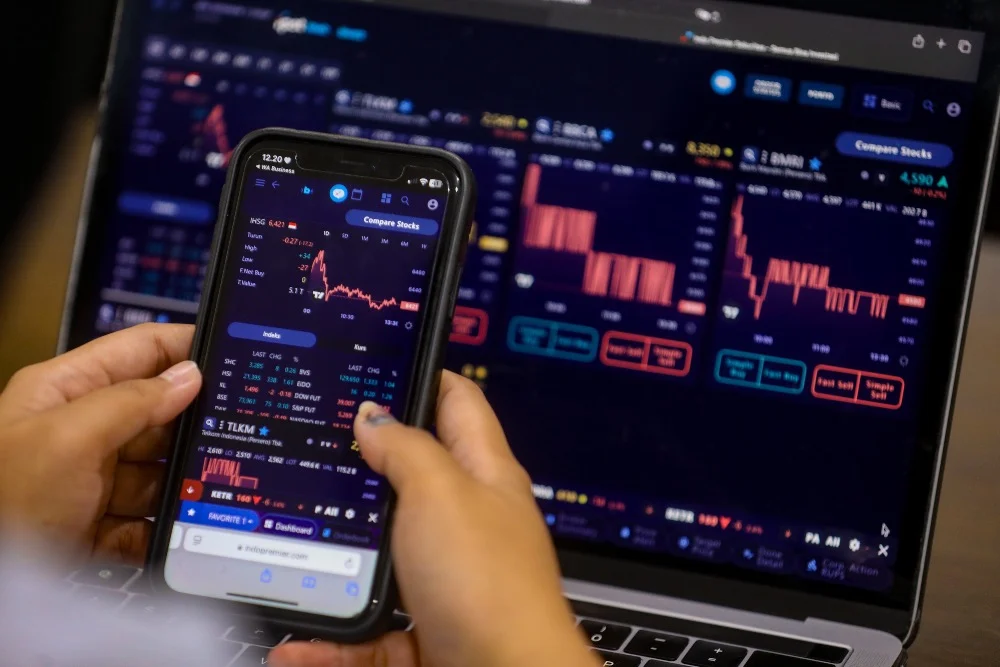
Fed rate cut impact is driving renewed optimism in the Indonesian stock market as the Jakarta Composite Index (IHSG) rose 1.02% to 7,938.83 in the first session on Monday, August 25, 2025. Investors reacted positively to dovish signals from the U.S. Federal Reserve, which hinted at potential interest rate cuts in September 2025. This movement reflects a broader trend where emerging market assets attract global capital seeking higher returns amid falling U.S. yields.
How Fed Rate Cut Impact Drives Emerging Market Sentiment
The Fed plans to cut interest rates twice by 25 basis points each, potentially widening the spread between domestic and global rates. Lower U.S. rates reduce the appeal of American bonds, encouraging investors to explore emerging market assets.
According to Stefanus Dennis Winarto, Chief Investment Officer at PT Inovasi Finansial Teknologi (Makmur), “Spread that is wider means Indonesia’s instruments offer more attractive yields compared to the U.S. This could push foreign inflows into bonds and equities, provided domestic macro stability is maintained.” This global context underpins the current rally in the IHSG.
Foreign Capital Inflows Strengthen Indonesia’s Market
Foreign capital has started to return to Indonesian markets. In the year-to-date period through August 21, 2025, investors recorded an inflow of IDR 71.63 trillion in government bonds, although stocks saw an outflow of IDR 52.99 trillion.
Government bond yields remain attractive, with the 10-year INDO10Y yielding 6.3–6.4%, far above the U.S. Treasury 10-Year at 4.27%, Malaysia at 3.39%, and Thailand at 2.08%. Stefanus added, “With solid domestic fundamentals, inflows into bonds will rise further if The Fed eases monetary policy.” These foreign capital inflows help improve liquidity and valuations in the Indonesia stock market, particularly in large-cap sectors.
Domestic Factors Supporting Market Growth
Bank Indonesia has supported the market by cutting the BI Rate to 5% in August 2025, totaling 100 basis points of reductions since the start of the year. This proactive approach helps mitigate risks and fosters a forward-looking investment environment. Domestic economic indicators are also encouraging. Indonesia’s Q2-2025 GDP grew 5.12% year-on-year, inflation remained stable at 2.5±1%, and the rupiah maintained relative stability.
Senior Market Chartist Nafan Aji Gusta of Mirae Asset Sekuritas stated, “This dynamic is mainly influenced by expectations of benchmark interest rate cuts, both from the Fed projected to start in September and from Bank Indonesia,” highlighting how both global and domestic policy shifts boost investor confidence. Banking stocks led the rally, with BBRI up 2.93%, BBNI up 2.05%, BMRI up 1.64%, and BBCA up 0.30%.
Risks Ahead for Indonesia’s Stock Market
Despite positive momentum, risks remain. Slower quarter-on-quarter growth in Q3 2025 and weak domestic consumption could dampen market performance. Global uncertainties, including trade tensions and the Fed’s cautious approach, could also affect investor sentiment.
Nafan noted, “Government commitment through KSSK and political elites is also important to mitigate these crucial risks. The goal is to maintain the momentum of foreign net buy,” emphasizing the importance of strong government support to sustain foreign net buy momentum.
Read More: Trump Fed Replacement Plan Sparks Market Uncertainty
Opportunities in Indonesia Stock Market and Bonds
Overall, the combination of Fed rate cut impact and solid domestic fundamentals presents opportunities for investors in Indonesia’s stock market and bond sector. Attractive yields, controlled inflation, and stable growth position Indonesia favorably among emerging markets.
Stefanus concluded, “With potential inflows into bonds and BI’s continued rate cuts, RDPT performance could improve. This makes them an attractive portfolio option.” Investors may consider diversifying into bonds, mutual funds, or equities to capitalize on current market conditions.
The IHSG is projected to trade between 7,680–8,225 for Q3 2025, reflecting cautious optimism as foreign and domestic factors converge to shape a supportive investment environment.
Source: market.bisnis.com, money.kompas.com
Image: Bisnis/Abdurachman