
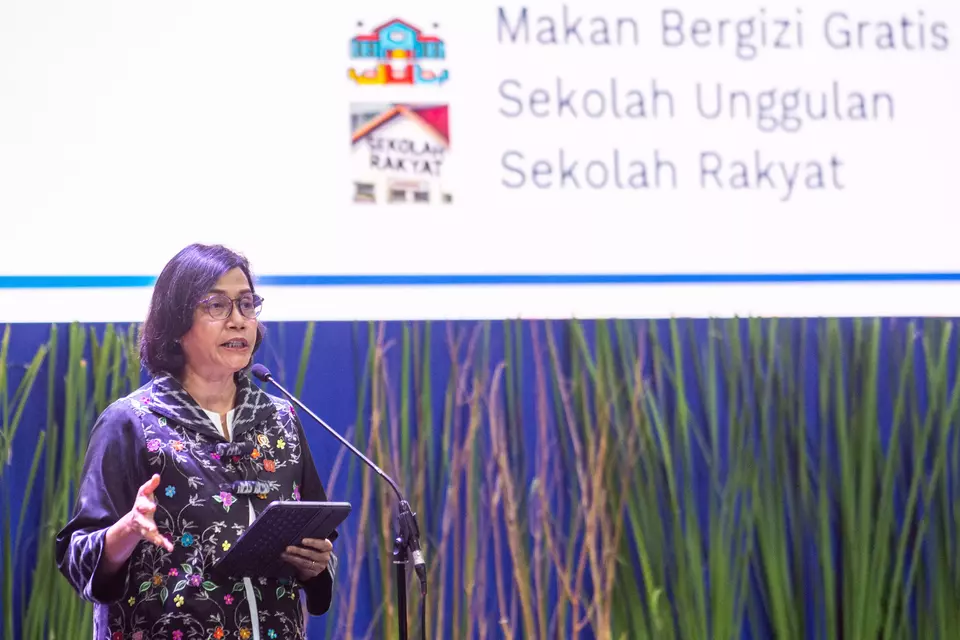
The Indonesian government is calling on industries to take advantage of the super tax deduction scheme to fund research and development (R&D). Finance Minister Sri Mulyani Indrawati emphasized that the 300% tax deduction aims to boost innovation and strengthen collaboration between industry and research institutions.
“If a company or industry spends IDR 1 billion, they can deduct three times that amount for tax reduction. Three times. So if they spend IDR 1 billion, they can deduct IDR 3 billion when calculating their taxable income,” Sri Mulyani explained at the Indonesian Science, Technology, and Industry Convention 2025 on Thursday, August 7.
Government’s Push for the Super Tax Deduction Scheme
The super tax deduction scheme is a fiscal incentive designed to encourage companies to invest in R&D. By allowing businesses to claim a deduction worth three times their qualifying R&D expenditure, the government hopes to make such investments financially attractive. The policy applies to a wide range of activities that can produce new products or innovations.
Sri Mulyani stressed the importance of using this scheme as part of a national effort to accelerate scientific and technological advancements. She believes this incentive can significantly reduce the financial burden for companies willing to fund research.
Read More: Social Media Tax Part of Indonesia’s 2026 Tax Reform
Uptake and Current Utilization Rates
Despite the clear benefits, utilization of the scheme remains limited. Data from the Ministry of Finance shows that 30 corporate taxpayers have submitted 224 R&D proposals, with a total estimated value of IDR 1.46 trillion, or around USD 15.36 million. However, only nine taxpayers have received the incentive so far, covering just 19 proposals.
This gap between applications and approvals suggests challenges in either meeting the requirements or promoting the scheme effectively. The low adoption rate also indicates untapped opportunities for both companies and research institutions.
Encouraging Industry–Research Collaboration
Sri Mulyani urged researchers to actively engage with industry partners. She encouraged them to adopt an entrepreneurial mindset and approach companies with clear proposals.
“Keep inviting industries and say, ‘Hey, if you do research with me and spend IDR 1 billion, you can deduct triple that from your taxes.’ That’s a gain for them, right?” she said as cite by Bisnis.com.
By framing R&D collaboration as a mutually beneficial arrangement, both sides can achieve their goals: industries gain substantial tax benefits while researchers secure the funding they need to innovate.
Read More: Indonesia Tax Revenue Shortfall Spurs Reform Strategies
Other Fiscal Support for Education and Research
The super tax deduction scheme is not the only government measure supporting research and education. The Education Endowment Fund, currently valued at IDR 154.1 trillion, plays a vital role in long-term educational development. Sri Mulyani noted that the fund could increase by IDR 20 trillion this year, reaching IDR 175 trillion.
This fund complements tax incentives by ensuring that both the academic and industrial sectors have access to the resources needed to drive innovation. Together, these fiscal tools form part of a broader strategy to position Indonesia as a competitive player in science and technology.
Tax Incentives for Research: A Path to Innovation
Tax incentives for research, such as the super tax deduction scheme, represent a powerful opportunity for industries to reduce costs while contributing to national progress. By investing in R&D, companies not only strengthen their competitiveness but also play a direct role in advancing Indonesia’s innovation ecosystem.
If more industries embrace this policy, the benefits could extend far beyond immediate tax savings, fostering a culture of collaboration and continuous technological improvement. With strong participation, the scheme has the potential to transform the landscape of Indonesian research and development.
Source: ekonomi.bisnis.com, nasional.kontan.co.id
Image: ANTARA FOTO / Novrian Arbi