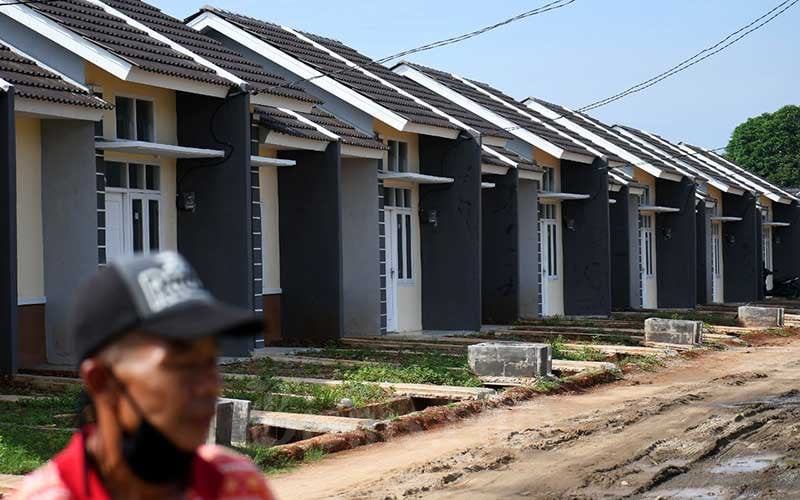
Indonesia continues to struggle with a severe housing shortage, with millions of families unable to afford a home. Developers are now turning to a rent-to-own housing scheme as a potential answer to this long-standing issue. The initiative aims to make homeownership more accessible for low-income families and informal workers who face barriers in traditional mortgage systems.
Indonesia Housing Shortage Remains a Major Challenge
The Central Statistics Agency (BPS) reports that the current housing backlog has reached 9.9 million units. This shortage affects millions of families, particularly those in the low-income bracket (MBR). Many struggle with strict mortgage requirements and limited access to banking services, leaving them without viable options to own a home. Addressing these challenges requires innovative solutions that reduce entry barriers and offer flexibility.
Read More: Danantara Open to Backing Affordable Housing Program
Rent to Own Housing Offers an Alternative Path
A rent-to-own (RTO) scheme could help solve these problems. The program allows families to rent a property while simultaneously building equity for a down payment. It follows a two-step process:
- Initial rental period: Families rent the property for a fixed time, often two years. Part of their rent goes toward a future down payment.
- Transition to mortgage: Once enough equity accumulates, families can move to a subsidized mortgage program.
“In the initial stage, low-income families rent for a certain period, for example, two years. Part of the rental payments will be collected as a down payment, which can later be used when transitioning to a subsidized mortgage,” explained Junaidi, Chairman of the Indonesian Housing and Settlement Developers Association (Apersi).
Junaidi also highlighted its advantages for workers who cannot access bank loans. “In fact, the RTO scheme can also be a solution for those facing issues with the Financial Services Authority (OJK) Financial Information Service System (SLIK) when applying for a subsidized mortgage. During the rental period, these SLIK-related obstacles can be resolved,” he added.
Read More: Indonesia Housing Market Heats Up With Foreign Investors
Housing Backlog Solution Needs Stakeholder Collaboration
Junaidi believes that a massive rollout of the rent-to-own model could significantly reduce the housing backlog. It would also support the government’s Three Million Homes Program. However, success depends on a coordinated effort.
“Effectively, a massive implementation of the RTO scheme will also support the achievement of the government’s Three Million Homes Program,” he said.
He stressed that this plan requires active involvement from all stakeholders, including developers, financial institutions, and government agencies. “Collaboration among stakeholders is essential to make the RTO scheme roll out faster and hit the target,” Junaidi emphasized.
Affordable Homeownership for Low Income Buyers
The rent-to-own model creates new opportunities for low-income homebuyers and informal workers. It removes the immediate need for large down payments and provides time to address credit or banking issues. For many families, it represents a realistic path toward homeownership. Benefits include:
- Lower entry barriers compared to conventional mortgages.
- Flexibility to transition from renting to owning.
- Improved housing security for vulnerable groups.
A Step Forward in Affordable Housing
The rent-to-own scheme could transform Indonesia’s housing landscape if implemented effectively. By reducing financial barriers and fostering cooperation among stakeholders, it offers hope for millions of families. As Junaidi stated, the RTO program must move quickly to deliver meaningful impact and make homeownership a reality for those who need it most.
Source: detik.com
Image: Bisnis/Abdurachman