
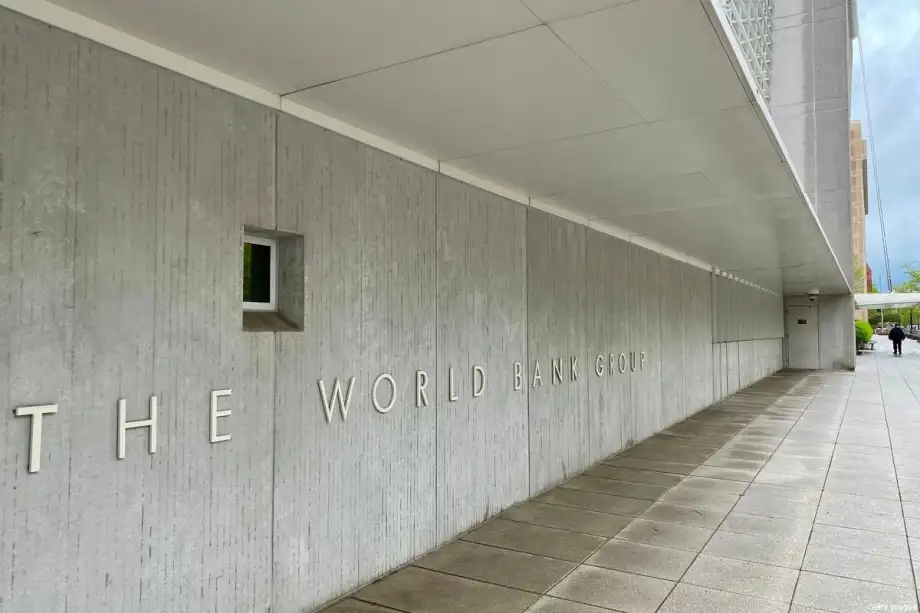
The World Bank forecast projects Indonesia’s economy will maintain strong momentum, growing at an average of 4.8% annually from 2025 to 2027. Despite global uncertainties, including rising tensions in the Middle East, the country shows resilience backed by solid macroeconomic fundamentals and targeted government programs.
Carolyn Turk, World Bank Country Director for Indonesia and Timor-Leste, emphasized, “Indonesia’s current economic performance reflects strong fundamentals and effective policy responses.”
Strong Fundamentals Behind the World Bank Forecast
The World Bank attributes Indonesia’s economic stability to a combination of low inflation, ample financial reserves, and fiscal discipline. These policies have helped the country manage declines in government spending and a slowdown in investment.
In Q1 2025, Indonesia recorded year-on-year economic growth of 4.9%, surpassing regional peers like Malaysia (4.4%) and Singapore (3.8%). Carolyn Turk noted during the launch of the Indonesia Economic Prospects report in Jakarta on Monday (June 23, 2025), as reported by RM.id, “Low inflation, adequate financial reserves, and strict adherence to fiscal rules have helped maintain stability and manage the pressure from declining government spending and slowing investment.”
While lower-income communities benefit the most from this growth, middle-income groups still face pressure. Sluggish household consumption growth in this segment reflects the need for better job creation and wage improvement.
Key Growth Drivers: Housing Sector and Investment Plans
The housing sector has emerged as a major driver of inclusive economic growth. The Indonesian government targets the construction of three million housing units annually. This people-focused strategy aligns with broader efforts to improve living standards and economic opportunities.
Public investment of USD 3.8 billion per year will support this program, with the potential to create over 2.3 million jobs and attract an additional USD 2.8 billion in private capital. Turk stated, “With a public investment allocation of USD 3.8 billion annually, this program is expected to create around 2.3 million jobs and attract USD 2.8 billion in private investment.”
The launch of the Danantara sovereign wealth fund is also expected to boost investor confidence and strengthen financing for infrastructure and housing.
Challenges Ahead in the Southeast Asia Economy
Despite the optimistic outlook, the World Bank identifies several risks. These include disruptions in global trade, fluctuations in commodity prices, and volatility in capital flows. Indonesia, like other Southeast Asian economies, must remain adaptable in the face of external shocks.
Turk highlighted the importance of policy reform, saying, “If these reforms are implemented consistently, Indonesia has the potential to reach 5.5 percent annual growth by 2027.”
The government’s focus on deregulation, digitalization, and trade facilitation aims to cushion the impact of global headwinds while boosting competitiveness.
Maintaining Stability Through Sound Fiscal Policy
Fiscal stability has supported Indonesia’s resilience. In May 2025, national inflation stood at just 1.6%, and the trade balance showed a surplus of USD 4.9 billion. These indicators reflect prudent economic management.
According to Puteri Komarudin, a member of the House of Representatives Commission XI, “Our economy grew 4.87 percent in the first quarter of 2025, higher than Malaysia and Singapore.”
She credited strong growth in agriculture (10.52%), household consumption (4.89%), and exports (6.78%) as key contributors. Komarudin also emphasized the importance of continued vigilance in response to Middle East conflict-related risks.
Long-Term Outlook for Indonesia’s Economic Growth
The World Bank forecast signals sustained confidence in Indonesia’s economic trajectory. If structural reforms continue, the country could surpass expectations and reach 5.5% growth by 2027.
Habib Rab, Lead Economist at the World Bank for Indonesia, said, as cited by Kumparan.com, “Indonesia’s housing program is not just about building homes, it’s about stronger and more inclusive economic growth.”
With targeted investment, effective policy, and structural reforms, Indonesia is well-positioned to lead in the region and ensure broad-based prosperity for years to come.
Source: kumparan.com, rm.id
Image: DANIEL SLIM/AFP via Getty Images