
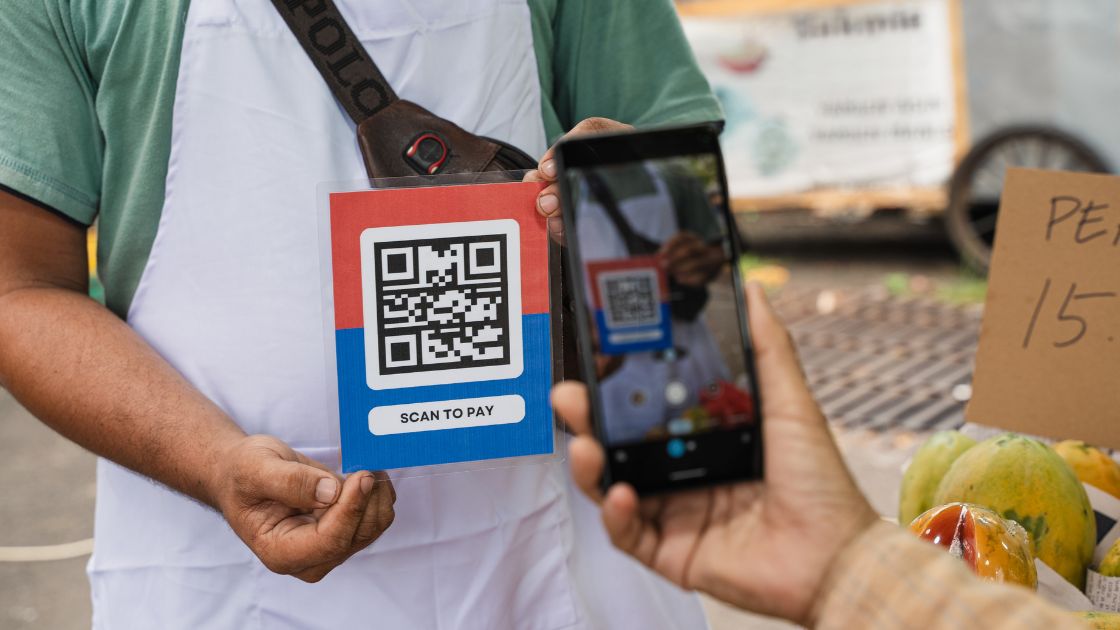
QRIS cross-border payment now enables transactions across Southeast Asia. Bank Indonesia (BI) unveiled the milestone in Bali this week, confirming that tourists can finally pay with one familiar QR code across Thailand, Malaysia, and Singapore, while expansions to Japan, China, South Korea , and India are already scheduled. The digital leap promises quicker purchases, stronger visitor spending, and fresh momentum for Southeast Asia’s favourite island destinations.
Regional Growth of QRIS Transactions
Bali already shows impressive traction. BI recorded 24,121 inbound QRIS payments worth IDR 7.1 billion between January and April 2025, and the total climbs each month. Nationwide adoption runs even deeper; Indonesians have executed 3.7 billion QRIS transactions to date, involving 56.5 million shoppers and 38.7 million merchants—92.5 percent of which are micro, small or medium enterprises.
Batam, the busy gateway opposite Singapore, mirrors Bali’s progress. By December 2024, Malaysia led its inbound chart with 1,839,496 transactions, while Thailand and Singapore followed with 42,297 and 50,731, respectively.
Outbound figures flipped the balance: Indonesian wallets sent 638,315 payments to Thailand, 320,778 to Malaysia, and 71,001 to Singapore. The data reveal a net inflow from Malaysia and a net outflow to Thailand and Singapore, underscoring two‑way appetite for the seamless code.
Read More: Bali Digital Economy Gains Momentum with QRIS Growth
QRIS Cross‑Border Payment Enhances Convenience
The shared QR code standard removes guess‑work from holiday spending. Travellers scan once and pay from their home‑country e‑wallets, while BI’s back‑end converts currency instantly. “This initiative is not just about transaction efficiency but also serves as a lever for the tourism and MSME sectors, which have long been the backbone of Bali’s economy,” said BI Deputy Governor Filianingsih Hendarta.
Her team proved the point live on stage: Singaporean visitor Dannie Yeo bought a Penglipuran Village tour with his SingPass wallet; moments later Indonesian Honorary Consul Panudiana Khun used the BPD Bali app to pay a Malaysian merchant with the very same QR label. Delegates applauded, acknowledging how cashless speed delights both sides of the counter.
Bank Indonesia and Regional Collaboration
Behind the scenes, BI coordinates daily with travel agencies, port operators, and hoteliers to widen acceptance. Head of BI’s Bali office, Erwin Soeridimadja, stated, as reported by balitribune.co.id, “We will socialize this system to ASITA members and other associations like HGMA and HPI, who interact directly with foreign tourists.”
His Riau Islands counterpart Rony Widijarto, pursues the same mission for Batam’s ferry terminals, where many Singaporean and Malaysian visitors still arrive carrying thick bundles of cash. “Transactions become easier, safer, and well‑documented — beneficial for both merchants and tourism businesses,” he added.
He also promised, “In the future, we will promote more incentives for QRIS Cross‑Border usage, especially at ports that serve as main entry points for tourists from Singapore and Malaysia.”
Southeast Asia’s Unified Digital Payment Vision
BI will start QRIS pilots in Japan and China on 17 August 2025 – Indonesia’s Independence Day, before activating South Korea and India. The roadmap aligns with ASEAN’s ambitions for seamless digital payments and lower remittance fees.
Closer to home, Bali’s districts have carved out signature “digital zones” such as Kuta Beach Digital Walk, Tabanan City Park, and Nusa Lembongan Digital Island. Each zone supplies free Wi‑Fi, cashless signage, and merchant training, moving thousands of small vendors online and anchoring tourist purchases inside the formal economy.
Read More: QR Code Scam Prevention Tips for Safer Transactions
QRIS Cross‑Border Payment Strengthens Regional Mobility
Travellers now carry one QR code, eight countries and countless opportunities. The policy streamlines vacations, lifts small‑business revenue and deepens financial inclusion across the archipelago. Bali Governor Wayan Koster captured the stakes when he said, “A fast and practical payment system could determine the overall tourist experience.”
As more borders adopt the standard, BI expects QRIS cross‑border payment to power a competitive, connected, and resilient tourism ecosystem throughout Southeast Asia and to keep the holiday checkout line moving at the speed of a simple scan.
Source: balitribune.co.id, antaranews.com, bisnisbali.com
Image: Andrean Lim / Studio Indonesia