
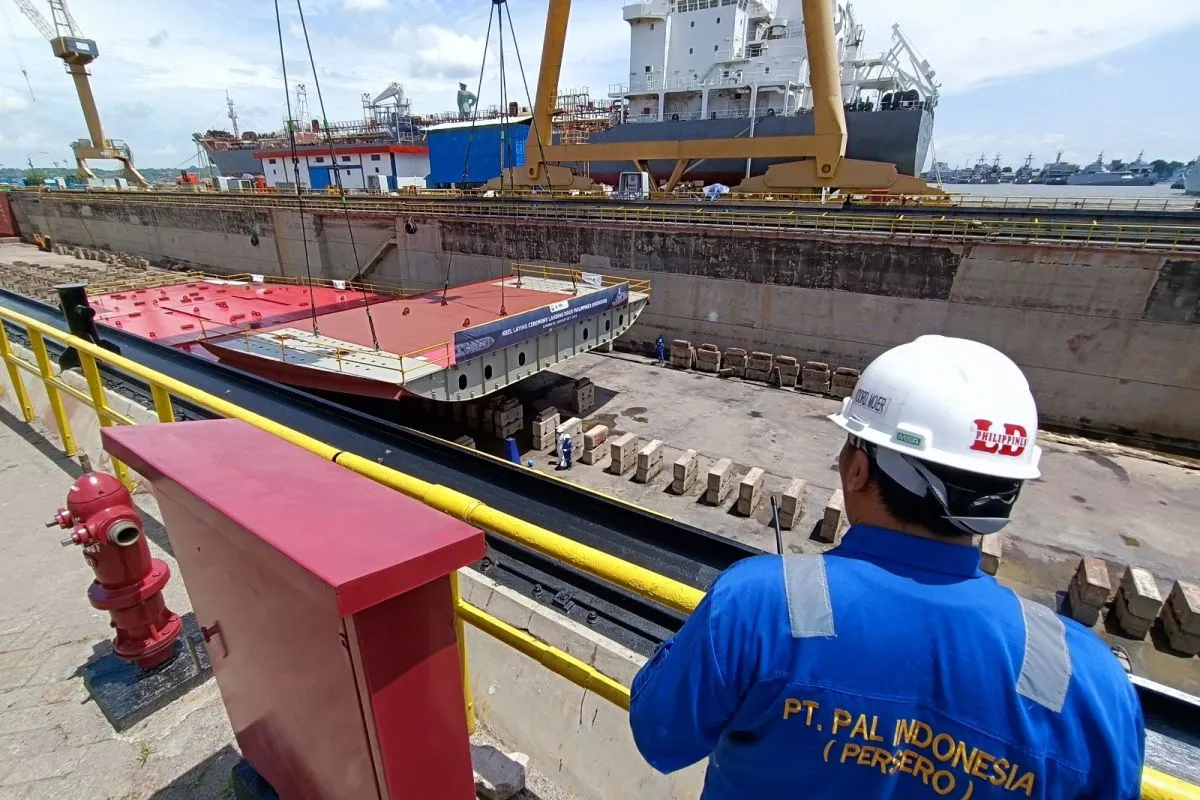
Indonesia’s shipbuilding industry leaders are accelerating efforts to attract global investors. PT PAL Indonesia (Persero), the state-owned shipbuilder, is spearheading initiatives to boost local manufacturing, reduce reliance on imports, and strengthen the maritime economy. These strategies aim to capitalize on Indonesia’s vast maritime potential while creating jobs and advancing national industrialization.
Growing Potential of Indonesia’s Shipbuilding Industry
The economic potential within Indonesia’s shipbuilding sector continues to grow rapidly. According to PT PAL Indonesia’s Marketing Director, Wiyono Komodjojo, “One of our goals is to grow the domestic industry, as the economic value of this maritime sector is enormous.” He stated, as cited by Kontan.co.id.
He noted that a single ship engine can be valued at up to USD 25 million. Given Indonesia’s geographic advantages and vast maritime territories, the government sees shipbuilding as a cornerstone for economic development. PT PAL’s efforts to boost domestic ship production aim to make Indonesia a leading maritime nation.
PT PAL Indonesia’s Investment Initiatives
PT PAL Indonesia’s investment initiatives focus on strengthening industrial capacity. Recently, PT PAL signed an agreement with PT Pertamina (Persero) to build 15 tanker ships domestically. In addition, partnerships with Krakatau Steel and the Indonesian Ship Component Industry Association (PIKKI) aim to enhance the Domestic Component Level (TKDN) in ship manufacturing.
“Components such as pumps, pipes, fittings, and valves, which have so far been imported, we hope can be produced domestically. This is one of our steps to accelerate the increase of TKDN and advance the domestic industry,” Wiyono explained. These collaborations are central to the broader goal of self-reliance and economic resilience.
Foreign Investors in Maritime Sector Targeted
Foreign investors in maritime development are crucial for Indonesia’s success. Wiyono emphasized that reviving the national shipbuilding ecosystem demands significant investment. “One of the steps is to attract foreign investors and then grow the domestic industry, because the investment value needed to build this industry is quite substantial,” he said.
PT PAL targets collaborations with proven ship and engine manufacturers from Japan and Eastern Europe. “For engines, we will adopt technology from countries with proven track records, such as Mitsubishi Heavy Industries (Japan) and Eastern European countries,” Wiyono added. He stressed that these partners are not only reliable but also committed to helping build industries in Indonesia.
Local Ship Component Manufacturing Gains Momentum
Local ship component manufacturing gains momentum through this integrated approach. PT PAL and PIKKI’s cooperation aims to reduce dependency on imported materials while boosting local production capabilities. Their focus includes research and development, technology mastery, and human resource development.
These initiatives promise significant multiplier effects, such as increased job creation, improved workforce skills, and expanded export opportunities. Wiyono highlighted the broader impact by stating, “The multiplier effect will be tremendous, from job creation, improvement of workforce skills, to opportunities for exporting domestic industrial products. This will have a major positive impact on Indonesia.”
Maritime Industry Development for National Growth
Maritime industry development stands at the heart of Indonesia’s economic strategy. As Kaharuddin Djenod, President Director of PT PAL Indonesia, declared, as cited by Liputan6.com, “The maritime industry is the locomotive that will drive Indonesia’s economy faster. Now is the time.” PT PAL takes the lead in building a globally competitive shipbuilding industry while pioneering innovation and sustainability.
Djenod concluded, “Our task today goes far beyond just building ships. We are building Indonesia’s maritime civilization. This is a historical mandate that we must answer with real work: building an independent high-tech industry and empowering national human resources.”
With foreign investor support and strong domestic partnerships, Indonesia’s shipbuilding sector is poised for a transformative leap forward.
Source: liputan6.com, industri.kontan.co.id
Image: ANTARA/Naufal Ammar Imaduddin